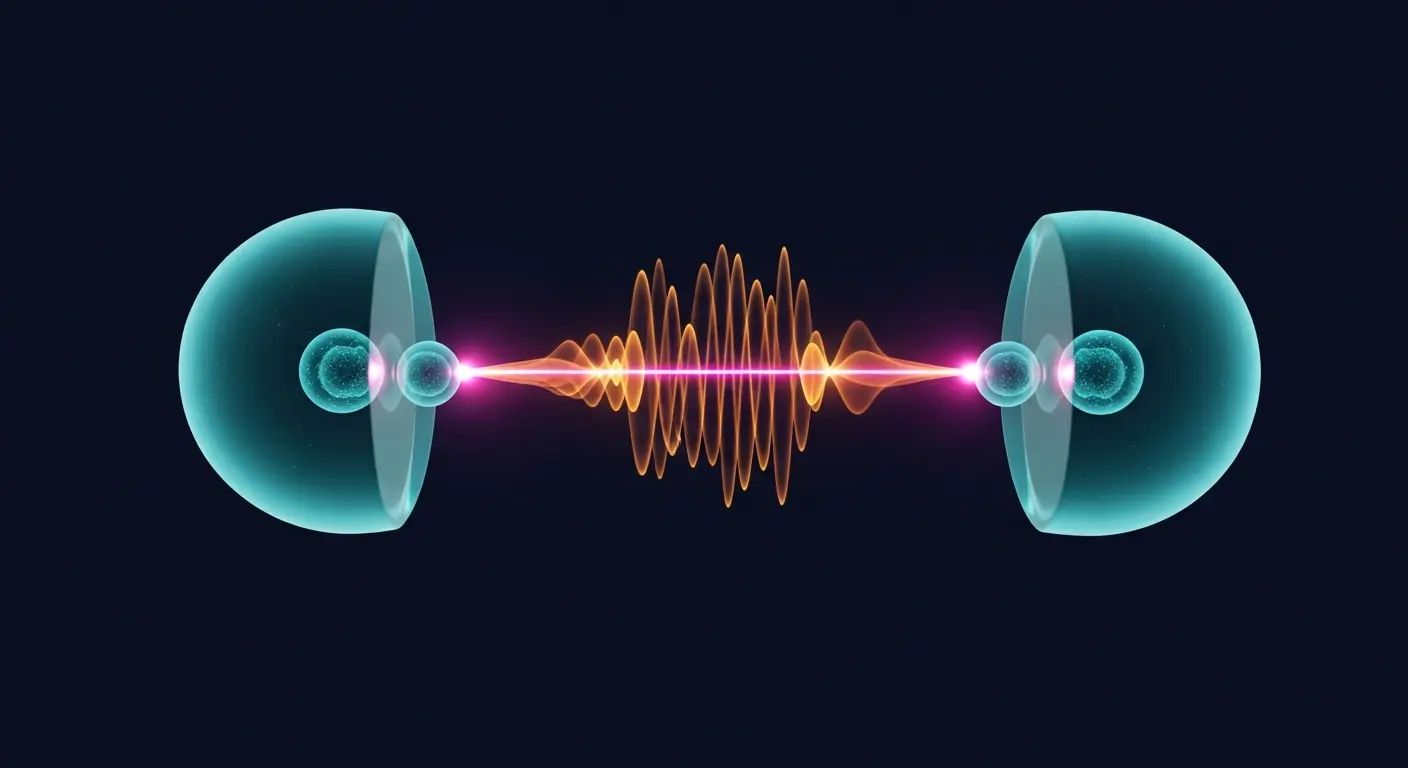
Quantinuum’s H2-2 quantum computer has successfully computed the Jones polynomial, a complex calculation originating in knot theory, demonstrating a practical application extending beyond theoretical simulations. Researchers at Quantinuum, led by Tuomas Laakkonen and Konstantinos Meichanetzidis, tackled both versions of the problem, Markov-closed and Plat-closed braids, despite the differing computational classifications of DQC1 and BQP. The team leveraged the Jones polynomial’s properties as a link invariant to construct an efficiently verifiable benchmark to characterize the effect of noise present in a given quantum processor, a surprising application of mathematical knot theory to quantum hardware diagnostics. This work also includes classical algorithms for comparison, allowing the team to pinpoint the knot sizes where near-term quantum advantage is realistically achievable.
Quantum Algorithm Optimization for Jones Polynomial Evaluation
This achievement signifies a crucial step in validating quantum algorithms on actual hardware, rather than relying solely on modeled performance. Researchers optimized this quantum algorithm and simultaneously developed a novel benchmark designed to assess the impact of noise inherent in quantum processors, a significant challenge in realizing practical quantum devices. The team’s work, detailed in a recent publication, addresses a longstanding problem in knot theory: efficiently calculating the Jones polynomial, a complex invariant used to distinguish different knots. While Markov-closed braids are DQC1-complete and Plat-closed braids are BQP-complete, the researchers found that the resource requirements of classical algorithms for the DQC1 version are at least as high as for the BQP version, suggesting a potential advantage in focusing on the former. This nuanced approach highlights the importance of carefully considering algorithmic trade-offs when pursuing quantum advantage, even when one complexity class appears more difficult than another.
Parallel to the quantum algorithm development, the team also benchmarked tensor-network-based classical algorithms for computing the Jones polynomial, providing a crucial point of comparison for evaluating quantum performance. The reconfigurable tools created by the researchers allow for precise resource estimation, enabling the identification of minimum link sizes where near-term quantum advantage is expected, given specific hardware capabilities. According to the researchers, this work is an important step toward quantum utility, when quantum computers are used to advance scientific and mathematical discovery. The team’s findings provide a pathway for quantifying the minimum system requirements needed to demonstrate a practical quantum advantage, a critical step toward realizing the full potential of quantum computing in knot theory and beyond.
DQC1-Completeness and BQP-Completeness for Knot Invariants
The pursuit of quantum advantage, demonstrating a clear computational speedup over classical methods, continues to drive innovation in quantum algorithm development, and knot theory has emerged as a surprising proving ground. Researchers are now leveraging the mathematical complexities of knots and braids to test the limits of quantum computers and to refine diagnostic tools for assessing hardware performance. This work establishes the DQC1-completeness of the problem for Markov-closed braids and BQP-completeness for Plat-closed braids, accommodating both versions within a single algorithmic framework. The algorithm was successfully implemented on Quantinuum’s H2-2 quantum computer, moving beyond theoretical simulations to demonstrate practical execution on available hardware. Crucially, the researchers didn’t stop at simply running the algorithm; recognizing the importance of characterizing noise in near-term quantum processors, they constructed an efficiently verifiable benchmark using the Jones polynomial as a link invariant. This benchmark allows for a precise assessment of how noise affects the algorithm’s output, transforming a mathematical tool into a diagnostic instrument for quantum hardware.
Quantum-Classical Benchmarking of Jones Polynomial Computation
Demonstrating the computation of the Jones polynomial, a complex mathematical object central to knot theory, on their H2-2 quantum computer, Quantinuum is actively pushing the boundaries of practical quantum computation. This isn’t merely a theoretical exercise; it represents a significant step toward applying quantum algorithms to problems beyond simulation, showcasing the potential to tackle challenges with real-world implications in mathematics and physics. The team, led by Tuomas Laakkonen, didn’t stop at achieving a quantum result, but embarked on a detailed comparative analysis with leading classical algorithms, a crucial step in establishing genuine quantum advantage. A key aspect of their approach lies in accommodating both Markov-closed and Plat-closed braids within their algorithm. While the problem is DQC1-complete for Markov-closed braids and BQP-complete for Plat-closed braids, the researchers highlight a surprising nuance. Laakkonen and colleagues explain that focusing on Markov-closed braids, despite being considered more difficult, may offer a more viable path to demonstrating a computational edge.
The team’s work goes beyond simply identifying a potential advantage; they’ve developed tools that allow for precise resource estimation, pinpointing the minimum knot sizes where quantum computers could outperform classical counterparts.
Noise Characterization via Link Invariant Benchmarks
The pursuit of practical quantum computation increasingly focuses on identifying problems where quantum computers demonstrably outperform their classical counterparts. Beyond theoretical speedups, a crucial step is validating these algorithms on actual, albeit imperfect, hardware. Researchers at Quantinuum, in collaboration with colleagues, have developed a novel approach to assessing the impact of noise on quantum processors by leveraging the mathematical intricacies of knot theory and the Jones polynomial. This nuanced understanding of computational complexity is vital for maximizing potential quantum gains. Demonstrating the algorithm’s viability, the team successfully ran it on Quantinuum’s H2-2 quantum computer, a concrete step toward running these algorithms on physical hardware, rather than relying on simulations. The researchers didn’t stop at execution, however, but also incorporated problem-tailored error-mitigation techniques to improve the accuracy of the results. This is a surprising application of a mathematical tool typically used for knot classification, now repurposed to diagnose limitations within quantum processors. The development of tensor-network-based classical algorithms ran in parallel, allowing for a rigorous comparison of quantum and classical performance.
Resource Estimation for Near-Term Quantum Advantage
Demonstrating a surprising reality through computing the Jones polynomial, Quantinuum’s recent work reveals that achieving demonstrable quantum advantage isn’t simply about scaling qubit counts, but about meticulously characterizing and accommodating the limitations of existing hardware. For decades, the pursuit of quantum computation has focused on building increasingly powerful machines, yet determining when these machines will outperform the best classical algorithms for practical problems remains elusive. The team’s approach, detailed in their published research, moves beyond theoretical simulations to focus on running complex algorithms, specifically those related to knot theory, on actual quantum hardware like Quantinuum’s H2-2 processor. The algorithm accommodates both Markov-closed and Plat-closed braids, a design choice informed by the problem’s DQC1-completeness for the former and BQP-completeness for the latter. This parallel development allowed for a rigorous definition of quantum advantage, measured by the wall-clock time required to obtain the Jones polynomial within a specified precision.


See today’s quantum computing news on Quantum Zeitgeist for the latest breakthroughs in qubits, hardware, algorithms, and industry deals.