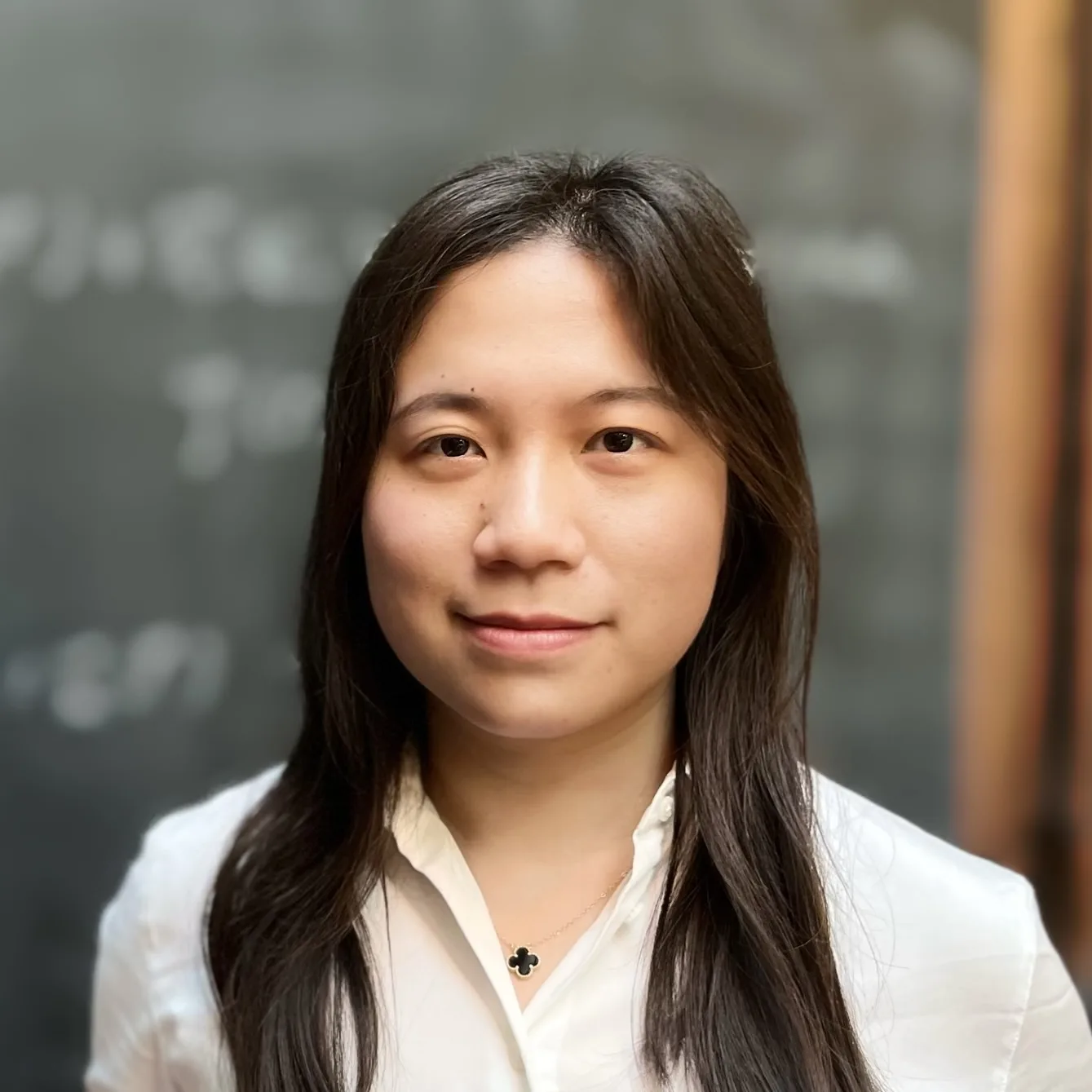
Dr. Shuqiu Wang, Assistant Professor in Physics at the University of Bristol, has won the 2024 Nicholas Kurti Science Prize, awarded by Oxford Instruments. The award recognizes her work in visualizing and identifying electronic structures in superconductors at extremely low temperatures. Her research has made significant contributions to the field of topological quantum matter, which could have implications for the development of quantum computing technologies. Matt Martin, Managing Director at Oxford Instruments NanoScience, praised Dr. Wang’s work with dilution refrigerators and scanning tunneling microscopes.
Dr. Shuqiu Wang Receives Prestigious 2024 Nicholas Kurti Science Prize
Dr. Shuqiu Wang, an Assistant Professor in Physics at the University of Bristol, has been awarded the 2024 Nicholas Kurti Science Prize. This recognition is bestowed upon her for her significant contributions to the field of atomic-scale visualisation and identification of electronic structures in p-wave topological superconductors at millikelvin temperatures. Her research, which combines the use of a dilution refrigerator and a scanning tunnelling microscope, is pushing the boundaries of our understanding of unconventional superconductivity.
Dr. Wang expressed her gratitude for the recognition, acknowledging the invaluable guidance and collaboration of her advisors and colleagues. She emphasized that the award not only validates the scientific aspects of her work but also the engineering aspects of experimental physics.
Breakthroughs in Topological Quantum Matter
Dr. Wang’s research has had a profound impact on the field of topological quantum matter. She has made a breakthrough in identifying a previously unknown quantum state – a topological pair density wave, in the spin-triplet superconductor UTe2. This discovery has significantly advanced our understanding of quantum physics.
In addition to this, her research in orbital ordering has provided a potential unified explanation for high-temperature superconductivity. This could have far-reaching implications for the development of new technologies and materials.
Recognition from Oxford Instruments NanoScience
Matt Martin, Managing Director at Oxford Instruments NanoScience, praised Dr. Wang’s contributions to the field of low-temperature physics. He highlighted her work with dilution refrigerators and the development of scanning tunnelling microscopes. Her research has implications for the development of technologies like quantum computing, making her a deserving recipient of this year’s prize.
The Nicholas Kurti Science Prize aims to promote and recognize the innovative work of young scientists working in the fields of low temperatures and/or high magnetic fields in Europe. The selection committee for the 2024 prize includes esteemed professors from various universities and institutes across Europe.
Dr. Wang’s Notable Academic Contributions
Dr. Wang has held several significant positions at leading academic institutions. She joined the University of Oxford as a post-doctoral researcher in 2019, where she served as lead postdoc, supervising group operations during the pandemic in 2020-2021. As a visiting student at Cornell University, she and her team developed a quantitative theoretic model to quantify Andreev tunnelling.
Since December 2023, she has been leading the Visualizing Quantum Matter Research Group at the University of Bristol. Dr. Wang has published numerous papers in prestigious journals, including Nature, Science, Nature Materials, and Nature Communications. She has also delivered over ten invited talks at leading institutions and international conferences.
The Nicholas Kurti Science Prize: Aiding Early-Career Researchers
The Nicholas Kurti Science Prize is an initiative by Oxford Instruments to support individuals who are producing innovative work during the challenging stage between completing their PhD and securing a permanent research position. The prize is named after Professor Nicholas Kurti, known for his distinguished work in ultra-low temperature physics at the Clarendon Laboratory, Oxford University.
Previous recipients of the Nicholas Kurti Science Prize include researchers from Lancaster University, University of Konstanz, Paul Scherrer Institut, Centre de Nanosciences et de Nanotechnologies (C2N), and Institut Polytechnique de Paris.
External Link: Click Here For More

See today’s quantum computing news on Quantum Zeitgeist for the latest breakthroughs in qubits, hardware, algorithms, and industry deals.