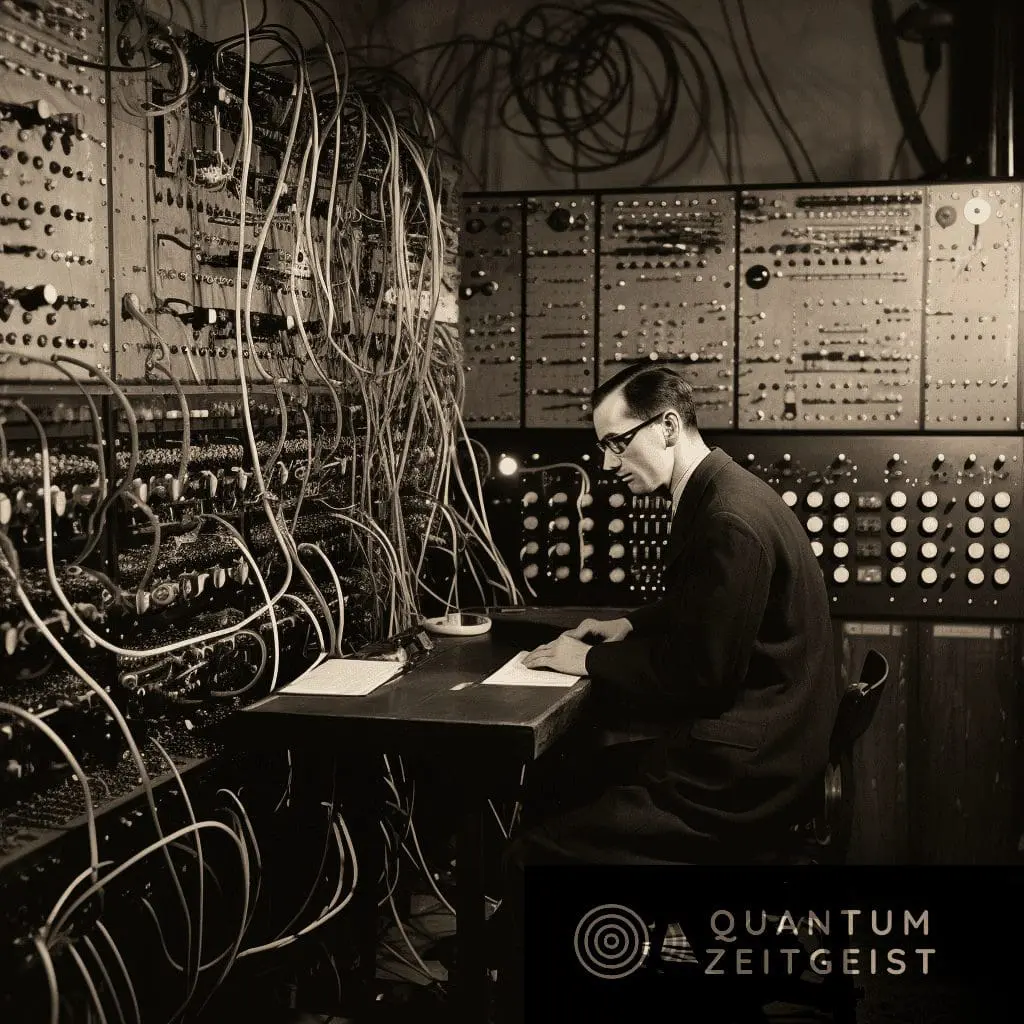
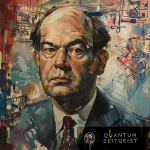
John von Neumann, born on December 28, 1903, in Budapest, Hungary, is one of the most influential mathematicians and polymaths of the 20th century. Born to a wealthy Jewish family, his father, Miksa Neumann, was a banker, while his mother, Margit Kann, came from a family whose firm, Kann-Heller, had prospered selling farm equipment in Budapest. The Neumann family’s affluence gave young John a privileged upbringing, ensuring he received the best education. His prodigious talent for mathematics was evident from an early age, and tales of his mental calculations as a child are legendary.
John von Neumann: A technology pioneer
John von Neumann pursued several educations at once. He was enrolled as a mathematics doctoral candidate at the University of Budapest while studying chemistry at the University of Berlin and then chemical engineering at the Swiss Federal Institute of Technology in Zurich, and he also spent time at Gottingen in David Hilbert’s orbit. In 1926, at the age of 22, he collected his Zurich diploma in chemical engineering and his Budapest doctorate in mathematics, the latter on the axiomatisation of set theory, in the same year. His early works in set theory and quantum mechanics set the stage for a career spanning numerous disciplines, from pure mathematics to applied sciences.
Von Neumann’s health declined in the 1950s. He was diagnosed with metastasised cancer in 1955, and accounts of the primary site differ, naming the skeleton, the pancreas or the prostate. His exposure to radiation during wartime and post-war weapons work has often been suggested as the cause, though it has never been established. As his condition deteriorated, he was admitted to the Walter Reed Army Medical Center in Washington, D.C., where he passed away on February 8, 1957.
Beyond his profound academic contributions, von Neumann’s legacy is also coloured by his vibrant personality. Known for his quick wit and love for humour, he was as much a social butterfly as he was a dedicated scholar. Today, his work continues to inspire, and his name graces institutions and theories, a testament to the indelible mark he left on science. He was one of the Hungarian-born scientists later nicknamed the Martians, a group that also included Edward Teller, Eugene Wigner, and Paul Erdős.
John von Neumann’s Scientific Achievements
Quantum Mechanics
John von Neumann made significant contributions to the mathematical foundations of quantum mechanics. His work in this area culminated in his book “Mathematische Grundlagen der Quantenmechanik” (Mathematical Foundations of Quantum Mechanics), published in 1932. In this seminal work, he provided a rigorous mathematical framework for quantum mechanics, introducing the concept of a Hilbert space as the state space of a quantum system. He also formalised the measurement problem and introduced the density matrix for describing mixed states. The same book contained his argument that no hidden-variable theory could reproduce quantum statistics, an argument that stood for decades until Grete Hermann and later John Bell identified the assumption that made it far narrower than it looked.
Von Neumann entropy is a fundamental concept in quantum mechanics and quantum information theory. Named after the renowned mathematician and physicist John von Neumann, this entropy measures the degree of uncertainty or disorder of a quantum system. It is the quantum generalisation of the entropy Claude Shannon later defined for classical information, and von Neumann’s version came first, arriving in his 1927 work on quantum thermodynamics some two decades before Shannon’s 1948 paper.
Reference: von Neumann, J. (1932). Mathematische Grundlagen der Quantenmechanik. Berlin: Springer.
Game Theory
Von Neumann’s work in game theory, particularly his development of the minimax theorem, laid the foundation for the field. Collaborating with economist Oskar Morgenstern, von Neumann co-authored the book “Theory of Games and Economic Behavior” in 1944. This work introduced the concept of expected utility and provided a mathematical formulation for complex economic and social decision-making processes. Their combined efforts are often credited with establishing game theory as a unique field of study.
Reference: von Neumann, J., & Morgenstern, O. (1944). Theory of Games and Economic Behavior. Princeton University Press.
Computer Science and the Digital Computer
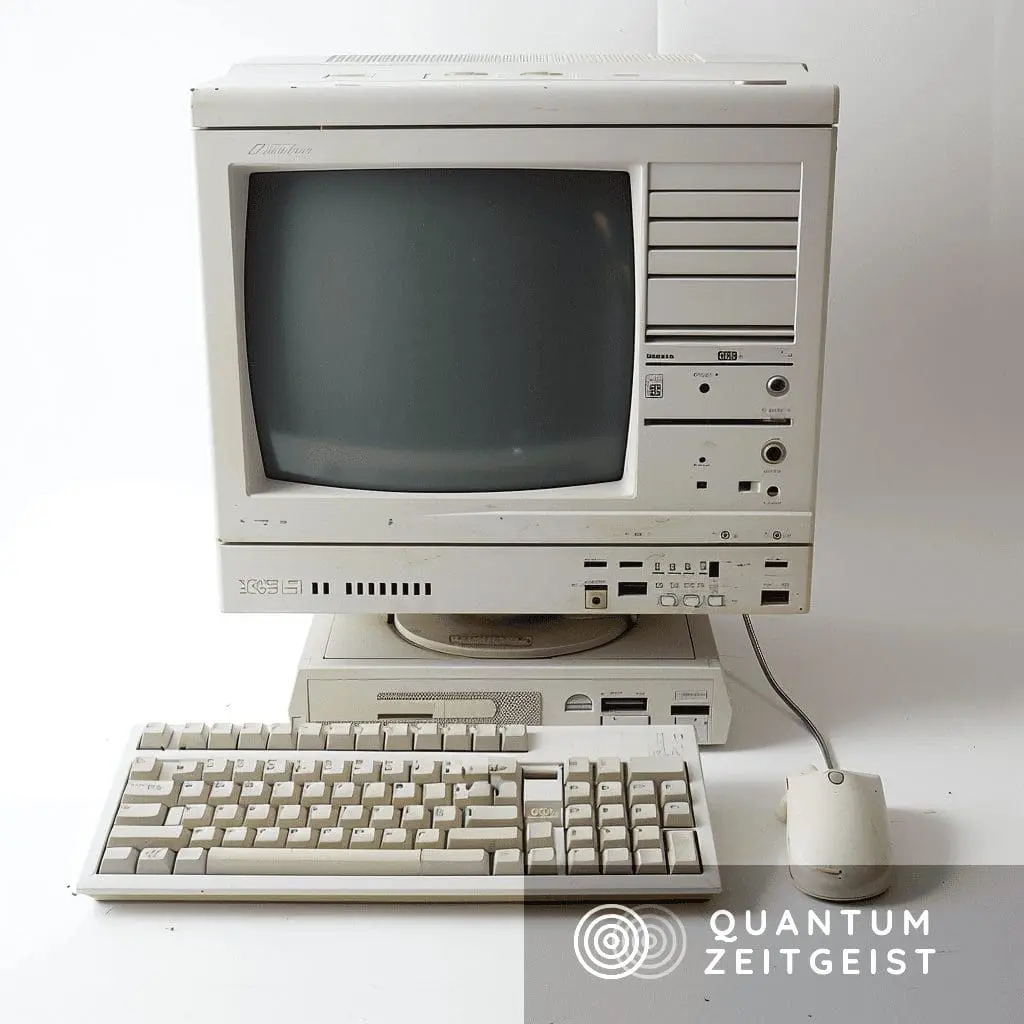
Von Neumann made pioneering contributions to the field of computer science. He is best known for the “von Neumann architecture,” a foundational concept for constructing digital computers. This architecture proposed a system where data and instructions are stored in the same memory unit and processed by a central processing unit (CPU). His design principles, documented in the “First Draft of a Report on the EDVAC,” became the blueprint for most subsequent digital computer designs. One company named MemComputing aims to use quantum inspiration and a new paradigm to move away from the von Neumann architecture.
The von Neumann architecture describes a computer design paradigm where both program instructions and data share the same memory space, and the machine operates in a sequential cycle of fetching, decoding, and executing instructions. Central to this architecture is the Central Processing Unit (CPU) that manages arithmetic operations and data flow, a memory unit that stores data and instructions, and input/output mechanisms. This design contrasts with the Harvard architecture, where instruction and data memories are separate, and has become the foundational model for most general-purpose computers.
Reference: von Neumann, J. (1945). First Draft of a Report on the EDVAC. Contract No. W-670-ORD-4926 between the United States Army Ordnance Department and the University of Pennsylvania.
Cellular Automata and Self-replication
Von Neumann delved into studying complex systems and patterns, leading to his development of cellular automata. He aimed to understand self-replicating systems and, in doing so, designed a hypothetical machine that could replicate itself using a universal constructor. This work laid the groundwork for later studies in artificial life and complexity theory.
Building on von Neumann’s ideas, the British mathematician John Conway devised the Game of Life in 1970, a cellular automaton in which cells live, die or reproduce according to a handful of simple rules. Martin Gardner put it in front of a wide audience in his Scientific American column that October, and it spread from there. The Game of Life demonstrated how complex patterns and behaviors could emerge from simple rules, a concept central to modern computational theory. It has inspired generations of computer scientists and has been used in various computational applications, from optimization algorithms to simulating biological processes.
Cellular automata and self-replication principles have found applications in modern computing, particularly in artificial life (alife). Alife studies life and life-like processes through computer simulations, robotics, and biochemistry. Cellular automata have been used to model and analyze various biological and physical systems, from the growth patterns of coral reefs to traffic flow. Additionally, self-replication has implications in nanotechnology, where researchers envision creating self-replicating nanobots for medical and industrial applications.
Von Neumann’s ideas on self-replication have also influenced the development of evolutionary algorithms and genetic programming. These are optimization and search heuristics inspired by the process of natural selection. They use mechanisms inspired by biological evolution, such as reproduction, mutation, recombination, and selection, to evolve solutions to problems. The idea of machines or programs that can modify and replicate themselves is a direct extension of von Neumann’s vision of self-replicating automata.
Reference: Koza, J. R. (1992). Genetic Programming: On the Programming of Computers by Means of Natural Selection. MIT Press.
Reference: Langton, C. G. (1989). Artificial life. In C. G. Langton (Ed.), Artificial Life (Vol. 6, pp. 1-47). Redwood City, CA: Addison-Wesley.
Reference: Gardner, M. (October 1970). “Mathematical Games – The fantastic combinations of John Conway’s new solitaire game ‘life'”. Scientific American. 223: 120–123.
Reference: von Neumann, J. (1966). Theory of Self-reproducing Automata. Edited and completed by Arthur W. Burks. University of Illinois Press.
Nuclear Weapons and the Manhattan Project
During World War II, von Neumann was a crucial figure in the Manhattan Project, the U.S. research initiative to develop the atomic bomb. He provided crucial insights into the implosion method used in the “Fat Man” bomb, which was dropped on Nagasaki. Beyond the war, von Neumann continued to be involved in defense-related work, contributing to the development of the hydrogen bomb.
Reference: Rhodes, R. (1986). The Making of the Atomic Bomb. Simon & Schuster.



See today’s quantum computing news on Quantum Zeitgeist for the latest breakthroughs in qubits, hardware, algorithms, and industry deals.