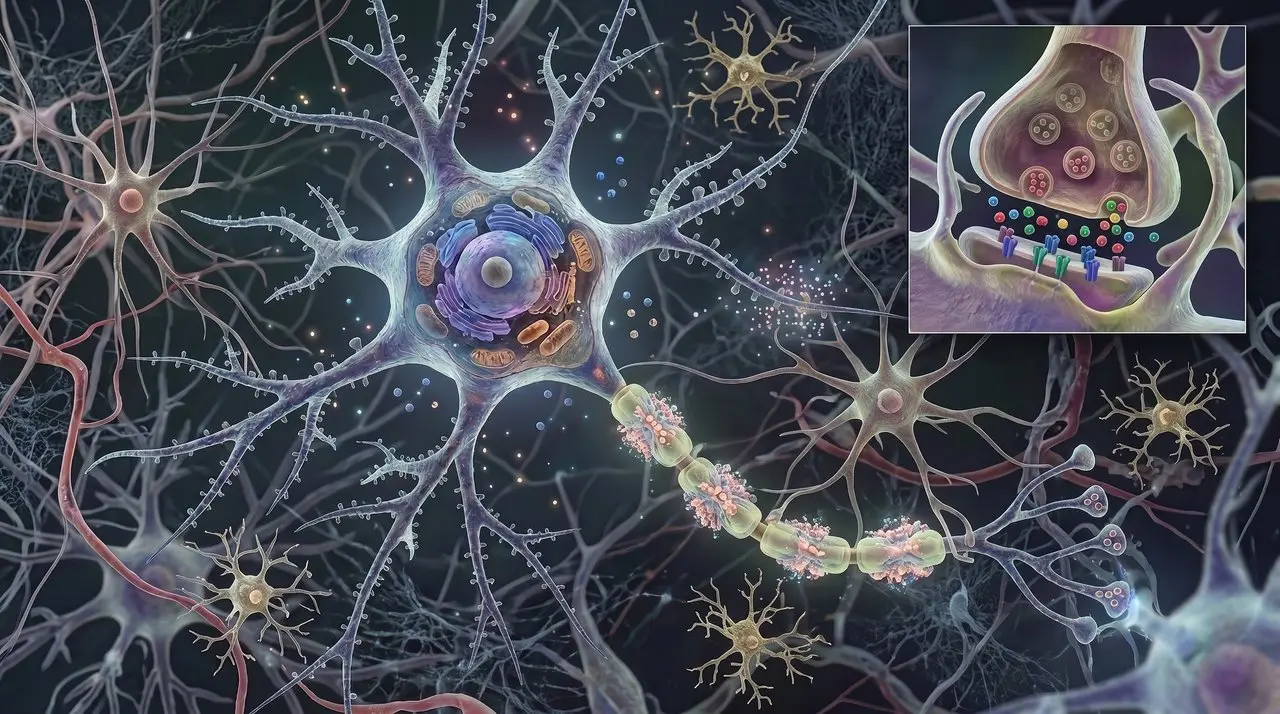
Researchers have completed a detailed three-dimensional epigenomic analysis of four key glial cell populations, ventricular radial glia, outer radial glia, oligodendrocyte precursor cells, and microglia, to map how these support cells orchestrate human neocortex development. Building on prior work demonstrating that chromatin looping regulates neurogenesis, the study identifies cell-type-specific candidate cis-regulatory elements and validates their function using transgenic mouse embryos. This work reveals a link between non-coding genetic variants and neuropsychiatric disorders through cell-type-specific gene regulation, advancing understanding of human-specific gene regulation during corticogenesis.
Glial Cell Types Sorted for 3D Epigenomic Analysis
Analysis of chromatin accessibility revealed that outer radial glia (oRG) cell-type-specific candidate cis-regulatory elements (cCREs) exhibit a striking correlation with human accelerated regions (HARs); oRG cCREs are enriched for human accelerated regions compared with other cCREs and a subset of human accelerated regions show activity differences from their chimpanzee orthologues that interact with genes involved in neuronal development. Researchers isolated these distinct glial cell types using fluorescence-activated cell sorting (FACS) from second trimester human cortex, employing cell-type-specific markers to ensure population purity.
The study extended beyond simple overlap analysis, investigating accessibility in related species; , a specific HAR identified within oRG cCREs, demonstrated accessibility in chimpanzee induced pluripotent stem cell (iPSC)-derived excitatory neurons, but not its human counterpart. This observation aligns with predictions of greater accessibility in the chimpanzee orthologue of , reinforcing the evolutionary relevance of these regulatory elements.
The team characterized over 60,000 cCREs for each of the four glial cell types examined, ventricular radial glia (vRG), oRG, oligodendrocyte precursor cells, and microglia, building on prior work that highlighted the importance of cell-type-specific epigenomic annotation in driving gene expression. To ensure data quality, RNA extraction utilized the RNA FFPE kit (Qiagen 73504) and required a minimum DV200 percentage of 30% for library construction, indicating a focus on high-quality RNA input. Machine learning models were trained to prioritize disease-associated variants and HARs using computational methods, offering an approach to pinpoint potentially impactful genetic elements.
The researchers used data from gene expression, chromatin accessibility, DNA methylation, and high-resolution 3D chromatin interactions to identify these cCREs and their regulatory targets, providing a multi-layered understanding of gene regulatory control. “We highlight loci containing epigenomic signals specific to vRGs and oRGs,” the study reports, “spotlighting transcription factors (TFs) that may contribute to lineage specification.” These results offer new insights into the complex interplay between genetics, epigenetics, and brain development, with implications for understanding both normal cortical evolution and the origins of neuropsychiatric disorders.
Distinction of vRG and oRG Lineages in Cortical Development
Outer radial glia exhibit distinct epigenetic signatures compared to their ventricular counterparts, revealing a regulatory basis for their expanded role in primate cortical development. Gene ontology analysis of target genes linked to human accelerated regions (HARs) identified enrichment for terms related to ‘system development’ and ‘cell population proliferation’, suggesting a molecular mechanism driving human-specific cortical expansion. This finding builds on previous transcriptional analyses by providing a deeper understanding of the epigenetic changes associated with these lineages, particularly as oRGs are rare or absent in rodents but important for cortical expansion in primates.
The study identified eight HARs displaying variations affecting chromatin accessibility in opposing directions, demonstrating complex regulatory interplay. For example, within , the human allele An at chromosome 1 position 20387007 was predicted to reduce chromatin accessibility compared to the ancestral G allele, while the human allele T at another location exhibited the opposite effect.
This divergence in accessibility suggests a refined regulatory landscape contributing to the unique features of the human cortex, and highlights how subtle genetic changes can have significant functional consequences. Systematic epigenomic comparison between vRGs and oRGs proved essential, as these cell types are more closely related than oligodendrocyte precursor cells or microglia, requiring precise techniques to dissect epigenetic differences.
Integration of Multiomic Data to Define Glial cCREs
The team prioritized cCREs based on low DNA methylation and high chromatin accessibility, finding that over 60% of these elements reside outside of traditional promoter regions, suggesting a complex regulatory network extending beyond gene coding sequences. Enrichment analysis within these cell-type-specific cCREs confirmed the presence of known transcription factor motifs, validating the precision of the cell sorting strategy employed in the study.
This enrichment persisted even when incorporating chromatin accessibility data from neurons, suggesting a conserved role for oRG cCREs in regulating HAR activity across diverse brain cell types. Expanding the scope to include neuropsychiatric disorder heritability, the study demonstrated that accessible regions involved in 3D genomic interactions are enriched for traits associated with attention deficit hyperactivity disorder and schizophrenia in both glial and neuronal cells.
However, a more nuanced picture emerged when examining specific glial cell types; both vRG and oRG cCREs showed enrichment for autism spectrum disorder, while enrichment was observed only in vRG and oRG. Using linkage disequilibrium score regression (LDSC) analysis, the team found that focusing on epigenomic signals, rather than all interacting genomic bins, significantly improved the ability to pinpoint genetic contributions to these disorders.
By integrating multiomic data, the team not only mapped the epigenetic landscape of glial cells but also provided a framework for prioritizing candidate genetic variants implicated in neuropsychiatric disorders and understanding the molecular basis of human cortical expansion. The analysis of HAR variants followed a method previously described, utilizing alignments to identify regions accessible in oRG cells.
3D Chromatin Interactions Reveal Regulatory Elements
Detailed analysis of chromatin organization revealed significant chromatin interactions originating from promoters marked by H3K4me3 in ventricular radial glia. The study identified cell-type-specific candidate cis-regulatory elements, or cCREs, and validated their function through experiments utilizing transgenic mouse embryos, demonstrating a direct link between genomic architecture and gene regulation.
A substantial fraction of the identified cCREs exhibited enhancer activity when tested in massively parallel reporter assays performed on mid-gestation human cortical cells and cerebral organoids, aligning with results from prior studies that selected elements based on H3K27ac signal or chromatin interactions. Gene ontology analysis of 589 genes interacting with cCREs overlapping VISTA validated neural enhancers highlighted enrichment for biological processes vital to brain development, including nervous system development, forebrain development, and neural precursor cell proliferation.
For example, significant chromatin interactions were observed linking VISTA elements hs434 in both ventricular radial glia and outer radial glia, and hs435 specifically in ventricular radial glia, to the PTPRG gene, a protein tyrosine phosphatase receptor primarily expressed within the nervous system. The team’s work extended beyond simply mapping these interactions; they also prioritized 112 schizophrenia risk variants within glia cCREs and further confirmed the predicted vRG enhancer disruption by the rs4449074 risk allele in vivo. Binding motifs for key transcription factors were also enriched within specific glial cell types: LHX2 in radial glia, SOX10 in oligodendrocyte precursor cells, and interferon regulatory factors in microglia.
This suggests a nuanced regulatory code where distinct factors govern the function of these support cells, orchestrating their roles in cortical development. The researchers found that a considerable portion of their identified cCREs, between 12.4% and 13.1% across the four glial types, had already been tested in prior massively parallel reporter assays, providing a valuable cross-validation of their findings.
This convergence of results strengthens the evidence for the functional importance of these regulatory elements in shaping brain development and underscores the power of integrating multi-omic data to unravel the complex interplay between genome, epigenome, and cellular function.
Human Accelerated Regions Enriched in oRG cCREs
This finding builds on prior work identifying HARs as key drivers of changes in gene expression during corticogenesis and extends the understanding of their function within specific glial populations. This observation aligns with previous models suggesting that diverging variants within HARs contribute to species-specific traits and supports the idea that changes in chromatin accessibility drive evolutionary divergence. The researchers then validated these predictions through further experimentation, strengthening the evidence for their functional importance.
Detailed analysis revealed that focusing on epigenomic signals, specifically the interacting cCREs, yielded stronger enrichment for the heritability of neuropsychiatric disorders than analyzing all interacting 2-kb bins, highlighting the value of integrating epigenomic data into genetic studies. The team’s work also builds on the established link between chromatin looping and transcriptional regulation in neurogenesis, suggesting that disruptions in these interactions may contribute to the development of neuropsychiatric conditions. This detailed dissection of gene regulatory networks governing human cortical cell fate offers new insights into the molecular mechanisms underlying both normal brain development and the origins of neurological disorders.
Chimpanzee-Human Differences in oRG cCRE Activity
A subset of these human accelerated regions demonstrate differing activity levels between humans and chimpanzees, directly impacting genes involved in neuronal development, and revealing a potential molecular basis for species-specific brain traits. Researchers validated the activity of these elements using transgenic mouse assays, confirming that variations in these regions influence gene expression patterns. The team’s analysis of chromatin accessibility revealed that the chimpanzee orthologue of showed a significant increase in relative luciferase activity, while the chimpanzee version of displayed more relative luciferase activity than its human counterpart.
This observation aligns with previous findings indicating that variations within human accelerated regions contribute to species-specific differences in brain development and function. Genome-wide analysis revealed a strong positive correlation between promoter-interacting cCREs and gene expression across different cell types, reinforcing the regulatory relationship between these elements and their target genes. The study identified approximately 19,826 to 20,107 peaks, representing genomic regions of regulatory activity, in microglia, oligodendrocyte precursor cells, oRGs, and ventricular radial glia, respectively.




See today’s quantum computing news on Quantum Zeitgeist for the latest breakthroughs in qubits, hardware, algorithms, and industry deals.