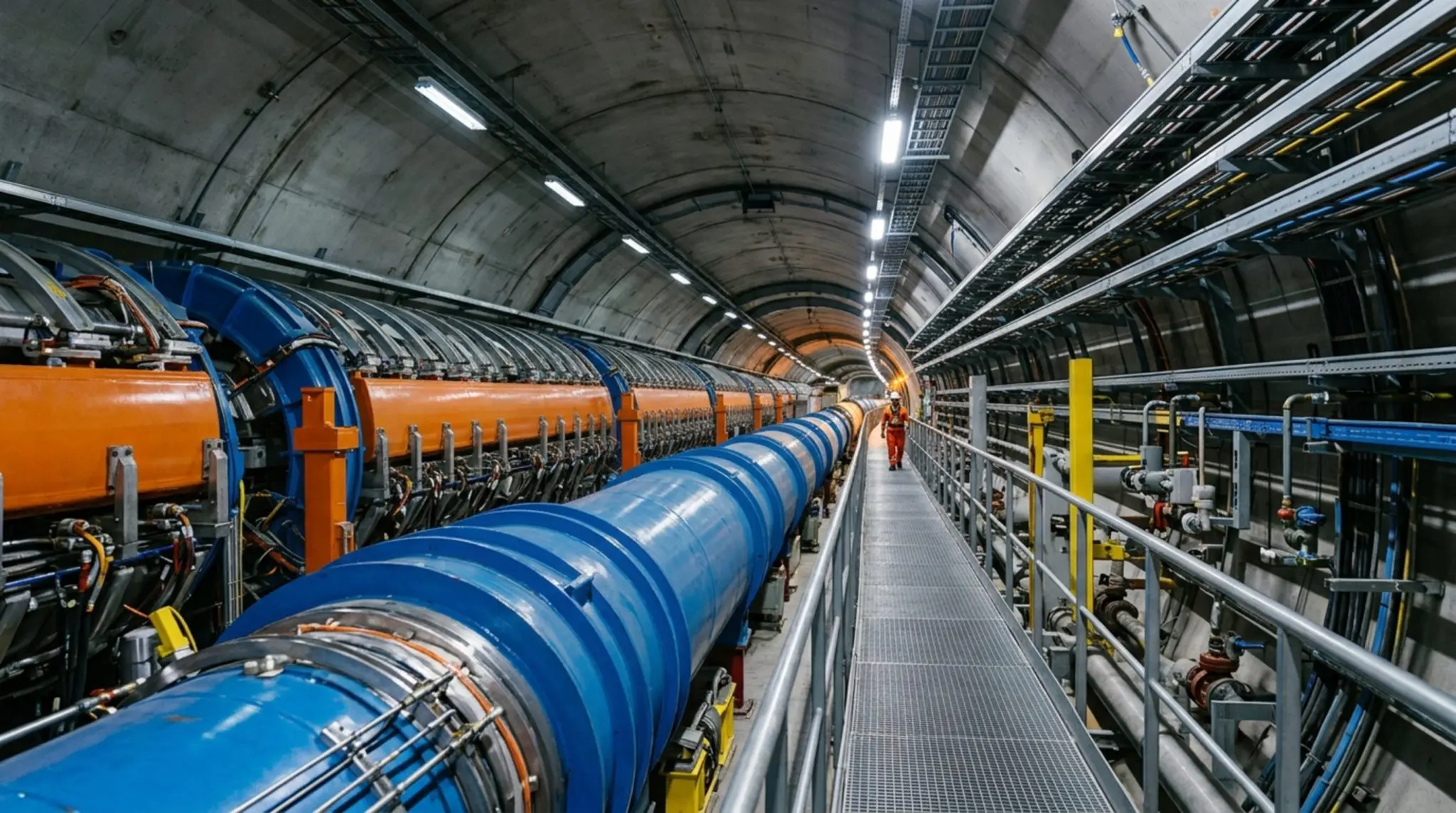
Over 80 researchers applied for funding, and nine doctoral students will receive dedicated research time thanks to a new program funded by the CMS Collaboration’s $1 million share of the 2025 Breakthrough Prize in Fundamental Physics, the company says. The CMS Breakthrough Prize PhD Awards will fund assignments, recognizing exceptional promise in early-career scientists. “The Breakthrough Prize recognized the work of thousands of CMS members,” said CMS Spokesperson Anadi Canepa, “That collective achievement now gives us the opportunity to invest in the future.”
CMS Breakthrough Prize Funds Doctoral Research at CERN
The CMS Collaboration is directly supporting early-career research with dedicated assignments for ten doctoral students selected through a new award scheme. Recipients, chosen from over 80 applicants worldwide, will pursue research topics of their own design while working within the CMS experiment, according to Breakthrough Prize. This initiative extends beyond simply providing funding; the inaugural cohort will actively contribute to shaping the program’s future direction.
Their feedback will be instrumental in refining subsequent calls for applications and ensuring the awards continue to meet the evolving needs of doctoral researchers. The selected students represent a diverse range of institutions, including Isfahan University of Technology.
The selection process highlighted the high caliber of applicants, making the final decision particularly challenging for the committee. “The overall level was extremely high, with many very interesting projects,” said Lucia Silvestris, Chair of the Selection Committee and Chair of the CMS Engagement Office, “The recipients stood out across the wide range of important topics we work on in CMS.” Students from institutions including the University of, University, are among those receiving the awards, reflecting a global commitment to particle physics research.
The awards are administered through the & Society Foundation, facilitating the logistical and financial support needed for the students’ research assignments. “The heart of the CMS Collaboration is our people from different countries and institutions working as one,” said Sridhara Dasu, Chair of the CMS Collaboration Board, “The time spent by the winning students, diving deep into technical challenges at the detector alongside experienced colleagues, truly shapes their path.” Anadi Canepa, CMS Spokesperson, emphasized the long-term impact of this investment.
The Breakthrough Prize recognised the work of thousands of CMS members. That collective achievement now gives us the opportunity to invest in the future, by supporting the next generation of CMS researchers and helping them develop the talent, expertise, and leadership that will carry CMS into the HL-LHC era.
Anadi Canepa, CMS Spokesperson

See today’s quantum computing news on Quantum Zeitgeist for the latest breakthroughs in qubits, hardware, algorithms, and industry deals.