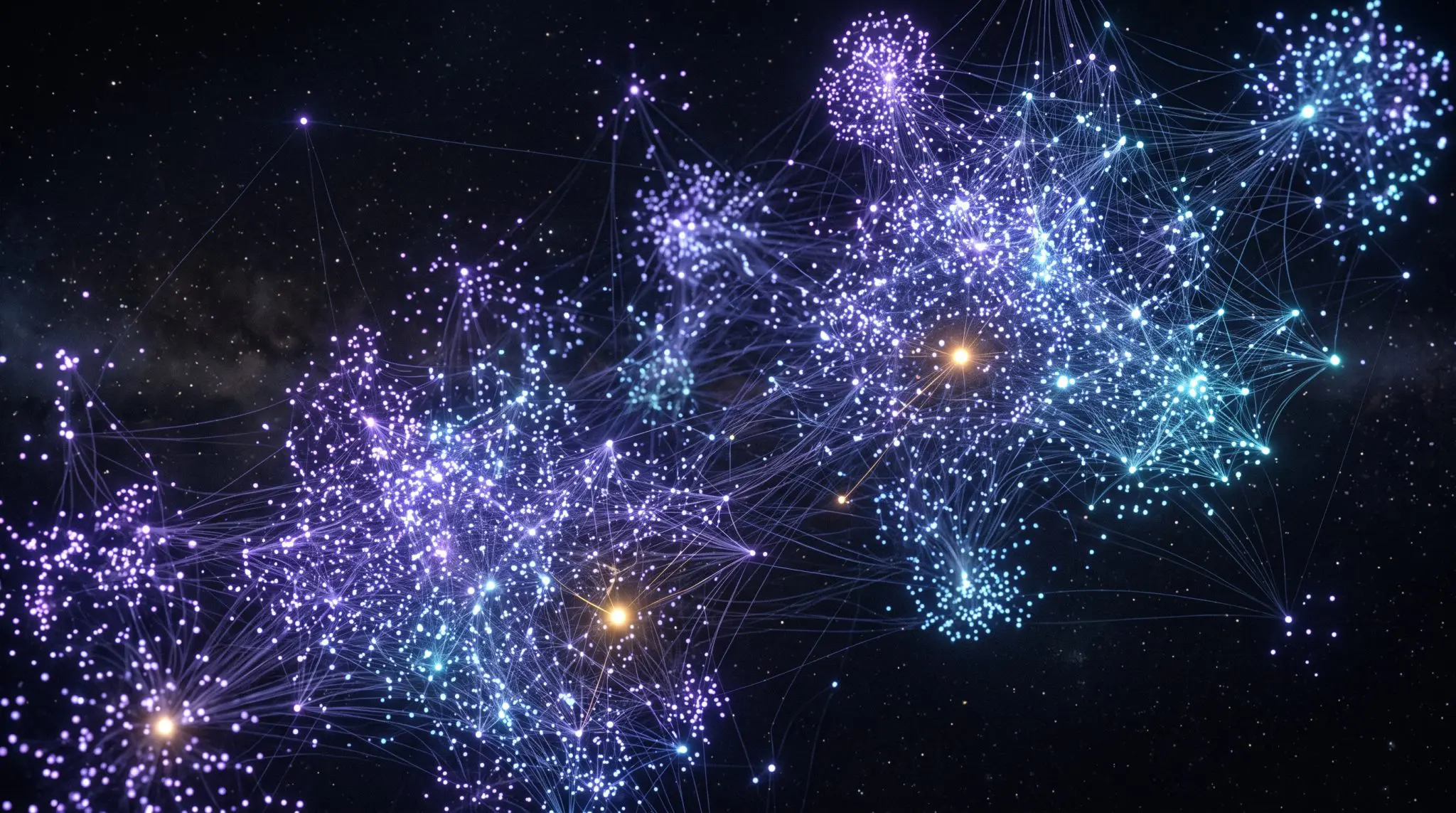
Gian Luca Spitzer of Université de Bordeaux and Ion Nechita of Université de Toulouse have developed a new method for constructing and analyzing quantum graphs. The researchers constructed quantum graphs parameterized by triples of matrices, allowing for a decomposition of quantum graph structure into classical and purely quantum components.
This approach yields the first parametric family of quantum graphs for which standard graph parameters, including the number of connected components, chromatic number, independence number and clique number, can be computed analytically. This work builds upon a theory initially introduced by Duan, Severini and Winter to describe zero-error behavior of quantum channels.
Parametric Quantum Graphs from Classical Matrix Groups
Matrices An and C define a classical weighted graph, while matrix B contributes solely quantum characteristics, lacking a classical analogue. This decomposition provides a new lens through which to analyze quantum graph behavior. Previously, obtaining exact formulas for these measures proved challenging, limiting detailed analysis of quantum graph properties. The researchers’ method circumvents this difficulty, offering a pathway to precise calculations and deeper insights. The parametric family of quantum graphs generated by this method offers a testbed for exploring quantum phenomena and validating theoretical predictions.
The results demonstrate a systematic way to build quantum graphs with predictable properties, furthering the development of quantum graph theory as a distinct area of study. This approach not only advances theoretical understanding but also provides tools for designing and analyzing quantum systems with specific characteristics.
See today’s quantum computing news on Quantum Zeitgeist for the latest breakthroughs in qubits, hardware, algorithms, and industry deals.