
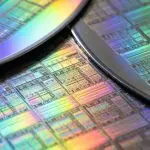
SEEQC will utilize 300mm silicon wafers to fabricate superconducting qubits as part of a four-year research and development program, the company announced; this represents a significant step toward industrial-scale quantum chip production, moving beyond smaller research-focused wafer sizes. The project, funded through the U. S. CHIPS Act and operating under the NORDTECH hub, directly supports Department of Defense objectives by focusing on materials like tantalum and tantalum nitride to enhance qubit coherence. Collaborating with partners including Cornell University, Princeton University, and the Air Force Research Laboratory, SEEQC aims to establish scalable manufacturing processes within the United States. “Industrial-scale quantum fabrication requires both materials innovation and reliable evaluation infrastructure,” said Dr. Oleg Mukhanov, Chief Scientific Officer of SEEQC, emphasizing the program’s goal to transition experimentation into repeatable, scalable production.
SEEQC Participation in NORDTECH Quantum R&D Program
SEEQC is participating in a four-year research and development program, NORDTECH, backed by the U. S. CHIPS Act, with a focus on scaling quantum chip fabrication using 300mm silicon wafers, a significant departure from the smaller substrates typically used in quantum research. This move towards larger wafers, a key component of the Microelectronics Commons Northeast Regional Defense Technology Hub, signals a deliberate effort to move beyond proof-of-concept experiments and establish a foundation for industrial-scale quantum manufacturing within the United States. The NORDTECH hub, collaborating with partners across New York State and the country, aims to bolster domestic capabilities in critical areas supporting Department of Defense objectives, while simultaneously addressing the need for a skilled quantum workforce.
SEEQC’s involvement as a subcontractor to NY CREATES positions the company alongside academic institutions like Cornell University, NYU, and Princeton University, as well as industry leaders such as Quantum Circuits / D-Wave, and the Air Force Research Laboratory. A central tenet of the NORDTECH program is targeted materials science, specifically focusing on tantalum and tantalum nitride to enhance qubit coherence, the duration for which a qubit maintains its quantum state, rather than pursuing broad materials exploration. SEEQC’s contributions extend beyond materials research to include the development of a high-throughput cryogenic qubit evaluation platform, designed to provide rapid performance feedback to fabrication teams and accelerate the iterative design process. The company is developing a quantum Process Design Kit within the Cadence EDA ecosystem, aiming to standardize chip design and facilitate compatibility with SEEQC’s digital superconducting control architecture.
This collaborative effort is not solely focused on technological advancement; workforce development is also a key priority, with educational content and internship opportunities planned across participating institutions. John Levy, CEO of SEEQC, highlighted the broader strategic importance of initiatives like NORDTECH, stating, “The U.S. Microelectronics Commons hubs, like NORDTECH, are foundational to building resilient U.S. semiconductor and quantum supply chains.” Scaled, standardized quantum chip processing is anticipated to not only accelerate research timelines but also improve the consistency of fabrication and strengthen the nation’s manufacturing base, positioning the U. S. as a leader in the rapidly evolving field of quantum computing.
SEEQC is proud to contribute our expertise in digital superconducting technology to a national effort aimed at accelerating quantum innovation.
John Levy, CEO of SEEQC



See today’s quantum computing news on Quantum Zeitgeist for the latest breakthroughs in qubits, hardware, algorithms, and industry deals.