Quantum computing has long been the subject of speculative headlines, but the latest partnership between German developer QUDORA Technologies and Taiwanese distributor Kensho 賢昇科技 signals a tangible shift. By marrying QUDORA’s trapped‑ion platform with Kensho’s deep ties to Taiwan’s precision‑manufacturing sector, the alliance promises to bring quantum‑enhanced tools into laboratories, factories and corporate data centres across Asia‑Pacific. The move is not merely a commercial venture; it is a strategic pivot that could reshape the region’s semiconductor supply chain and accelerate the convergence of quantum physics and artificial intelligence.
From Trapped Ions to Tangible Impact
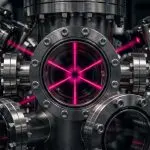
QUDORA’s flagship technology, Near‑Field Quantum Control (NFQC), relies on ions confined in electromagnetic traps and manipulated with finely tuned laser pulses. Unlike superconducting circuits that require millikelvin temperatures, trapped‑ion systems can operate at room temperature, reducing infrastructure costs and simplifying integration with existing industrial equipment. NFQC’s key innovation is a compact, scalable architecture that permits dozens of ions to be entangled in a single chip‑scale module, enabling the construction of fault‑tolerant quantum processors that can run complex algorithms in minutes rather than days.
In practical terms, this means that a semiconductor design team could use a QUDORA system to simulate quantum‑behaviour of novel materials, identifying defects or optimal doping levels before a single wafer is etched. A pharmaceutical firm might run a quantum‑accelerated optimisation routine to discover new drug candidates that fit a specific binding profile. Because the NFQC platform is engineered for compatibility with standard cloud‑based workflows, organisations can offload heavy computation to QUDORA’s servers while maintaining full control over data privacy.
Taiwan’s Manufacturing Ecosystem as a Quantum Launchpad
Taiwan sits at the heart of the global semiconductor value chain, housing the world’s most advanced lithography fabs and a dense network of foundries, equipment suppliers and research institutions. Kensho, a long‑time distributor of high‑precision semiconductor tools, brings unparalleled knowledge of this ecosystem. By acting as QUDORA’s local distribution partner, Kensho can accelerate the deployment of quantum systems across universities, national laboratories and private companies.
The partnership will leverage Kensho’s established supply‑chain relationships to ensure rapid installation and maintenance of QUDORA’s hardware. It will also enable joint training programmes, allowing Taiwanese engineers to acquire hands‑on experience with trapped‑ion technology. Early adopters are already visible: a leading university in Taipei has signed up for a QUDORA cloud licence, while a chip‑design house in Taichung is piloting quantum‑accelerated optimisation for its next‑generation memory array. These pilots demonstrate that quantum computing can be woven into the fabric of Taiwan’s high‑tech industry without disrupting existing workflows.
Moreover, the collaboration dovetails with Taiwan’s national strategy to foster a “Quantum‑AI” ecosystem. By providing a ready‑made quantum platform, QUDORA and Kensho give semiconductor firms a foothold in quantum‑enabled materials science. The resulting discoveries,such as new high‑mobility two‑dimensional semiconductors or ultra‑stable superconducting layers,could preserve Taiwan’s leadership in the global supply chain.
Strategic Momentum for the Asia‑Pacific Quantum Landscape
QUDORA’s entry into the Asia‑Pacific market complements its established presence in Europe, where the company has already secured contracts with major industrial customers. The partnership with Kensho unlocks a vast new customer base and positions QUDORA at the centre of a rapidly growing quantum‑AI cluster. The synergy is evident from the buzz generated at SEMICON Taiwan 2025, where QUDORA’s NFQC booth attracted the attention of semiconductor executives and policy makers alike. Media coverage highlighted how quantum computing could reduce design cycles, lower energy consumption and unlock new product categories.
The alliance also offers a template for cross‑border collaboration. By combining a European‑origin quantum platform with a Taiwanese distribution network, the partnership reduces time‑to‑market for quantum solutions across the region. It signals to investors that quantum technology is moving from research labs into production‑grade applications, potentially attracting new capital into the sector.
For governments, the partnership underscores the strategic importance of quantum readiness. Taiwan’s Ministry of Science and Technology has already earmarked funding for quantum‑AI research, and the presence of a proven hardware partner could accelerate the country’s roadmap to becoming a global quantum hub. In turn, the broader Asia‑Pacific region,home to major chip manufacturers and AI start‑ups,stands to benefit from a robust quantum infrastructure that can drive innovation across multiple industries.
In conclusion, the QUDORA‑Kensho partnership represents more than a commercial deal; it is a catalyst that could transform how semiconductor firms and research institutions harness quantum power. By bringing trapped‑ion technology to Taiwan’s world‑class manufacturing ecosystem, the alliance offers a practical pathway to quantum‑enhanced design, materials discovery and AI optimisation. As the region races to secure its place in the next wave of digital innovation, such collaborations will likely become the norm, turning quantum dreams into everyday tools that power the next generation of technology.
Technically, the ability of trapped-ion systems to achieve long coherence times is a significant differentiator. Because the qubits, which are the quantized energy levels of individual atoms, are isolated and protected from environmental decoherence by the vacuum and electromagnetic traps, they maintain their quantum state much longer than many solid-state qubits. This extended coherence time allows the execution of much deeper quantum circuits, which is crucial for implementing the complex sequences required by algorithms like Shor’s algorithm, thereby increasing the fidelity and reliability of computed results.
However, the industry remains within the Noisy Intermediate-Scale Quantum (NISQ) era, meaning current processors are susceptible to environmental noise and operational errors. QUDORA’s NFQC approach directly addresses this through modularity and the potential for Quantum Error Correction (QEC) codes. By designing the system architecture with fault-tolerance in mind, the company is enabling the implementation of physical qubits into logical qubits, a necessary step toward building machines that can reliably execute algorithms beyond the current limitations of physical gate operations.
Furthermore, the physical connectivity inherent to trapped-ion architectures is highly advantageous. Unlike superconducting chips where qubit connections are fixed by the underlying wiring grid, trapped ions allow for highly flexible reconfiguration of qubit interactions. This enables dense, all-to-all connectivity across the ion chain, maximizing the parameter space available for simulation and optimization routines and simplifying the integration of diverse quantum computational tasks into a single, cohesive workflow.



See today’s quantum computing news on Quantum Zeitgeist for the latest breakthroughs in qubits, hardware, algorithms, and industry deals.