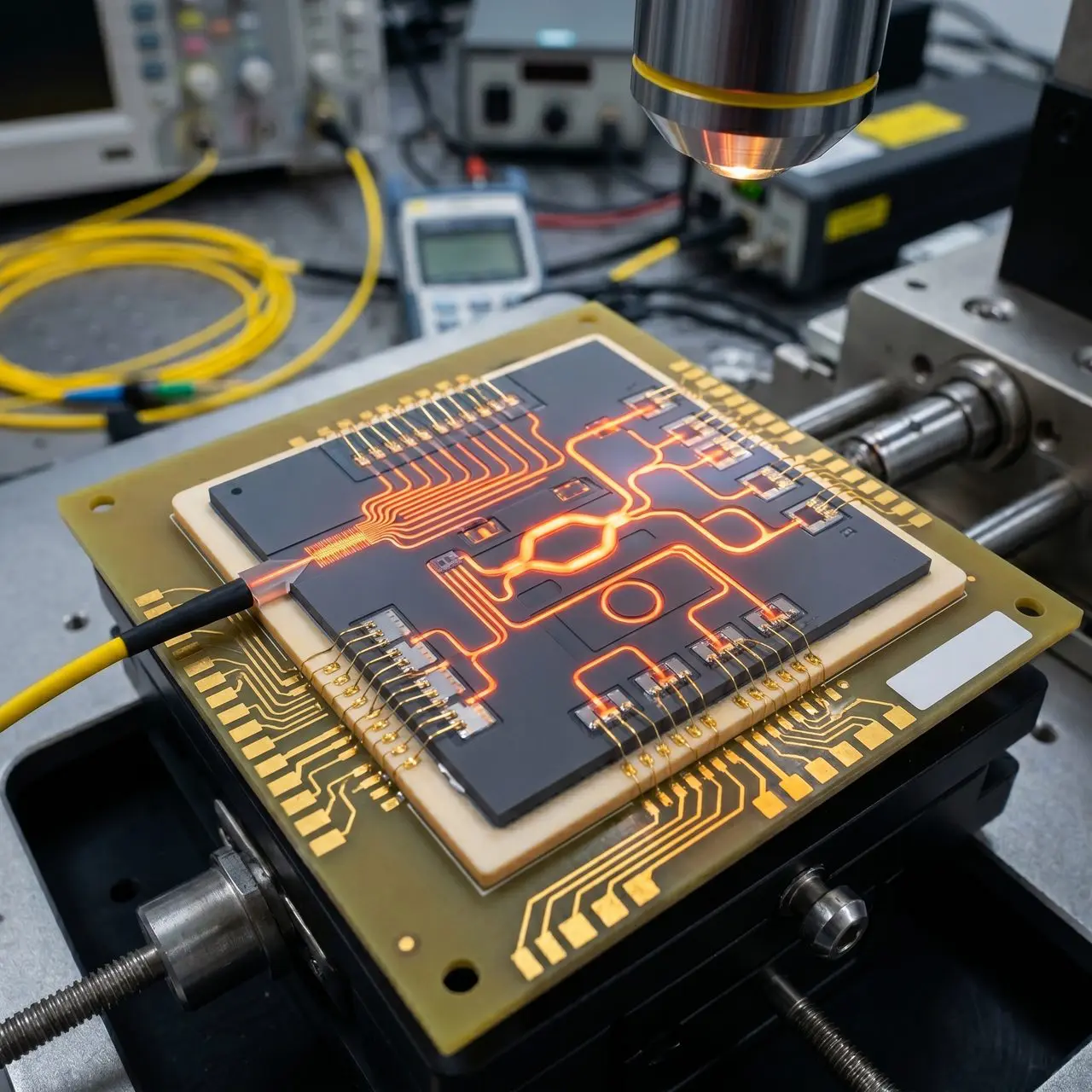
Researchers will compete for a share of £750,000 through the C-PIC Future Leaders programme, an initiative designed to accelerate development of open-access, quantum-ready photonics platforms. The programme will host an intensive three-day “sandpit” from January 12-14, 2027, at De Vere Horsley Estate, the former home of Ada Lovelace, bringing together experts from quantum science, photonics, and bioengineering.
“Future quantum technologies won’t be built by one discipline alone,” says Ruth Churchill, Impact Manager at CORNERSTONE. This collaboration, supported by the Integrated Quantum Networks and Quantum Biomedical Sensing hubs, aims to strengthen the UK’s capacity for quantum innovation.
£750,000 Funding Available for Silicon Photonics Platform Development
Applications opened on the twenty-first of September for £750,000 in funding earmarked for early and mid-career researchers developing solutions in quantum silicon photonics, a critical area for scaling technologies. The funding, distributed through the C-PIC Future Leaders programme, will support teams selected following an intensive three-day “sandpit” event designed to foster interdisciplinary collaboration and accelerate innovation. Successful applicants will pitch research ideas with the potential to unlock open-access, quantum-ready photonics platforms for the UK research community, addressing a key need for standardized infrastructure in the growing quantum field.
Participants will represent diverse fields including quantum science, photonics, bioengineering, and sensing, reflecting the programme’s emphasis on cross-disciplinary problem-solving. Teams, led by emerging research leaders, will receive mentorship from experienced facilitators at Knowinnovation and expert guidance to refine their proposals into commercially viable concepts.
The programme’s structure aims to move beyond purely academic exploration, pushing participants to consider real-world applications and industry needs, CORNERSTONE says. This collaboration ensures that funded projects align with broader national priorities and address challenges relevant to both fundamental research and practical implementation. Shortlisted teams will have the opportunity to develop full proposals requesting up to £250,000 from the C-PIC Innovation Fund panel, providing a clear pathway from initial concept to substantial financial support. Beyond funding, all applicants will become part of the C-PIC Innovation Fund Community, fostering ongoing networking, collaboration, and knowledge exchange.
Ruth Churchill, Impact Manager at CORNERSTONE, emphasized the necessity of interdisciplinary approaches to advancing quantum technologies, according to the company. “Developing new silicon photonics platforms will be critical to scaling the technology, but defining those platforms requires expertise spanning quantum science, photonic integration, materials engineering, biology, and real-world applications.” Churchill further stressed the importance of industry involvement, stating, “Industry has set the challenge; we’ve got the support, now we need the people.” Eligibility for the programme extends beyond traditional academic researchers to include technicians, industry professionals, clinicians, and policy stakeholders, broadening the scope of potential applicants and encouraging diverse perspectives.
Teams are expected to collaborate across at least two disciplinary boundaries, involving a minimum of two research organizations and a member of the C-PIC technical team, ensuring a robust and multifaceted approach to problem-solving. Success will hinge on integrating silicon photonics with knowledge from multiple disciplines while addressing tangible challenges and opportunities identified by industry partners. The programme specifically targets emerging research leaders, typically at the Affiliate or Associate Professor level, though established leaders are encouraged to participate as co-investigators or mentors.
The selection process will prioritize applicants based on research area, role type, and other characteristics outlined in the application, with a deliberate effort to achieve a balanced range of disciplinary experience and expertise. To support applicants in building connections and developing collaborative skills, CORNERSTONE will host a series of online webinars and networking sessions between September and November.
These preparatory events aim to facilitate team formation and ensure participants are well-prepared for the intensive sandpit experience, the firm reports. Key dates include the opening of expressions of interest on the twenty-first of September, a webinar on the eighth of October, an application deadline for a scoping meeting on the twenty-first of October, and the scoping meeting itself on the eleventh of November at the Wellcome Collection in London.
Professor Callum Littlejohns, Deputy Director at CORNERSTONE, highlighted the institute’s commitment to investing in research talent at all career stages, the company states. “Through the C-PIC Innovation Fund and the Future Worlds Silicon Photonics Cohort, we have already invested more than £500,000 in grants to accelerate industry-relevant research and support the growth of innovative silicon photonics start-ups.
Now, with the C-PIC Future Leaders programme, we’re giving researchers a clear pathway to the dedicated funding they need to apply silicon photonics to specific challenges in scaling quantum technologies.” Researchers interested in participating can submit an expression of interest and find complete programme details at https://apply. knowinnovation. com/c-pic/.
Silicon photonics only advances as fast as the people driving it forward, which is why CORNERSTONE is proud to invest in research talent at every stage. Through the C-PIC Innovation Fund and the Future Worlds Silicon Photonics Cohort, we have already invested more than £500,000 in grants to accelerate industry-relevant research and support the growth of innovative silicon photonics start-ups.
Professor Callum Littlejohns, Deputy Director at CORNERSTONE



See today’s quantum computing news on Quantum Zeitgeist for the latest breakthroughs in qubits, hardware, algorithms, and industry deals.