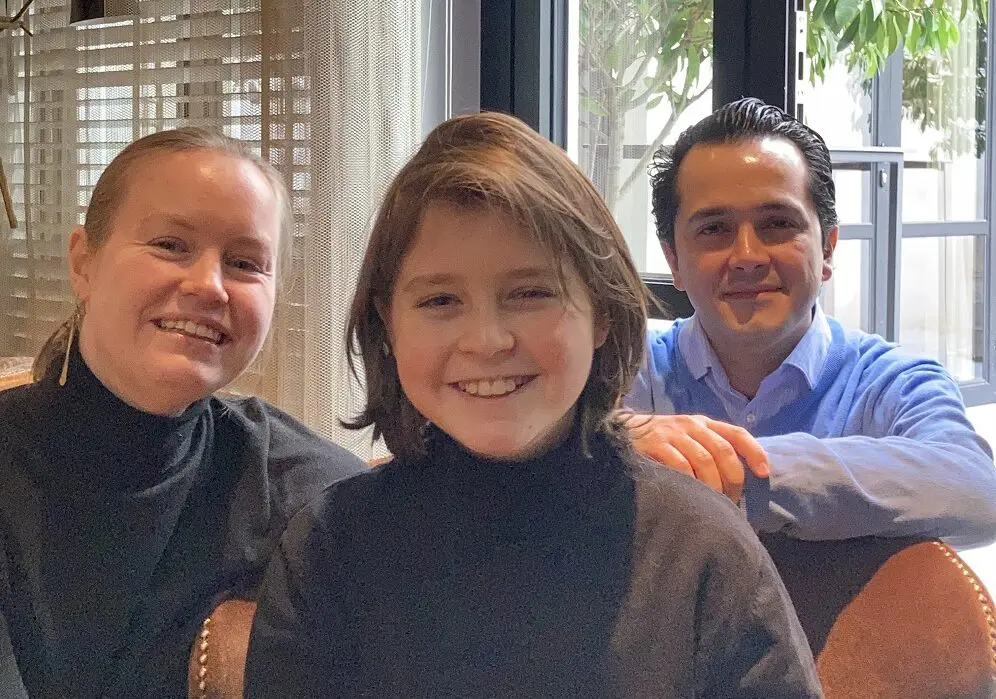
Fifteen-year-old Laurent Simons has officially earned a doctoral degree in quantum physics from the University of Antwerp. Simons successfully defended his thesis on Monday, following a trajectory that included completing a bachelor’s degree in physics in 18 months at the same institution, having graduated from high school at age eight. His master’s research explored the analogy between boson states and black holes, specifically studying Bose–Einstein condensates at ultra-cold temperatures. This achievement marks a significant milestone in Simons’ ambition to extend life expectancy and ultimately apply his expertise in physics, chemistry, medicine, and artificial intelligence to benefit medical science.
Laurent Simons’ Rapid Academic Achievements
Laurent Simons officially became a doctor in quantum physics at the age of 15, successfully defending his doctoral thesis at the University of Antwerp. This achievement follows a remarkably rapid academic trajectory, beginning with high school graduation at age eight and a bachelor’s degree in physics completed in just 18 months at age 12. He is believed by VTM to potentially be the youngest person ever to obtain a PhD, marking a new peak in a journey that has captivated the scientific world for years.
Simons’ earlier work demonstrates a clear focus on interdisciplinary research. At age nine, he briefly studied electrical engineering before shifting to physics. His master’s research explored the connection between boson states and black holes, specifically examining Bose–Einstein condensates at ultra-cold temperatures. Even at 12, he expressed a goal to “extend life expectancy,” signaling an ambition to apply his scientific knowledge to medicine and ultimately pursue biological immortality.
Currently, Simons is not stopping with his first doctorate. Immediately after his PhD defence, he traveled to Munich to begin a second doctoral programme, this time in medical science with a focus on artificial intelligence. According to his father, this new program is separate from his work in physics, demonstrating a continued drive to integrate multiple fields – physics, chemistry, medicine, and AI – into his research goals.
Focus on Interdisciplinary Research & Future Goals
Laurent Simons, at 15, has completed his doctorate in quantum physics and is already pursuing further study. Immediately following his PhD defense, he traveled to Munich to begin a second doctoral program, this time in medical science with a focus on artificial intelligence. This demonstrates his commitment to an interdisciplinary approach, combining physics with medicine and AI, a focus that dates back years and previously included a brief enrollment in electrical engineering. His father confirmed this second program is separate from his work in physics.
After this, I’ll start working towards my goal: creating ‘super-humans’.
Laurent Simons
Simons’ long-term goal is ambitious: creating “super-humans,” driven by a desire to “extend life expectancy” and ultimately achieve biological immortality. His research journey reflects this, beginning with physics and expanding to integrate chemistry and artificial intelligence. Even during his bachelor’s degree, completed in 18 months at age 12, he was focused on applying scientific principles to medicine. This commitment shaped decisions regarding support from tech companies, prioritizing medical benefits.
The study of Bose–Einstein condensates (BECs) touches upon fundamental aspects of quantum mechanics, representing a state of matter where a majority of bosons occupy the lowest quantum mechanical state. These ultracold atomic gases exhibit superfluidity, behaving as a single quantum entity described by a macroscopic wave function. Researchers use BECs as highly controllable quantum systems to model complex phenomena, such as the dynamics of atomic collisions or the behavior of fields near event horizons, providing vital experimental data for theoretical physics that cannot be observed otherwise.
In the context of medicine, leveraging quantum computing promises to revolutionize molecular simulation, an endeavor currently limited by the exponential complexity of classical computers. By harnessing quantum effects, physicists can accurately model the electron behavior within complex biological molecules, such as proteins or viral capsids. This capability allows for in silico drug design, enabling the prediction of chemical reactions and drug-target binding affinities with unprecedented precision, accelerating the development of novel therapies.
The integration of artificial intelligence into this highly specialized field introduces powerful tools for pattern recognition within massive, multi-modal biological datasets. AI algorithms are crucial for deciphering correlations between genetic markers, imaging data, and treatment outcomes. By systematically processing these diverse inputs, the combined framework of quantum physics, chemistry, and AI aims not merely to treat symptoms, but to model and preemptively correct the fundamental biological mechanisms underlying chronic or degenerative diseases.
His master’s research explored the connection between boson states and black holes, specifically studying Bose–Einstein condensates at ultra-cold temperatures, and included an internship in quantum optics at the Max Planck Institute. This work highlights an early focus on how physics could intersect with the medical field. Simons’ trajectory demonstrates a consistent, long-held ambition to merge disciplines for advancements in medicine and longevity.
Source: https://www.brusselstimes.com/1846332/belgiums-15-year-old-prodigy-earns-phd-in-quantum-physics



See today’s quantum computing news on Quantum Zeitgeist for the latest breakthroughs in qubits, hardware, algorithms, and industry deals.