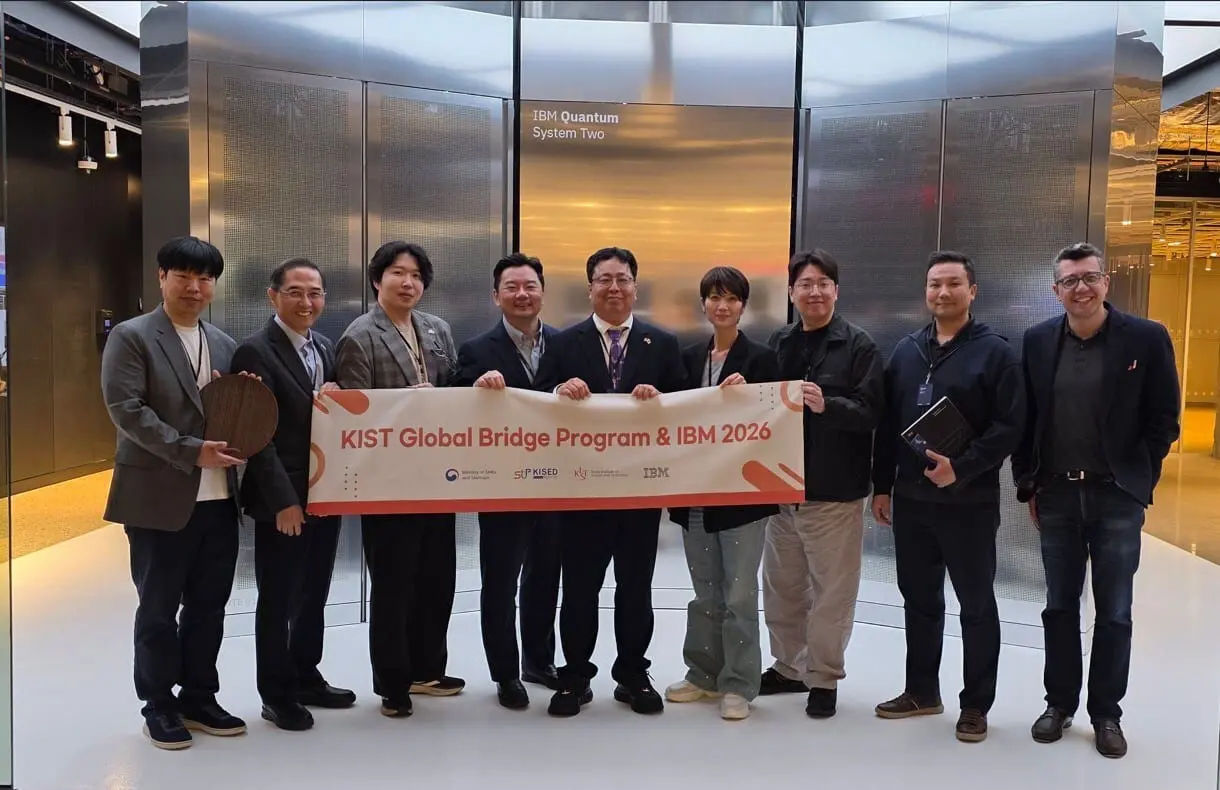
A Korean quantum delegation led by the Korea Institute of Science and Technology (KIST) is forging direct technical links with IBM researchers at the company’s Thomas J. Watson Research Center in New York. The initiative, funded through the Ministry of SMEs and Startups’ “Deeptech Incubator Project for Startups (DIPS)” program, centers on accelerating the global commercialization of five South Korean quantum startups. KIST utilized its “Global Bridge Program,” specifically developed in collaboration with IBM, to facilitate these exchanges, allowing participants to explore joint research and potential proof-of-concept projects. “This visit to the IBM Watson Research Center is a pivotal milestone that enables Korean startups to align directly with the frontiers of global innovation,” said SunJoon Kang, Program Director at KIST, emphasizing a commitment to transitioning quantum technology from research to the global marketplace.
KIST Global Bridge Program Facilitates US-Korea Quantum Tech Exchange
This program represents a sustained partnership designed to move quantum technologies beyond research and into practical applications. Participants engaged in sessions with IBM researchers, specifically focusing on IBM’s “Quantum System Two” architecture and operational framework. George Tulevski, Program Director at IBM Research Think Lab led a strategic technology exchange, discussing the evolving global quantum ecosystem and pathways to industrial commercialization. The delegation included QUAD, specializing in superconducting nanowire single-photon detector technology; OptiQ-Labs developing laser-based optical modules; SLEEX, combining Quantum LiDAR with electric field sensing; Elixir, focused on quantum-classical hybrid algorithms for data analysis; and SQK (QMEDIC), which develops physics-constrained medical imaging AI. A representative from the DIPS initiative stated, “We are committed to forging strategic alliances that will accelerate the transition of quantum technology to the global marketplace.” This collaboration will extend to the “IBM Quantum Connect APAC: Seoul” event on May 19, further solidifying connections within the global quantum ecosystem.
Quantum Startup Focus: SNSPDs, LiDAR, and Hybrid Algorithms
South Korea’s growing quantum industry is actively pursuing commercialization pathways, as demonstrated by a recent delegation visit to IBM’s Thomas J. The program’s design allows for direct interaction between startup founders and IBM researchers, identifying potential partnerships and accelerating technology transfer. Five quantum startups comprised the delegation, each addressing distinct challenges within the field. QUAD specializes in superconducting nanowire single-photon detector (SNSPD) technology, crucial for secure quantum communication and advanced sensing applications. OptiQ-Labs tackles scalability issues in ion-trap quantum computers through the development of compact optical modules, while SLEEX is pioneering a novel approach to underwater navigation by integrating quantum LiDAR with electric field sensing, aiming to eliminate blind zones within the critical 0 to 2 meter range. Elixir is developing StatUpAI, a platform utilizing quantum-classical hybrid algorithms for complex data analysis, with a specific focus on accelerating medical clinical trials. SQK (QMEDIC) addresses a critical limitation of conventional AI in medical imaging, hallucinations, by incorporating physics-based constraints into its reconstruction algorithms, promising more reliable diagnostics.
This visit to the IBM Watson Research Center is a pivotal milestone that enables Korean startups to align directly with the frontiers of global innovation.
IBM Quantum System Two Architecture & Commercialization Pathways
The architecture of IBM’s Quantum System Two took center stage during a recent visit by a Korean quantum delegation to the IBM Thomas J. Watson Research Center. The visit to the Watson Research Center in New York revealed a focused effort to translate theoretical advances into viable commercial applications. This wasn’t a cursory overview; the session delved into the practicalities of building and operating a modular quantum processor, a critical step toward scaling quantum computing beyond the experimental phase. Facilitated by KIST’s “Global Bridge Program, developed in collaboration with IBM,” the visit underscores a pre-existing, formalized partnership designed to accelerate the commercialization of South Korean quantum technologies. These continued engagements are expected to strengthen connections and enable future joint research and commercialization opportunities, positioning South Korean startups within the evolving global quantum ecosystem and solidifying the KIST Global Bridge Program as a catalyst for industry expansion.
This visit to the IBM Watson Research Center is a pivotal milestone that enables Korean startups to align directly with the frontiers of global innovation.




See today’s quantum computing news on Quantum Zeitgeist for the latest breakthroughs in qubits, hardware, algorithms, and industry deals.