Inspira Technologies is seeking shareholder approval to rebrand as QTREX Ltd., signaling a full pivot toward addressing a key obstacle in scaling quantum computing: connectivity within dilution cryostats. The company intends to apply its additive manufactured electronics (AME) technology, developed with over 200 million in prior investment, to overcome limitations in interconnect density, thermal load, and signal noise that hinder qubit stability. This move targets a quantum computing market projected to reach 72 billion by 2035, according to McKinsey. “As a co-founder of Nano Dimension and a co-inventor and developer of the AME technology, I have an intimate knowledge of its capabilities,” said Dagi Ben-Noon, Chief Executive Officer of Inspira, adding, “We view this as a technological frontier well matched to the strengths of the AME platform.”
3D AME Architecture Targets Cryogenic Connectivity Bottlenecks
Over 200 million in prior investment supports Inspira Technologies’ move into quantum computing connectivity. The company, pending shareholder approval for a rebrand to QTREX Ltd., is directing its additive manufactured electronics (AME) platform toward a novel 3D architecture specifically designed to overcome limitations within dilution cryostats, the ultra-cold environments essential for operating many quantum processors. This venture is supported by a substantial financial commitment to AME development that predates the quantum computing push, indicating a strategic application of existing technology. The core challenge QTREX aims to address is interconnect density within dilution cryostats; as quantum systems scale up, the number of connections needed between qubits and control electronics creates significant engineering hurdles. “As quantum computing scales toward larger system architectures, one of the field’s most significant engineering bottlenecks lies in connectivity inside dilution cryostats,” the company stated.
Traditional wiring methods struggle to provide the necessary density without introducing excessive thermal load, electromagnetic crosstalk, and signal noise, all detrimental to qubit coherence and system fidelity. QTREX believes its AME technology, refined over years of research, offers a solution by enabling the creation of highly integrated, three-dimensional structures. This approach leverages specialized materials and precision additive manufacturing to minimize these issues, potentially accelerating the path toward fault-tolerant quantum computing. Proof-of-concept work has already demonstrated the platform’s compatibility with quantum materials and its ability to achieve the necessary micro-scale precision. The company explained, “We believe that this validation substantiates the platform’s material compatibility and micro-scale precision for quantum hardware applications.” With an experienced leadership team, QTREX believes it has the expertise needed to adapt AME for cryogenic connectivity in quantum computing. QTREX is actively pursuing collaborations with industry leaders, anticipating a future where its technology becomes an indispensable link in the global quantum computing value chain.
72 Billion Quantum Computing Market Drives Strategic Shift
The pursuit of stable qubits and scalable quantum systems is increasingly focused on overcoming physical limitations within the extremely cold environments required for operation. Engineers are grappling with how to densely interconnect qubits while minimizing signal degradation and heat transfer, a challenge that intensifies as systems grow in complexity. Inspira Technologies, pending shareholder approval for a rebrand to QTREX Ltd., is now directly addressing this bottleneck with a substantial investment in additive manufactured electronics (AME). More than 200 million has already been allocated to developing this technology, demonstrating a commitment that extends well beyond exploratory research. This strategic shift is a calculated response to a projected market valued at up to 72 billion by 2035, according to McKinsey’s 2025 Quantum Technology Monitor.
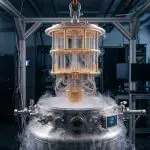
The core of QTREX’s approach centers on creating three-dimensional architectures designed for integration within dilution cryostats, the specialized refrigerators that maintain the near-absolute zero temperatures essential for qubit coherence. These structures aim to alleviate interconnect density issues, reduce thermal load, and minimize electromagnetic interference, all critical factors in maintaining qubit stability and fidelity. The company’s leadership, including CEO Dagi Ben-Noon and COO Avi Shabtay, both previously involved with Nano Dimension Ltd., believe their accumulated expertise is ideally suited to this task.
Quantum computing is expected to represent a market of up to 72 billion by 2035, according to McKinsey’s 2025 Quantum Technology Monitor.
McKinsey
Dagi Ben-Noon & Nano Dimension Expertise Fuel Expansion
Inspira, pending shareholder approval for a rebrand to QTREX Ltd., has invested over 200 million in developing the AME technology, suggesting a calculated expansion rather than a speculative venture. The company’s strategy centers on a novel 3D architecture designed to overcome interconnect density challenges, reduce thermal load, and minimize signal noise, critical factors as quantum systems scale up. Ben-Noon’s prior experience at Nano Dimension is proving invaluable, and Inspira is actively leveraging personnel from Nano Dimension, including key members of the research, development, operations, and finance teams, to ensure a seamless transition and capitalize on years of accumulated knowledge. This internal continuity is intended to accelerate development and deployment of quantum solutions. Inspira is focusing on cryogenic connectivity, a bottleneck already recognized by leading quantum teams, while also continuing to advance its existing medical technology portfolio, maintaining a dedicated operational focus on respiratory support and blood monitoring systems.
We believe we have the expertise needed to adapt AME for cryogenic connectivity in quantum computing.
Dagi Ben-Noon, Chief Executive Officer of Inspira
QTREX Ltd. Rebranding Reflects Quantum Focus
The shift by Inspira Technologies toward quantum computing is a strategic realignment underscored by a planned corporate name change to QTREX Ltd., pending shareholder approval. This rebranding signals a full commitment to addressing a fundamental challenge in scaling quantum processors: interconnectivity within dilution cryostats. These specialized cooling systems, essential for maintaining qubit coherence, are becoming bottlenecks as quantum systems grow in complexity, limiting the density of connections and introducing thermal and electromagnetic interference. This pre-existing financial commitment distinguishes the venture from purely speculative entries into the quantum field. The company intends to leverage AME’s capabilities in 3D design, specialized materials, and precision manufacturing to create highly integrated structures optimized for operation within the demanding environment of dilution cryostats. McKinsey projects the quantum computing market could reach up to $72 billion by 2035, a figure that fuels the drive to overcome these hardware limitations and enable the development of fault-tolerant quantum computers.
As a co-founder of Nano Dimension and a co-inventor and developer of the AME technology, I have an intimate knowledge of its capabilities.
Dagi Ben-Noon, Chief Executive Officer of Inspira



See today’s quantum computing news on Quantum Zeitgeist for the latest breakthroughs in qubits, hardware, algorithms, and industry deals.