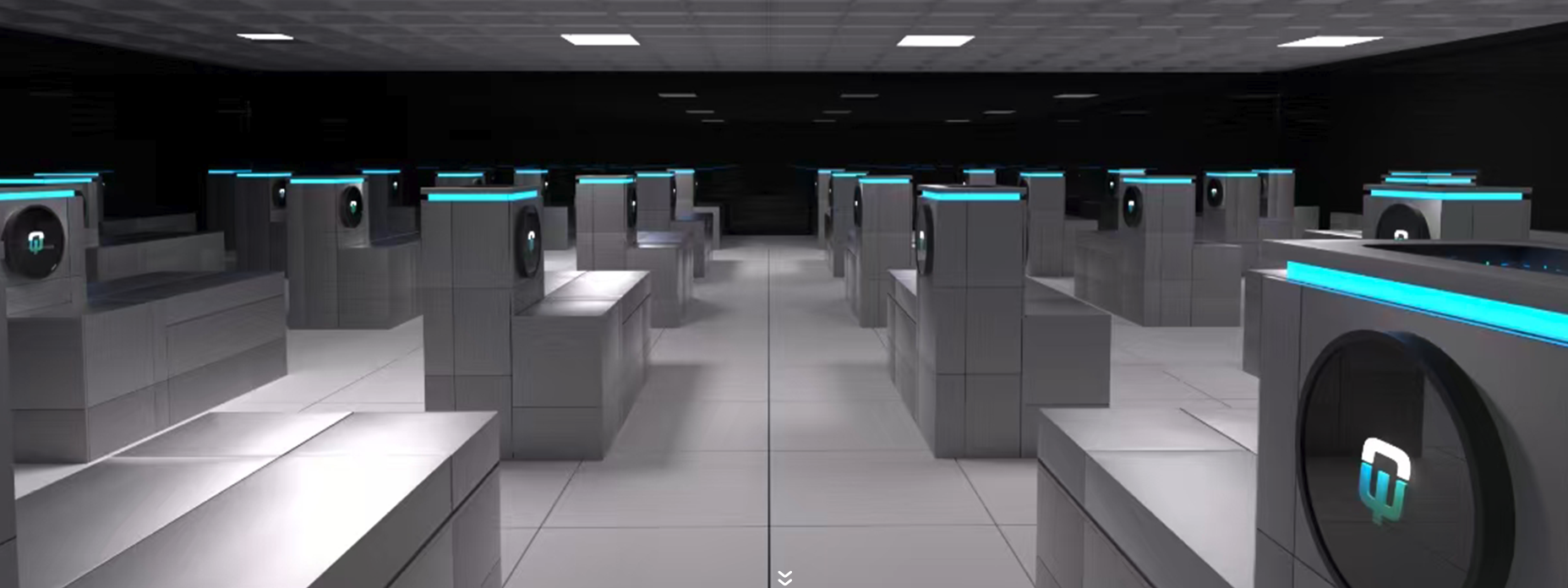
Chinese quantum technology startup QBoson has secured CNY1 billion (USD145 million) in Series B funding to accelerate the development and manufacturing of quantum computing hardware and software. Led by a consortium including Beijing Financial Holdings Group and ICBC Capital, the investment will fuel efforts to establish a pilot production line for quantum computing chips and expand operations at the company’s large-scale quantum computer factory in Shenzhen. Founded in 2020, QBoson focuses on photonic quantum computing and currently offers specialized computers with 100, 550, and 1,000 qubits, the fundamental units of quantum information. The company stated that the proceeds will be used to overcome key technological barriers to practical quantum computers, with applications targeted for fields ranging from drug discovery to financial modeling, aligning with China’s ambitious five-year plan for quantum technology development.
QBoson Secures CNY1 Billion Series B Funding
Led by Beijing Financial Holdings Group, ICBC Capital, and several other investment firms, this capital infusion will directly address critical technological hurdles preventing the widespread adoption of practical quantum computers. QBoson has already begun delivering its quantum computing solutions to key clients including the National Supercomputing Center in Chengdu and China Mobile Communications Group, aligning with China’s national strategy to prioritize quantum technology within its 15th Five-Year Plan (2026-2030). The plan outlines ambitious goals including the development of fault-tolerant universal quantum computers and scalable specialized systems, solidifying the importance of companies like QBoson in realizing these objectives.
1,000 Qubit Systems & AI-Driven Operational Stability
The development of 1,000-qubit systems marks a significant step in the pursuit of practical quantum computation, with QBoson among the first to deliver such specialized machines. These advancements focus on more than just increasing qubit count; maintaining operational stability is paramount, and the company has integrated artificial intelligence to address this challenge. Their next-generation system, unveiled at the 2026 ZGC Forum, boasts an AI-driven intelligent control system capable of sustaining stable operations for 7×16 hours, a crucial step toward reliable performance. This extended stability unlocks potential applications spanning diverse fields, including pharmaceutical innovation, materials science, and complex financial modeling. QBoson’s focus extends beyond hardware development to encompass a complete business ecosystem, merging quantum computing capabilities with artificial intelligence to accelerate discovery, and this momentum aligns with China’s 15th Five-Year Plan, which prioritizes the development of both scalable specialized quantum computers and integrated quantum communication networks, further solidifying the nation’s position in this rapidly evolving field.
Qubits are the basic units of information storage in quantum computers, and their number determines the maximum computational capacity of the machines.
QBoson
See today’s quantum computing news on Quantum Zeitgeist for the latest breakthroughs in qubits, hardware, algorithms, and industry deals.