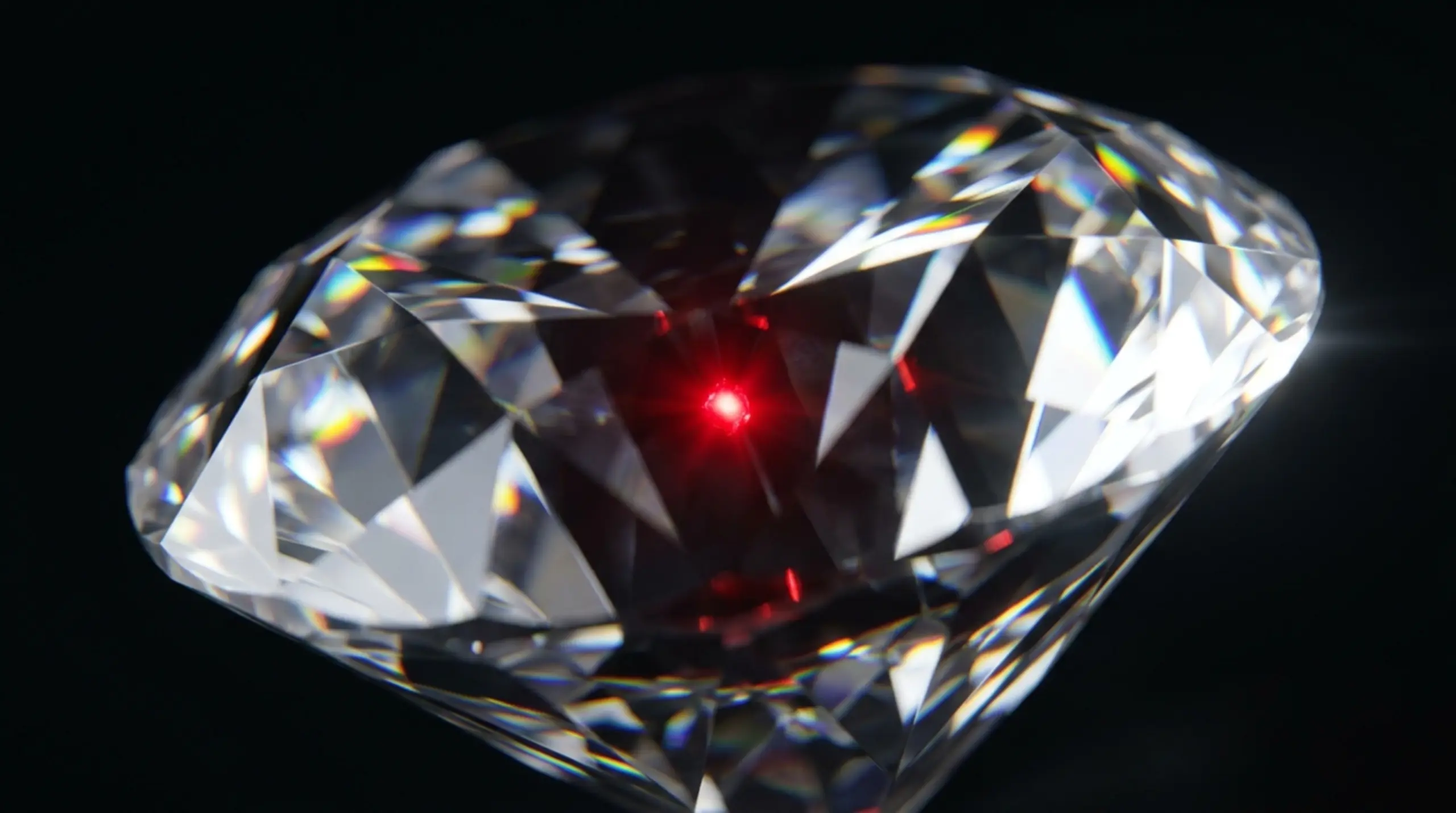
Researchers at Princeton University and the University of Iowa discovered a counterintuitive effect impacting nanoscale quantum sensors. The team observed approximately a four-fold reduction in coherence time for shallow nitrogen-vacancy (NV) centers in diamond when transitioning from ambient conditions to ultrahigh vacuum. This finding challenges the long-held assumption that surface contaminants are the primary cause of decoherence in these sensors. The work highlights a complex role for surface adsorbates in shaping the noise environment of shallow NV centers, with important implications for nanoscale quantum sensing.
Shallow Nitrogen-Vacancy Centers as Nanoscale Quantum Sensors
This counterintuitive result upends expectations that removing surface contaminants would improve the performance of these nanoscale quantum sensors, instead revealing a more complex interplay between the diamond surface and its environment. Researchers directly compared the behavior of individual NV centers in both environments, tracking their locations to ensure a one-to-one assessment of the surface’s impact on their quantum properties. The study tested a long-held assumption that surface adsorbates contribute significantly to decoherence in shallow NV centers by creating a stark contrast in surface conditions.
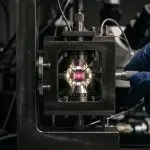
A custom-built UHV chamber facilitated in situ annealing of the diamond sample at 350 °C, effectively removing surface adsorbates and creating an exceptionally clean interface. This allowed for a direct examination of the NV centers’ behavior without the influence of these typically problematic surface contaminants, providing a unique opportunity to isolate the role of the vacuum-diamond interface.
The team’s approach focused on separating contributions from different noise sources to understand the underlying mechanisms limiting the sensors’ performance. Analysis of the Hahn echo measurements revealed that both electric and magnetic noise were enhanced in the UHV environment, despite the removal of potential contaminant-induced noise sources. In contrast, measurements reveal an increased DQ in UHV, indicating suppressed electric field noise in the ~ 100 MHz frequency regime.
These results point to a modification of the surface noise spectrum upon adsorbate removal, with different frequency regimes arising from distinct microscopic mechanisms. Specifically, the team found that the low frequency noise is consistent with increased surface charge in UHV that can be compensated by surface adsorbates in ambient conditions. This suggests that the adsorbates act as a buffer, mitigating the effects of surface charge fluctuations and stabilizing the NV centers’ quantum state.
The results point to a scenario where the removal of these adsorbates exposes underlying surface charges, leading to enhanced low-frequency noise and reduced coherence. This research demonstrates that the relationship between surface conditions and NV center coherence is far more complex than previously understood. The implications extend beyond fundamental research, potentially influencing the development of more sensitive and stable quantum sensors for a range of applications.
UHV Conditions Reveal Enhanced Electric and Magnetic Noise
The research team separated noise contributions using single-quantum (SQ) and double-quantum (DQ) bases, establishing that UHV conditions amplified both noise types. While overall coherence, as measured by the Hahn echo time T2, decreased by approximately four-fold in UHV, analysis of T1 measurements showed a more subtle picture. Specifically, the DQ T1, a measure of spin relaxation, increased in UHV, indicating a suppression of electric field noise at frequencies around 100 MHz.
Further analysis of the noise sources revealed that the ratio of SQ to DQ T2, a metric sensitive to the balance between electric and magnetic noise, increased in UHV compared to ambient conditions. This shift indicates a change in the relative contributions of these noise types, with magnetic noise becoming more prominent in the absence of surface adsorbates.
Decomposing the total SQ decoherence rate into electric and magnetic components, the researchers found that while electric noise initially dominated in ambient conditions, the magnetic contribution became comparable, and even exceeded, the electric contribution under UHV. The team’s power-law fitting of the data yielded exponents of -2. 13 ± 0. 21 (UHV, magnetic), -2. 19 ± 0. 27 (UHV, electric), -1. 67 ± 0. 19 (air, magnetic) and -1. 63 ± 0. 14 (air, electric), further quantifying the differences in noise scaling between the two environments.
The ratio of electric to magnetic decoherence rates also shifted, with electric noise being higher in air and magnetic noise becoming more dominant in UHV. This finding supports the hypothesis that surface adsorbates effectively compensate for surface charges, mitigating their impact on NV center coherence. Dynamical decoupling measurements, designed to selectively filter environmental noise at different frequencies, corroborated these findings.
By probing the noise spectrum under UHV conditions, the researchers observed that low-frequency noise, both electric and magnetic, increased after removing surface adsorbates. The observed depth dependence of the electric noise component suggests that fluctuating surface charges, rather than fluctuating surface dipoles, are the primary source of this noise.
Similarly, the magnetic noise scaling is more consistent with magnetic fields generated by the motion of surface charges than with surface spin fluctuations. The discovery that surface adsorbates can, paradoxically, improve coherence by suppressing low-frequency noise has important implications for the development of more sensitive nanoscale quantum sensors.
Hahn Echo Measurements Distinguish Noise Sources
Measurements of shallow nitrogen-vacancy (NV) centers revealed a counterintuitive outcome: a roughly four-fold reduction in Hahn echo coherence time when the diamond sensors were placed under ultrahigh vacuum (UHV) conditions, rather than the expected improvement. This finding challenges the assumption that surface adsorbates are solely responsible for limiting coherence in these promising nanoscale quantum sensors, as the removal of these surface layers worsened performance.
The DQ basis, implemented with additional π pulses via the transition, enhances sensitivity to magnetic noise while suppressing electric field fluctuations along the NV axis, as illustrated in the pulse sequences detailed. This technique revealed that the SQ coherence time, T2, was approximately twice as long as the DQ T2 under UHV conditions, a discrepancy indicating a shift in the dominant noise mechanisms.
Analysis of the power-law scaling of extracted T2 coherence times with the number of π pulses yielded exponents ranging from 0. 36 to 0. 55 for both air and UHV conditions, deviating from the expected value of 2/3 for a slowly fluctuating spin bath. The difference in fitted exponents between air and UHV measurements for the same NV center suggests a modification of the noise bath dynamics, potentially reflecting a change in the correlation time of the dominant noise sources.
“One key aspect of this study is the one-to-one comparison of the same individual NV centers measured in air and in UHV,” the researchers state, emphasizing the directness of their assessment. Further investigation into relaxation times, measured in both SQ and DQ bases, provided additional insight into the noise channels at play.
Representative comparisons of T1 measurements in air and UHV for both bases are, revealing a slight decrease in SQ T1 and an increase in DQ T1 under UHV conditions. These results indicate a complex interplay between surface adsorbates and underlying surface charges, with adsorbates appearing to compensate for charges in ambient conditions. This challenges the previously understood role of surface adsorbates as simply decoherence sources, revealing a more detailed relationship between surface conditions and quantum sensor performance.
Surface Adsorbates Modify Low-Frequency Noise Spectrum
The work demonstrates that these surface layers do not simply degrade sensor performance, but actively modify the noise spectrum in ways not previously understood. This increase occurs despite the widely held belief that these adsorbates are primary sources of decoherence, suggesting a more detailed role than previously appreciated. This compensation suggests that the “dirt” on a sensor’s surface paradoxically shields it from certain types of noise. Further investigation into the frequency-dependent nature of this noise revealed distinct mechanisms at play.
This suggests that the removal of adsorbates alters the surface noise spectrum, creating different noise profiles at different frequencies. “The intermediate-frequency noise is more consistent with fluctuating surface dipoles associated with adsorbates, and its removal after UHV annealing can explain the observed increase in DQ under UHV conditions,” the researchers wrote in their report. The team’s detailed analysis points to a dynamic interplay between surface charges and adsorbates.
Additional evidence for UHV-induced surface charging came from enhanced surface photoluminescence observed both within the UHV environment and after the sample was removed, suggesting that the NV center itself can contribute to charge generation when atmospheric adsorbates are absent. This finding emphasises the importance of considering the full complexity of surface interactions when designing and optimizing nanoscale quantum sensors.
The research highlights that the surface environment is an active component shaping the sensor’s performance, as stated by de Leon of the Department of Electrical and Computer Engineering at Princeton University. The implications of these findings extend beyond fundamental understanding, offering new avenues for improving the coherence of NV centers. The ability to manipulate surface charge through controlled adsorption could potentially lead to strategies for enhancing sensor performance and mitigating noise.
The team’s work emphasizes the need for careful consideration of surface conditions in the development of sensitive nanoscale quantum sensors, particularly those relying on shallow NV centers. The study’s detailed characterization of noise sources and their frequency dependence provides a valuable framework for future research aimed at optimizing these promising quantum sensing platforms.
👉 More information
🗞 Surface adsorbates suppress low-frequency noise for shallow nitrogen-vacancy centers
✍️ Zhiyang Yuan, Kalliope Zervas, Sorawis Sangtawesin, Lila V. H. Rodgers and Nathalie P. de Leon (Department of Electrical and Computer Engineering, Princeton University, Princeton, New Jersey 08544, USA); David A. Fehr (Department of Physics and Astronomy, University of Iowa, Iowa City, Iowa 52242, USA); Patryk Gumann (IBM T.J. Watson Research Center, Yorktown Heights, New York 10598, USA); Michael E. Flatte
🧠 DOI: http://link.aps.org/doi/10.1103/jc77-2nvb


See today’s quantum computing news on Quantum Zeitgeist for the latest breakthroughs in qubits, hardware, algorithms, and industry deals.