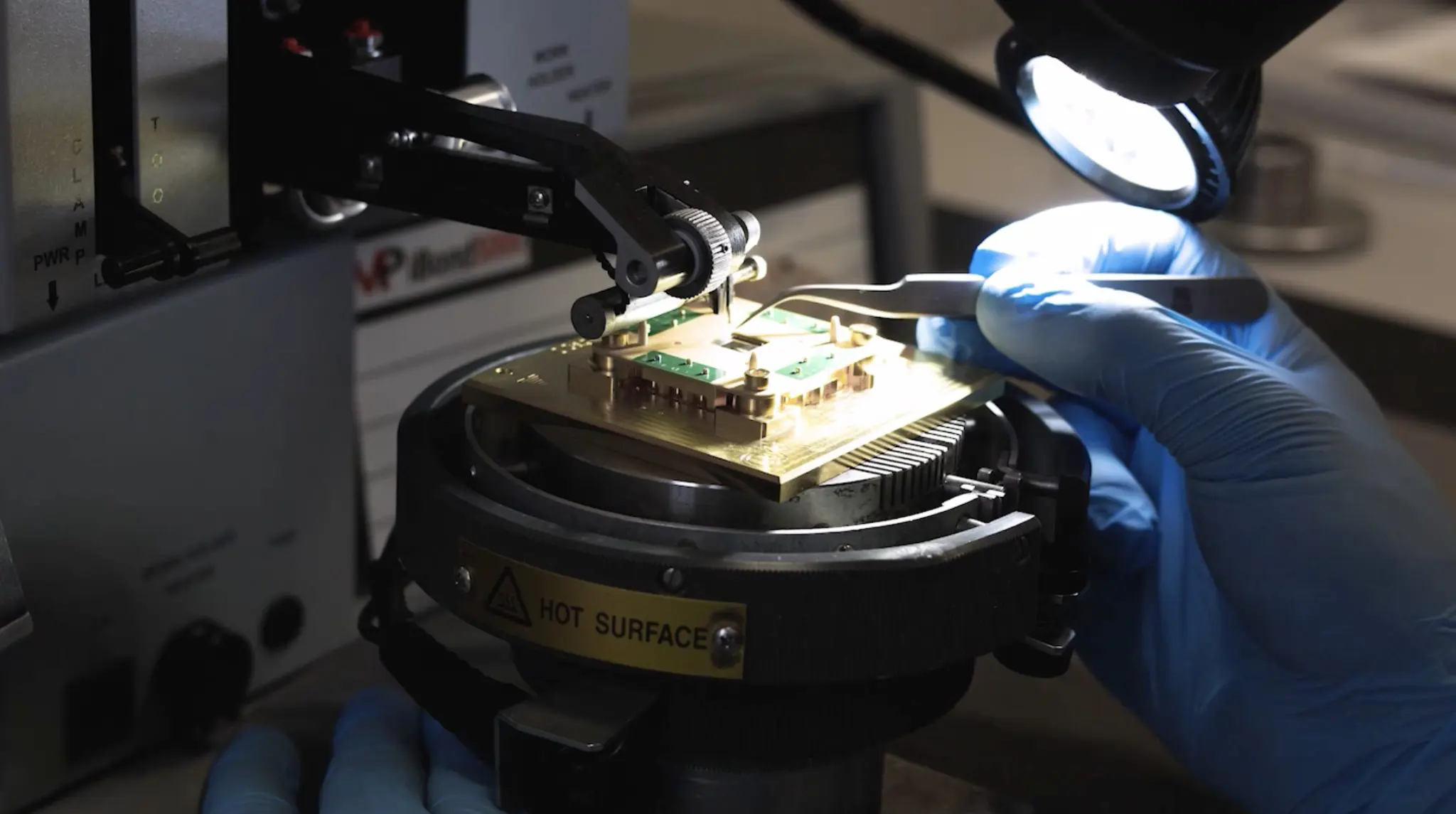
Pisa-based quantum technology firm Planckian will receive 300,000 euros after being selected as one of 13 companies participating in the EuroHPC Quantum Grand Challenge, and the only firm chosen from Italy. The European Union initiative aims to identify companies with viable plans to deliver fault-tolerant quantum computers, with Planckian focusing on reducing the infrastructure costs that hinder scaling.
“The Quantum Grand Challenge signals that Europe is not only leading quantum research, but is serious about turning that research into machines that the industry can actually buy and run,” says Planckian CEO Michele Dallari. Through its SQALE project, the company, a 2023 spin-off from the University of Pisa and Scuola Normale Superiore, will develop a technical and financial roadmap for its superconducting qubit architecture, designed to share control lines between qubits and lower system costs.
Planckian Selected for EuroHPC’s Phase 1 Quantum Challenge
The company is the sole Italian participant among the thirteen firms chosen from a pool of twenty-seven proposals across Europe. This initial phase will provide Planckian with funding to refine its approach to overcoming infrastructure limitations in quantum computer construction.
The core challenge Planckian addresses is the escalating infrastructure overhead associated with scaling superconducting processors; traditional designs necessitate dedicated control lines for each qubit, a configuration that quickly becomes economically unsustainable as qubit counts increase. Planckian’s architecture differs by enabling multiple qubits to share control lines, a design intended to facilitate scalability toward commercially viable, utility-scale machines.
The company’s SQALE project, funded through this phase, will detail the steps needed to achieve a fault-tolerant, industrial-scale system, the company says. “That is the problem we set out to solve.
Our approach enables scalability by design and changes the economics of large-scale machines, bringing them within the reach of industrial and market R&D budgets, rather than relying on national programmes alone.” Successful completion of Phase 1, expected to span four months following grant agreement finalization, will qualify Planckian to compete for up to EUR 30 million in funding from the European Investment Bank during Phase 2.
The Quantum Grand Challenge signals that Europe is not only leading quantum research, but is serious about turning that research into machines that the industry can actually buy and run.
Michele Dallari, CEO of Planckian
Source: https://www.planckian.co/



See today’s quantum computing news on Quantum Zeitgeist for the latest breakthroughs in qubits, hardware, algorithms, and industry deals.