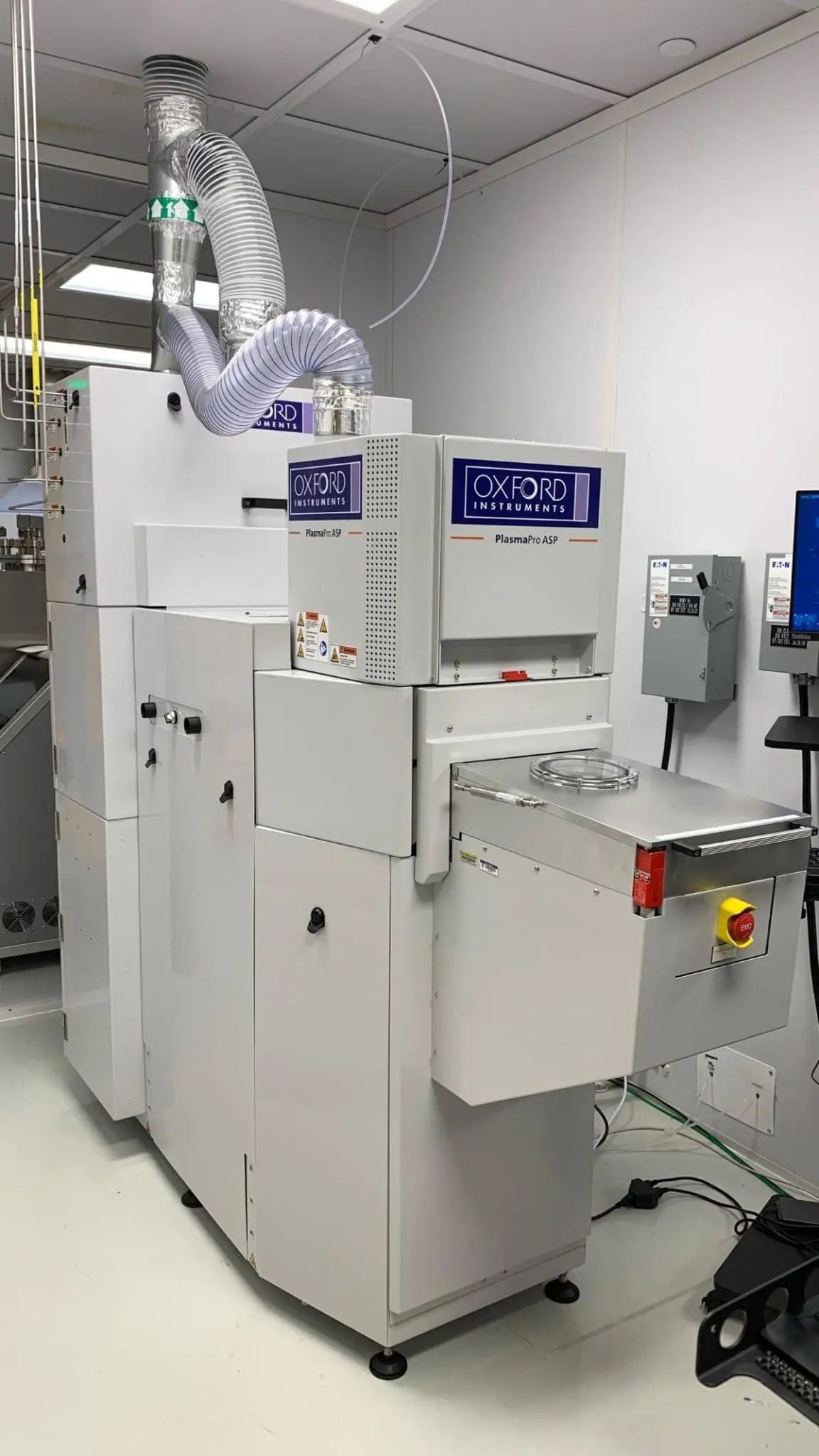
New York University’s Nanofabrication Cleanroom is now equipped to deposit materials for quantum computing three times faster than previously possible, thanks to the installation of an Oxford Instruments PlasmaPro ASP atomic layer deposition system, the first of its kind for superconducting quantum applications in the United States. The upgrade, funded by the U. S. Microelectronics Commons through the NORDTECH hub, focuses on creating superconducting nitrides, with research published last November in Applied Physics Letters identifying tantalum carbonitride (TaCₓN₁₋ₓ) as a particularly promising material due to its low microwave loss. “As an academic prototyping facility within the NORDTECH Hub, NYU Nanofab’s role is to enable new materials and processes that bridge fundamental research and scalable manufacturing for quantum technologies,” said Davood Shahrjerdi, Professor of Electrical and Computer Engineering at NYU Tandon and Director of the NYU Nanofab. This advancement directly supports the CHIPS and Science Act’s goals of bolstering U. S. microelectronics research and manufacturing capabilities.
PlasmaPro ASP ALD Enables Superconducting Nitride Deposition
The new system, funded through the U. S. Microelectronics Commons’ NORDTECH hub, facilitates the creation of superconducting nitrides vital for advancements in quantum computing, sensing, and communications, enabling a faster transition from research to scalable manufacturing processes. Researchers can now explore materials with greater efficiency, addressing a critical need in the rapidly evolving field of quantum technology. The ability to reliably deposit high-quality nitride thin films is expected to reduce the operational costs of superconducting quantum platforms and facilitate their integration with other technologies, according to Dr. Matthew LaHaye, who oversaw work at the Air Force Research Laboratory. Oxford Instruments anticipates the PlasmaPro ASP will accelerate the development of both semiconductor and quantum devices; “We are delighted to strengthen the capability of NYU’s Nanofab with the installation of the first PlasmaPro ASP ALD system for superconducting nitrides within the USA,” said Dr. Harriet van der Vliet, Head of Strategic R&D Markets at Oxford Instruments Plasma Technology, emphasizing the company’s commitment to supporting researchers in this field.
Tantalum Carbonitride Demonstrates Low-Loss Quantum Potential
The pursuit of stable and scalable quantum computing hardware demands materials that minimize signal degradation; current superconducting platforms often suffer from energy loss at microwave frequencies, hindering performance. The system’s ability to deposit materials at rates three times faster than conventional methods significantly accelerates the fabrication process, enabling rapid prototyping and experimentation. This advancement bridges the gap between fundamental research and practical manufacturing, and the potential benefits of thin-film nitride superconductors extend beyond performance, offering increased robustness under challenging operating conditions. “Thin-film nitride superconductors have a number of key advantages over conventional superconducting materials used in quantum information platforms, which could make such systems more robust for operation at higher temperature, and under other non-ideal conditions, like in the presence of magnetic fields and light,” said Dr. Matthew LaHaye. Oxford Instruments anticipates that this new capability will accelerate device development.
As an academic prototyping facility within the NORDTECH Hub, NYU Nanofab’s role is to enable new materials and processes that bridge fundamental research and scalable manufacturing for quantum technologies.
Davood Shahrjerdi, Professor of Electrical and Computer Engineering at NYU Tandon and Director of the NYU Nanofab



See today’s quantum computing news on Quantum Zeitgeist for the latest breakthroughs in qubits, hardware, algorithms, and industry deals.