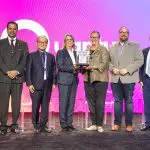
New York University’s Quantum Institute is joining the IBM Quantum Network, expanding the consortium beyond traditional academic boundaries to include enterprises, startups, and government labs. The collaboration will support postdoctoral research projects spanning chemistry, computer science, materials science, physics, and optimization, fostering an interdisciplinary approach to quantum algorithm development for current and future quantum computing architectures. This program aims to bridge the gap between quantum-centric supercomputers and the scalability goals of large-scale, fault-tolerant machines, potentially accelerating advancements in fields like drug development and materials discovery. “Quantum computing’s potential to understand and address engineering, mathematical, and scientific barriers is unmatched,” says NYU Professor Javad Shabani, director of NYU’s Quantum Institute, who will oversee the university’s role in the program.
NYU Quantum Institute Focuses on Quantum Computing, Communications, Sensing
This collaboration isn’t simply about bolstering research capacity; it’s about fostering a multi-sector ecosystem designed to accelerate the development of practical quantum applications, a critical step given the complex challenges of scaling these technologies. The program’s scope extends beyond immediate gains, aiming to advance applications for both current quantum-centric supercomputer architectures, which combine quantum and classical computing, and the future generation of large-scale, fault-tolerant quantum computers. NYU postdoctoral researchers will conduct projects at both NYU’s Quantum Institute and IBM Research headquarters in Yorktown Heights, New York, utilizing IBM’s quantum computers and benefiting from the expertise of IBM’s quantum researchers. This initiative builds upon a prior NYU-IBM program focused on training undergraduate and graduate students in quantum information physics, demonstrating a sustained commitment to cultivating a skilled quantum workforce. Juan De Pablo, Anne and Joel Ehrenkranz Executive Vice President for Global Science and Technology and executive dean of the Tandon School of Engineering, emphasizes the importance of industry collaboration, stating, “Together we can help make New York a vital part of the quantum universe.” Jamie Garcia, Director, Growth & Strategic Partnerships, IBM, adds that the postdoctoral research sponsorship will support these efforts.
IBM and NYU Postdoctoral Program Advances Quantum Algorithms & Architectures
The pursuit of practical quantum computing requires collaboration beyond isolated academic endeavors to translate theoretical advances into tangible applications. This consortium aims to accelerate progress by pooling resources and expertise, recognizing that significant breakthroughs require a diverse range of perspectives and capabilities. The partnership expands research capacity and creates a robust ecosystem capable of sustaining long-term development. The program’s scope reflects an understanding that quantum algorithms are a foundational technology with implications across numerous scientific and industrial sectors. The program is designed to address both the immediate challenges of current quantum-centric supercomputer architectures and the longer-term goals of building large-scale, fault-tolerant quantum computers, acknowledging the need for incremental progress on existing platforms while simultaneously investing in technologies that will unlock the full potential of quantum computation, accelerating efficiencies in areas like drug development and materials discovery.
This postdoctoral research sponsorship will give some of NYU’s top talent an opportunity to push IBM’s quantum-centric supercomputing architecture not just for immediate application development, but to lay the groundwork for the algorithms that will power tomorrow’s fault-tolerant quantum computers, all while engaging with the broader quantum community of students, researchers, and industry professionals.
Jamie Garcia, Director, Growth & Strategic Partnerships, IBM




See today’s quantum computing news on Quantum Zeitgeist for the latest breakthroughs in qubits, hardware, algorithms, and industry deals.