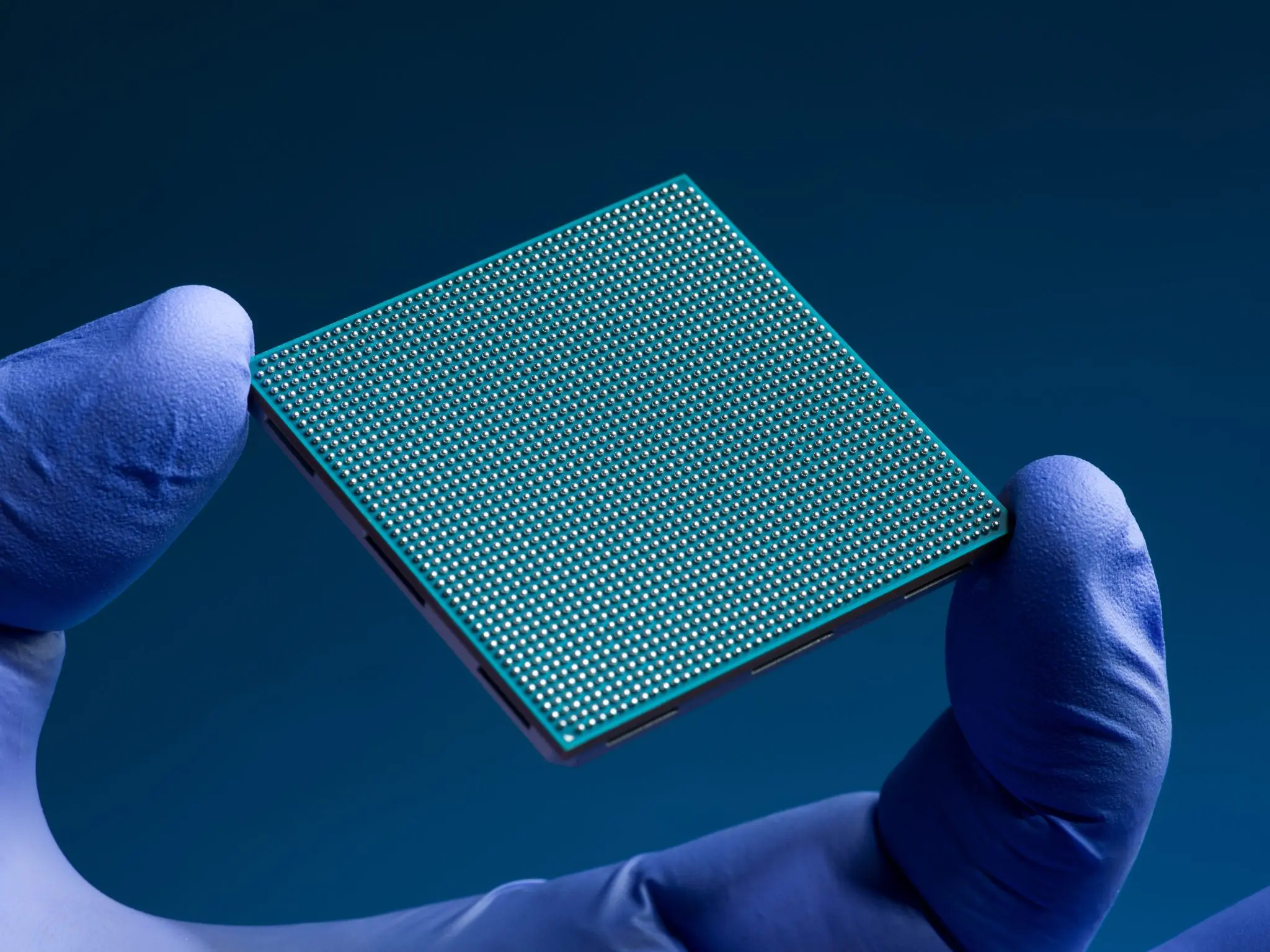
NASA’s Jet Propulsion Laboratory is currently testing a new High Performance Spaceflight Computing processor, aiming for a significant increase in onboard spacecraft capabilities. The system-on-a-chip, small enough to fit in the palm of a hand, is designed to deliver up to 100 times the computational capacity of current spaceflight computers while withstanding the extreme conditions of deep space. “Building on the legacy of previous space processors, this new multicore system is fault-tolerant, flexible, and high-performing,” said Eugene Schwanbeck, program element manager in NASA’s Game Changing Development program at the agency’s Langley Research Center. Jim Butler, High Performance Space Computing project manager at JPL, notes the team is replicating the harsh space environment with radiation, thermal, and shock tests to ensure the processor can endure the rigors of flight and accelerate scientific discovery.
Radiation-Hardened Processor Enables Increased Capacity for Spaceflight
Unlike previous generations reliant on decades-old chip technology for its resilience, this processor is designed to withstand the conditions of deep space while also offering a substantial increase in processing speed. Rigorous testing is currently underway at NASA’s Jet Propulsion Laboratory in Southern California, subjecting the processor to challenges mirroring the space environment, including assessments of its performance under radiation, thermal stress, and physical shock. This exhaustive testing is necessary because electronics are vulnerable to high-energy particles from the sun and interstellar space, which can induce errors and force spacecraft into “safe mode”. The processor’s capabilities extend beyond survival; it is intended to facilitate more complex onboard data analysis, enabling spacecraft to respond autonomously to unforeseen circumstances. Initial results from testing, which began in February, are promising, with the processor demonstrating performance 500 times greater than currently utilized radiation-hardened chips, and the technology is already being shared with partners in the defense and commercial aerospace industries.
JPL Testing Validates Performance of System-on-a-Chip Design
Testing at the Jet Propulsion Laboratory is currently confirming the anticipated performance gains of a novel system-on-a-chip processor intended for deep space missions, a development that promises to accelerate scientific return and enable more autonomous spacecraft. The team is also employing high-fidelity landing scenarios from actual NASA missions to assess performance under realistic, power-intensive workloads, simulating the processing of data from landing sensors. Early results from the testing, which began in February, are highly encouraging; indications show the processor operating at 500 times the performance of currently used radiation-hardened chips. This achievement is not merely about speed, but about enabling capabilities previously unattainable, such as real-time artificial intelligence for autonomous decision-making and the efficient analysis of massive datasets collected during deep space exploration. “This is an exciting time for us to be working on hardware that will enable NASA’s next significant advancements,” added Butler, highlighting the potential for transformative advancements in space exploration and terrestrial applications.
Microchip Partnership Drives Autonomous Spacecraft Capabilities
Microchip Technology Inc. is central to a collaborative effort with NASA’s Jet Propulsion Laboratory that is expected to redefine spacecraft capabilities. The partnership has yielded a High Performance Spaceflight Computing processor, a complete system-on-a-chip designed to overcome the limitations of decades-old technology currently governing space missions. Unlike previous designs prioritizing survival in harsh conditions, this processor aims to unlock new levels of autonomy and accelerate scientific returns from deep space exploration. “We are putting these new chips through rigorous radiation, thermal, and shock tests while also evaluating their performance through a functional test campaign,” he explained, emphasizing the need to replicate the extreme stresses of the space environment. These tests, which commenced in February, are not simply about endurance; they are designed to validate performance under conditions that would rapidly degrade conventional electronics.
The processor’s design allows it to operate at 500 times the performance of existing radiation-hardened chips, a substantial increase in processing power despite its remarkably small size. This system-on-a-chip integrates central processing units, computational offloads, networking units, memory, and input/output interfaces into a single, resilient package. This leap in computing power will enable spacecraft to utilize artificial intelligence for real-time decision-making in environments where communication with Earth is impractical, and to efficiently manage the vast quantities of data generated by modern scientific instruments.
Source: https://www.nasa.gov/technology/hello-universe-nasas-next-gen-space-processor-undergoes-testing/



See today’s quantum computing news on Quantum Zeitgeist for the latest breakthroughs in qubits, hardware, algorithms, and industry deals.