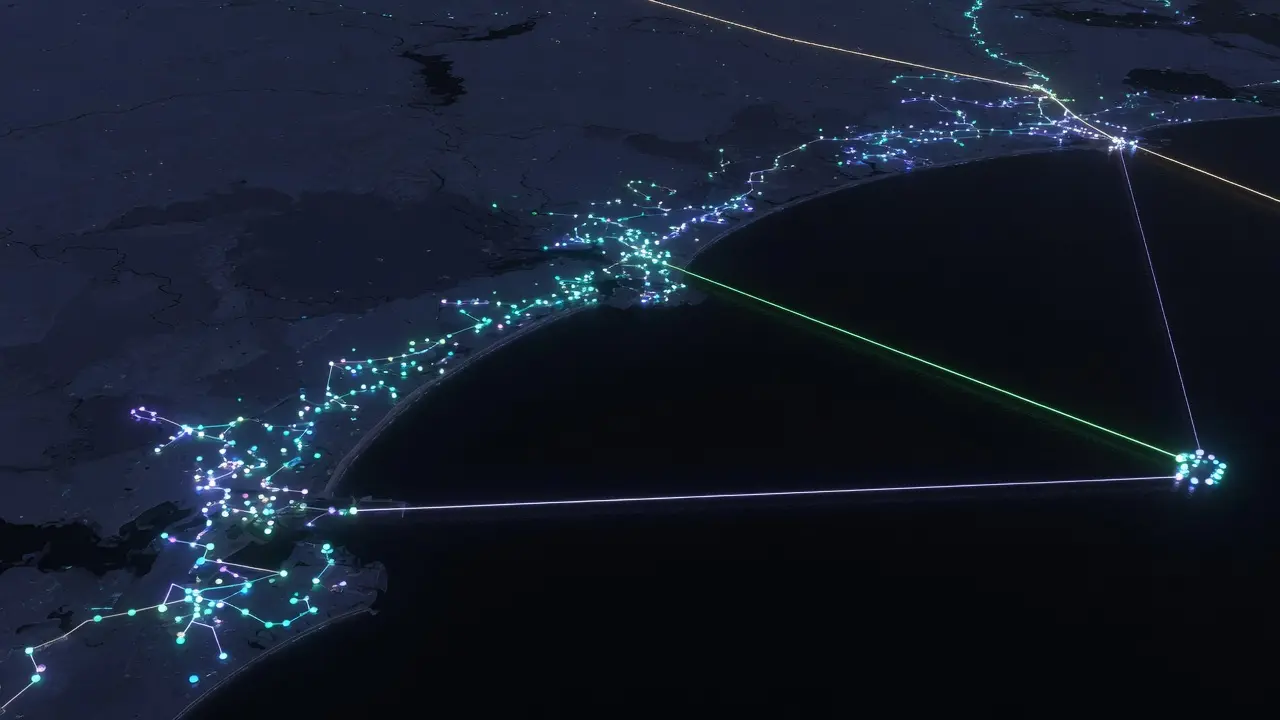
Munich Quantum Valley demonstrated a step toward practical quantum computing at the International Conference for High-Performance Computing, Networking, Storage, and Analysis (SC26) in Chicago, held November 15 to 20, the company says. The organization presented its Quantum Device Management Interface (QDMI)-Powered Federated Network, interconnecting quantum computing resources from multiple providers through a common software interface.
This capability is part of the Munich Quantum Software Stack (MQSS) and was presented alongside contributions from research institutions and technology companies at the US Department of Energy booth as part of the open Quantum Software Ecosystem (openQSE) initiative. MQV’s work aims to move beyond integrating quantum computers into existing infrastructures, toward a fully interconnected ecosystem accessible to industrial users.
QDMI-Powered Federated Network Enables Quantum Resource Interconnection
MQV presented “Rethinking QDMI: Expanding the Quantum Device Abstraction to the Software Stack,” proposing extending the QDMI specification to enable entire quantum-HPC software stacks to participate in the network as individual resources, supported by a working prototype connecting the infrastructures of the Leibniz Supercomputing Centre and MQV. Complementing this development, MQV researchers presented “The MQSS Benchmarking Framework: Extensible Orchestration Layer for Quantum Benchmarking in HPC-Integrated Ecosystems,” which addressed a potential use case of the QDMI-Powered Federated Network: systematic benchmarking across heterogeneous quantum computing resources.
The framework provides an extensible orchestration layer for evaluating performance and identifying optimal configurations within the interconnected system. The QDMI-Powered Federated Network is central to MQV’s Quantum Pathway Program (QPP), which aims to provide industrial users with unified access to an expanding international network of quantum computing providers. Currently in its Friendly-User Pilot Phase, the QPP presented collaborations with hzero and Qudora at SC26, representing a selection of providers participating in the network, as well as a participant in the current pilot phase.
Source: https://www.munich-quantum-valley.de/news-events/detail/munich-quantum-valley-at-sc26-in-chicago

See today’s quantum computing news on Quantum Zeitgeist for the latest breakthroughs in qubits, hardware, algorithms, and industry deals.