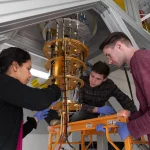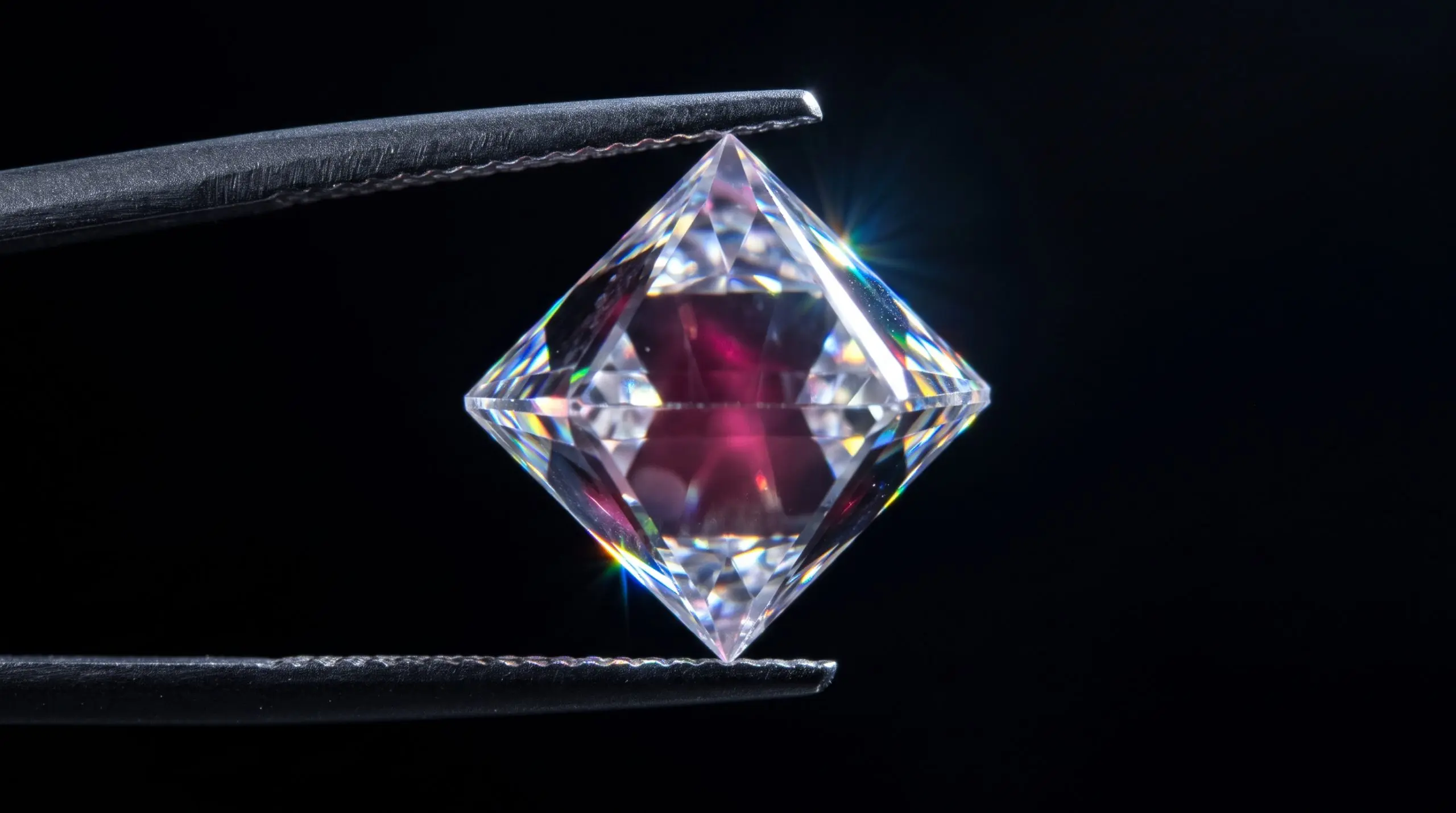
Researchers at the Indian Institute of Technology Bombay have demonstrated a new method for imaging dynamic magnetic fields using nitrogen-vacancy (NV) defects within diamonds. The team, led by Prof Kasturi Saha, achieved speeds of up to 100 frames per second, a significant increase over current technologies that typically require minutes or hours for high-resolution images. A study based on this work was published in the journal Scientific Reports.
Nitrogen-Vacancy Defects Enable High-Sensitivity Magnetic Field Mapping
This new technique uses nitrogen-vacancy (NV) defects within diamond crystals to detect these weak fields, a method that could circumvent limitations of current technologies like magnetoencephalography (MEG) and functional magnetic resonance imaging (fMRI). The team’s experimental setup functions as a magnetic field microscope, similar in principle to a standard light microscope, but capable of resolving fields generated by microscopic circuits and, potentially, neuronal activity.
It renders the ability to image microscopic (1 micron to around 100 micron scale) magnetic fields found in microcircuits with a current flow and can potentially be extended to imaging dynamic magnetic fields from biological cells like neurons.
The core of this advancement lies in the use of a specialized lock-in camera, which dramatically reduces image acquisition time from minutes per frame to approximately 100 frames per second. This speed is particularly noteworthy when considered against the historical progression of motion picture technology; the initial 16 frames per second achieved by the Lumiere brothers now seems primitive compared to the potential for capturing rapid biological processes.
The team tested their setup by imaging the magnetic fields produced by both a microscopic wire and a microscopic coil, manipulating the NV center spins with millisecond-scale microwave frequencies to induce changes in the magnetic field. Unlike conventional cameras, the lock-in camera employed focuses solely on light fluctuations occurring at specific, pre-defined frequencies, effectively filtering out extraneous noise and enhancing the signal from the NV centers.
This sensitivity allows for capturing the faint photoluminescence emitted by the NV defects as they interact with the changing magnetic fields. The result is a “motion picture” of the magnetic field, capturing each change as light is emitted from the NV centers. This work represents the first demonstration of sub-second magnetic field microscopy using this technique, and Prof. Saha notes the broader implications of this capability for India’s quantum sensing landscape.
“In the context of India – Quantum Sensing is completely new, and our lab is the first to build such a quantum diamond microscope in the country. We can perform not only biological sensing but also explore quantum materials and many more,” she states, highlighting the potential for diverse applications beyond neuroimaging. The NV-based microscopes, therefore, offer a promising alternative for probing mammalian brain activity, potentially offering a more compact and versatile tool for understanding the complex dynamics of the nervous system.
Lock-In Camera Achieves 100 FPS Dynamic Diamond Microscopy
These fluctuations in the magnetic field interact with the NV defects, resulting in faint light emission, or photoluminescence, which is then captured by the specialized camera. This selective detection enhances the signal, making it ideally suited for ultra-low light imaging scenarios like those involving NV center photoluminescence.
“As opposed to a conventional camera, in a lock-in camera, each pixel detects only light fluctuations that contain specific frequency or oscillations of a fixed time period and ‘rejects’ light fluctuations of other frequencies,” explains Prof Kasturi Saha, the laboratory lead. The resulting high-speed imagery provides a new window into the complex workings of microscopic systems, promising a deeper understanding of the forces that govern them.
Source: https://rnd.iitb.ac.in/node/2014


See today’s quantum computing news on Quantum Zeitgeist for the latest breakthroughs in qubits, hardware, algorithms, and industry deals.