
Tyler D. Ellison’s work demonstrates that analyzing mutual information between non-overlapping regions containing non-contractible loops on a torus can provide information about obstructions to removing nonstabilizerness with shallow-depth local. This approach, focused on “long-range nonstabilizerness” (LRN), provides a full classification of error potential within the toric code model, certifying LRN for all encoded non-stabilizer states.
However, for the non-abelian string-net model with doubled Fibonacci topological order, the same method detects LRN for all states except from a finite subset with special transformation properties under the modular group. This research constrains the logical gates implementable with fault tolerance on the torus.
Mutual Information Diagnoses Long-Range Nonstabilizerness (LRN)
Researchers found that non-integer values of this mutual information directly indicate the presence of long-range nonstabilizerness, a key impediment to reliable quantum computation. The technique focuses on ground states of string-net models, but the underlying principles apply more broadly to gapped two-dimensional phases. This method uses a fundamental property of stabilizer states.
Because of this, any deviation from integer values signals the presence of nonstabilizerness, which cannot be removed by shallow-depth local circuits. The research team rigorously proved that mutual information remains invariant under these shallow circuits, solidifying its role as a reliable indicator of error potential.
A finite subset of states within this model evaded detection of long-range nonstabilizerness using the same mutual information approach, despite possessing specific transformation properties under the modular group. This suggests that while powerful, the technique is not universally applicable and certain states require alternative diagnostic methods. The definition of long-range nonstabilizerness employed in this work considers sequences of states and local circuits containing arbitrary unitary gates acting on disjoint sets of neighboring qubits.
This definition, similar to that used in previous studies, differs from others that require geometrically local gates. The researchers emphasize that a state family exhibits short-range nonstabilizerness if, for any arbitrarily small error tolerance and scaling factor, a local quantum circuit can bring the state arbitrarily close to a stabilizer state.
Topological Encoding and the Obstruction to Stabilizer States
The research demonstrates that for the toric code model, all non-stabilizer states exhibit long-range nonstabilizerness, a characteristic indicating an inherent difficulty in error correction. This provides a complete classification of error potential within that specific system, as the mutual information analysis successfully identifies all states that cannot be represented by a stabilizer state.
Long-Range Nonstabilizerness (LRN) as a Circuit Simulation Limit
Researchers found this integer property forms the basis for characterizing LRN, an obstruction to efficiently simulating a state within the stabilizer formalism. This work extends the concept of short-range nonstabilizerness by allowing for a controlled amount of error when determining if a state can be approximated by a stabilizer state using a shallow-depth quantum circuit.
The authors note that this approach differs from earlier definitions by permitting some error, but still provides a means to assess the complexity of simulating quantum states. This subtle definition is important for understanding the limits of fault tolerance in topological quantum computing, as it acknowledges that perfect simulation may not always be achievable.
Mutual Information Reveals LRN in Toric Code States
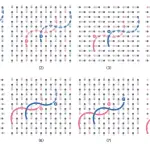
The team’s technique hinges on examining the mutual information, a measure of statistical dependence, between non-overlapping regions of the lattice model that contain non-contractible loops. This analysis, coupled with observing changes in mutual information under modular transformations, allows researchers to pinpoint the presence of LRN. The researchers state precisely and prove that the only states having integer mutual information for all gamma are stabilizer states.
Modular Transformations and Mutual Information on the Torus
The team’s work demonstrates that applying these transformations allows researchers to calculate mutual information and diagnose long-range nonstabilizerness within topologically-ordered quantum systems. This complete classification is achieved by examining the mutual information between regions containing non-contractible loops, and observing how that information changes under modular transformations. In the double Fibonacci model, the mutual information is not able to fully classify LRN, the study reports, highlighting a limitation of the current diagnostic.
Mutual Information’s Connection to Anyon Theory Data
This approach allows researchers to connect the characteristics of anyons, the exotic particles theorized to underpin topological quantum computation, to the practical challenge of error correction. Specifically, the team computed mutual information between well-separated regions wrapping around non-contractible paths of the torus, providing an explicit expression for the metric. In the non-abelian string-net model with doubled Fibonacci topological order, the approach is unable to fully classify error potential. The study reports, highlighting the complexity of applying this diagnostic to all topological phases.
👉 More information
🗞 Long-range nonstabilizerness of topologically encoded states from mutual information
✍️ David Aram Korbany, Tyler D. Ellison, David Stephen and Lorenzo Piroli
🧠 DOI: https://jquant.sissa.it/article/pubid/JQUANT1(2026)001011/



See today’s quantum computing news on Quantum Zeitgeist for the latest breakthroughs in qubits, hardware, algorithms, and industry deals.