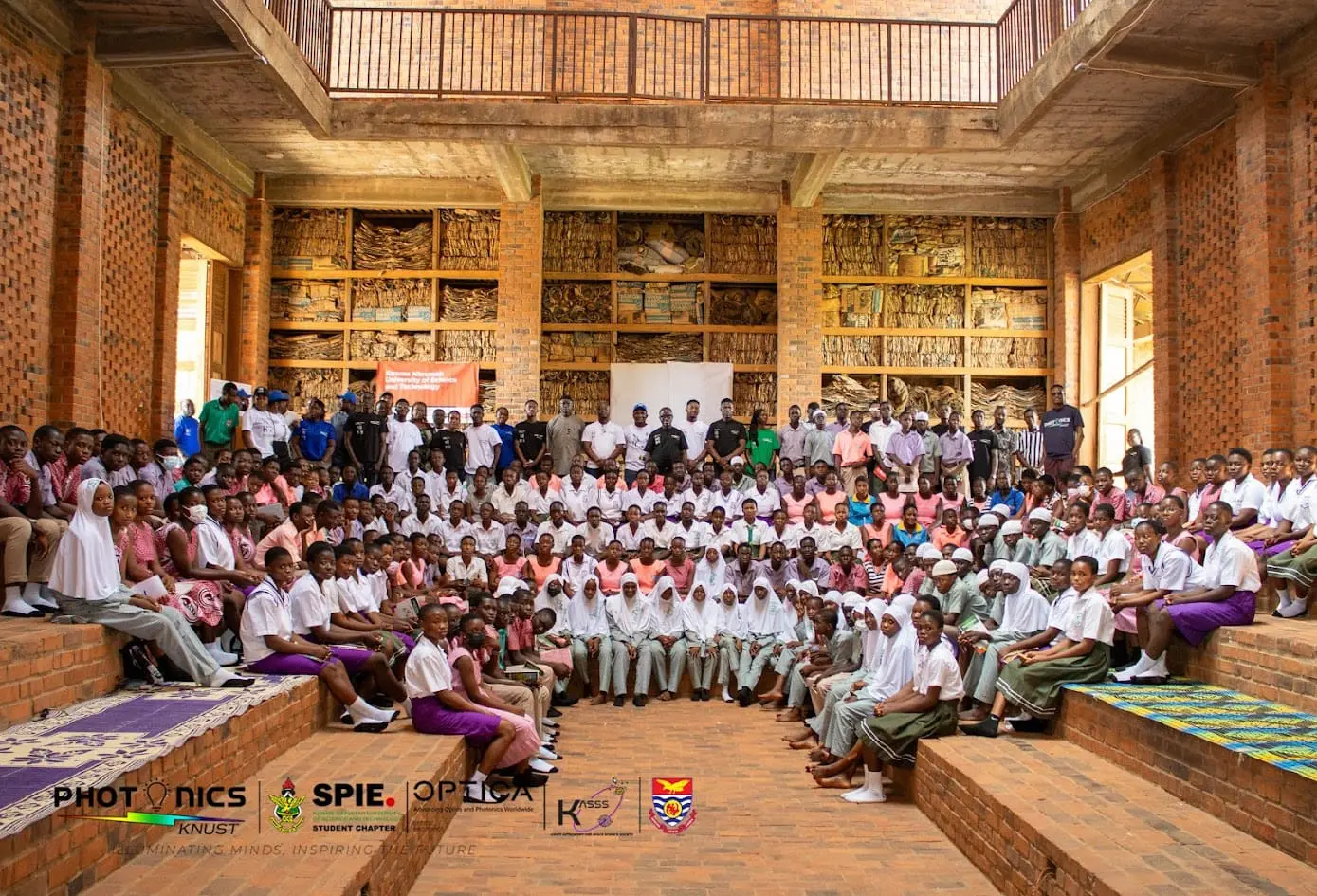
More than 400 students from across Ghana’s Northern Region recently gained hands-on experience with optics, photonics, and astronomy through the “Light Up Ghana 3.0” outreach program, a celebration of the International Day of Light organized by the Ghana Photonics and Optics Laboratory. Held at Red Clay Studios in Tamale, the two-day event extended beyond traditional classroom settings, incorporating free eye screening exercises conducted by the Diagnostics and Visual Function Research Laboratory alongside interactive science demonstrations. The program, a collaboration between several institutions including Kwame Nkrumah University of Science and Technology, aims to cultivate interest in STEM fields and position Ghana as a contributor to the global knowledge economy. Project Principal Investigator Dr. Akyana Britwum explained, “Light-based technologies sit at the heart of every modern economy. If Ghana is to be a producer of these technologies, not only a consumer, we must begin investing in the curiosity of our young people now.”
Participants like Kadim Nadara of the Northern School of Business found the outreach profoundly impactful. The program’s mentorship component reinforced the practical applications of light-based technologies in solving real-world challenges, inspiring a new generation of Ghanaian scientists and innovators.
This integrated approach demonstrates a commitment to both scientific literacy and immediate well-being, broadening the impact of the initiative beyond theoretical knowledge. The two-day event, organized in collaboration with several KNUST departments and societies, aimed to cultivate interest in STEM fields, particularly among secondary school students. Participants engaged in interactive sessions covering physics and related disciplines, fostering a deeper understanding of light-based technologies and their applications. Dr. Akyana Britwum is the project’s Principal Investigator.
Light-based technologies sit at the heart of every modern economy, from healthcare diagnostics to telecommunications to clean energy. If Ghana is to be a producer of these technologies, not only a consumer, we must begin investing in the curiosity of our young people now.
Diagnostics and Visual Function Research Laboratory Provides Eye Screening
This practical component, integrated with demonstrations on optics and photonics, addressed an immediate health need within the Northern Region while showcasing the real-world applications of light-based technologies. The screenings provided a valuable service to students, many of whom may lack regular access to comprehensive eye care, and underscored the potential for photonics to improve healthcare outcomes. This approach reflects a growing emphasis on community engagement and accessibility in STEM education, aiming to inspire interest in science among students who might not typically encounter it in a classroom environment. Dr. Akyana Britwum, the project’s Principal Investigator, emphasized the importance of investing in young people’s curiosity, stating, “Initiatives like Light Up Ghana are how we build that future: by showing students early that optics, photonics, and astronomy are fields they can lead in, here in Ghana and from Ghana out to the world.” The combination of preventative healthcare and scientific education demonstrates a holistic approach to development, fostering both individual well-being and national technological advancement.
Scientists and educators had a responsibility to inspire and train the next generation of innovators and researchers. He noted that science was often perceived as abstract and difficult, making it important for educators to simplify scientific concepts to improve understanding and appreciation among students.
Francis Kofi Ampong, Head of the Department of Physics at KNUST



See today’s quantum computing news on Quantum Zeitgeist for the latest breakthroughs in qubits, hardware, algorithms, and industry deals.