Four Korean quantum startups are expanding into the U.S. market following direct engagement with Midwest innovation hubs through the Global Bridge Program. Spearheaded by the Korea Institute of Science and Technology (KIST), the initiative culminated in a pitch session with gener8tor co-founders Troy Vosseller and Joe Kirgues, providing startups access to U.S. accelerators and venture platforms.
This program falls under South Korea’s Deeptech Incubator Project for Startups (DIPS), overseen by the Ministry of SMEs and Startups, and aims to connect Korean quantum companies with collaborators in Wisconsin and Chicago. KIST drives technology commercialization and global expansion through international exhibitions and targeted networking.
KIST Global Bridge Program Connects Startups to Midwest Accelerators
This focused workshop allowed the Korean startups to explore connections with gener8tor’s corporate network, extending beyond initial technology shows. Wisconsin’s economic development agency also participated, with Fanfu Li, Director of International Business Development at the Wisconsin Economic Development Corporation (WEDC), discussing potential links between Korean startups and local industry. Both KIST and WEDC agreed to continue discussions, anticipating a Wisconsin trade delegation’s visit to South Korea in November 2026 to further solidify these ties.
In Chicago, the program shifted focus to the translation of quantum research into viable commercial products and manufacturing processes. Meetings with leaders from the Chicago Quantum Exchange (CQE), the University of Chicago, the Bloch Quantum Tech Hub, mHUB and the Illinois Quantum and Microelectronics Park (IQMP) revealed a comprehensive ecosystem designed to bridge the gap between laboratory innovation and industrial application.
The Illinois Economic Development Corporation, with Chief Quantum Officer Preeti Chalsani, also engaged with the delegation to explore opportunities within the state’s expanding quantum sector. At the University of Chicago, David Awschalom, Director of the Chicago Quantum Institute and Founding Director of the CQE, reviewed technologies presented by the visiting startups, identifying potential research and commercialization pathways. The engagements in Chicago highlighted the interconnectedness of the region’s quantum infrastructure. the Bloch Quantum Tech Hub specifically connects quantum innovation with manufacturing capabilities.
KIST observed that this combination allows Chicago to effectively link research and startup development with technology validation, manufacturing and ultimately, market deployment. “For Korean quantum startups to scale globally, it is important not only to showcase their technologies overseas, but to build sustained relationships with investors, institutions and industrial leaders,” said Dr. SunJoon Kang, Director of KIST’s Technology Commercialization Office and head of DIPS quantum sector.
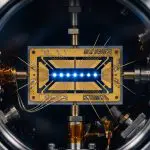
This Midwest tour follows KIST’s earlier U.S. engagements at the SelectUSA Investment Summit and Quantum World Congress 2026, demonstrating a sustained effort to facilitate international collaboration. The four participating startups, TruPixel, OptiQ-Labs, QRENS and Elixir, each presented unique contributions to the quantum landscape. TruPixel develops SPAD-based single-photon detection sensors for applications in quantum communications, advanced sensing, and imaging. OptiQ-Labs focuses on the manufacturing of optical hardware for trapped-ion quantum technologies, including ultra-narrow-linewidth lasers and ion-trap systems.
QRENS is developing quantum software solutions, including the AI-driven QubitSquare framework and the Q-Vista digital-twin simulator. Finally, Elixir delivers classical-quantum hybrid computing solutions aimed at accelerating medical data analysis, biomarker discovery and drug development. KIST believes this targeted approach will enable these Korean companies to establish a firm foothold within the U.S. quantum ecosystem and encourage long-term growth.
For Korean quantum startups to scale globally, it is important not only to showcase their technologies overseas, but to build sustained relationships with investors, institutions and industrial leaders.
Dr. SunJoon Kang, Director of KIST’s Technology Commercialization Office and head of DIPS quantum sector



See today’s quantum computing news on Quantum Zeitgeist for the latest breakthroughs in qubits, hardware, algorithms, and industry deals.