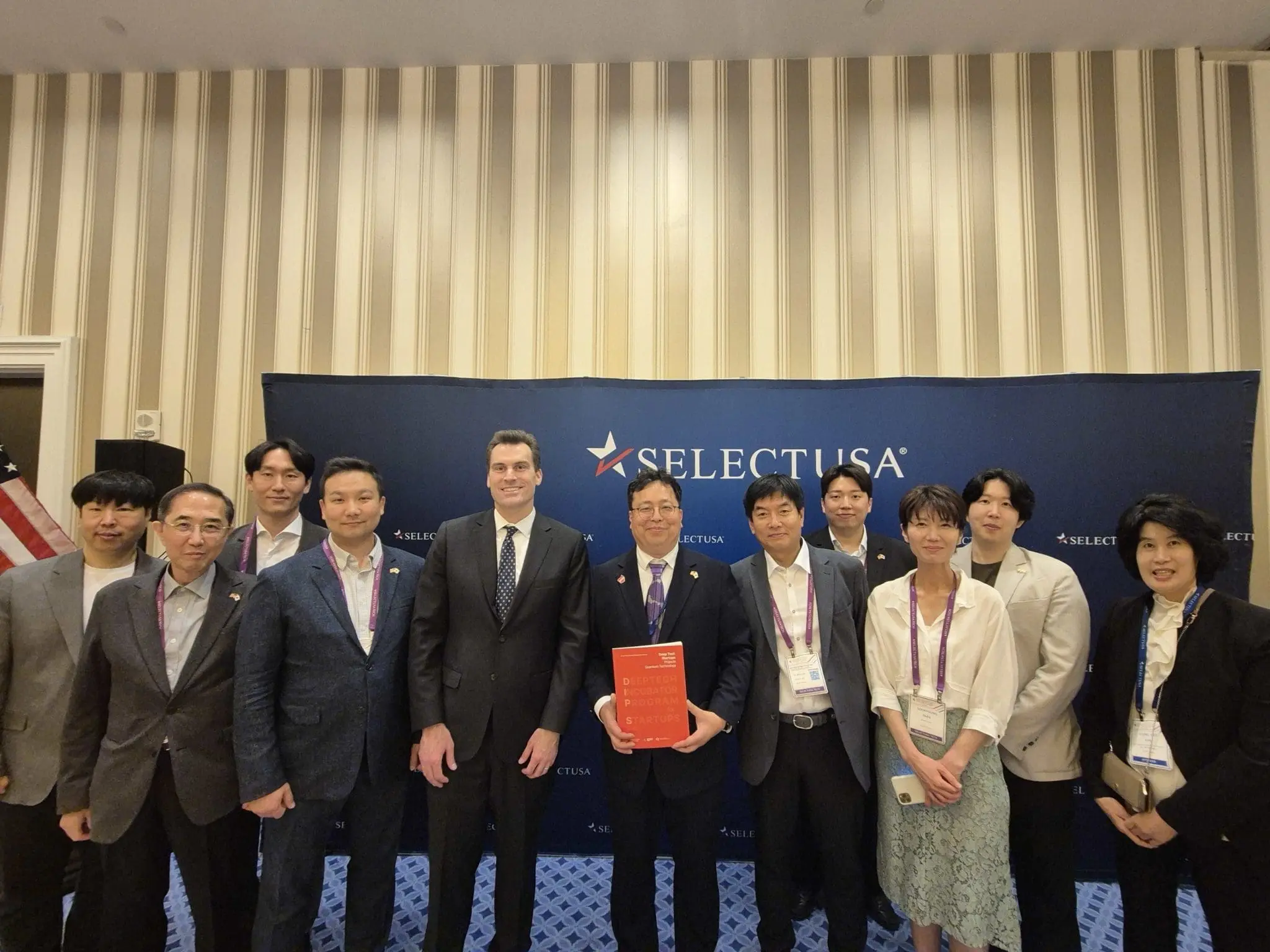
The Korea Institute of Science and Technology (KIST) is leading a delegation of quantum deep-tech startups to the SelectUSA Investment Summit, indicating a coordinated effort to enter the U.S. market. Designated as the lead institution for quantum technology under South Korea’s Deeptech Incubator Project for Startups (DIPS), KIST is actively directing the commercialization strategy for these ventures and linking investment attraction with diplomatic channels through its “Global Bridge Program” developed in September. This initiative, supported by South Korea’s Ministry of SMEs and Startups, aims to nurture globally competitive deep-tech firms; KIST will oversee the global commercialization efforts of participating firms. U.S. Deputy Secretary of Commerce William Kimmitt met with the KIST Quantum Delegation on May 5 to discuss potential areas of cooperation, highlighting the high level of U.S. government engagement with these emerging Korean technologies.
KIST Leads Quantum Startup Expansion via SelectUSA Summit
KIST’s strategic involvement in the SelectUSA Investment Summit signals an effort to accelerate the commercialization of South Korean quantum technologies within the United States. This focuses on the quantum technology sector specifically, with KIST managing the global commercialization process for participating firms. The coordinated approach began in September with the joint development of the “Global Bridge Program,” a joint initiative with the U.S. Embassy in Korea designed to directly link investment attraction with diplomatic channels for market entry. This strategy extends beyond participation in the SelectUSA Summit; from April 30 to May 1, companies participated in a spin-off program within Maryland, including visits to research institutions and exploration of the regional quantum ecosystem. These activities with Maryland’s state government focused on investment, collaboration, and joint research and development. Further demonstrating engagement, U.S.
The delegation is structured as a comprehensive quantum industry ecosystem, encompassing research institutes, academia, and five startups, alongside Kyung Hee University Department of Future Science & Technology Commercialization Policy and Entrepreneurship, with approximately 20 participants forming an integrated ecosystem that combines research institutes, academia, and startups. OptiQ-Labs was selected for a highly competitive pitching session on May 4, chosen from over 20,000 applicants worldwide, and may receive significant follow-up support if successful. KIST Project Director, Kang Sunjoon, stated, “This program represents a critical milestone for Korean quantum startups to directly connect with global investors and industry ecosystems,” and added, “Via the DIPS program, we are actively promoting the global commercialization of quantum technologies.” KIST aims to establish a complete global expansion model integrating technology validation, investment, and U.S. market entry, marking a pivotal moment for South Korea’s quantum sector.
Deeptech Incubator Project: Maryland Ecosystem & Global Bridge Program
The convergence of governmental support and targeted investment is reshaping the landscape for quantum technology startups, particularly within the South Korean deeptech sector. KIST is actively directing the path to market for these ventures, as evidenced by its participation in the SelectUSA Investment Summit alongside a delegation of supported firms. A key component of this strategy is the “Global Bridge Program,” jointly developed with the U.S. Embassy in Korea in September. This coordinated effort recently manifested in a two-stage program culminating in the SelectUSA Summit, beginning with a spin-off program hosted by the State of Maryland, providing access to state governments and investor networks. KIST has established a global expansion model that integrates technology validation, investment attraction, and U.S. market entry, positioning South Korea’s quantum sector for a new phase of validation, investment, and international expansion.
This program represents a critical milestone for Korean quantum startups to directly connect with global investors and industry ecosystems. Via the DIPS program, we are actively promoting the global commercialization of quantum technologies.
OptiQ-Labs Pitch & Diverse Quantum Technology Portfolio
OptiQ-Labs, a South Korean firm specializing in laser-based optical modules for ion-trap quantum computing, secured a pitching session at the SelectUSA Investment Summit on May 4, reflecting the growing international attention surrounding Korean quantum technology. The company was one of approximately 100 selected from over 20,000 applicants worldwide, highlighting the competitive nature of this event and the promise of OptiQ-Labs’ technology. If they win the pitching session, OptiQ-Labs stands to gain follow-up meetings with U.S. state governments, access to global investor networks, and support establishing a local presence, including assistance with site selection and tax incentives. KIST isn’t simply providing funding; it’s actively directing the commercialization strategy for the entire sector, overseeing the global expansion of these firms.
The delegation participating in SelectUSA demonstrates a broad commitment to the quantum industry, encompassing not only OptiQ-Labs but also QUAD, developing single-photon detection technology; SLEEX, focused on underwater sensing; Elixir (StatUp AI), working on quantum-classical hybrid algorithms for healthcare; and SQK (QMEDIC), specializing in physics-based imaging solutions. Kyung Hee University Department of Future Science & Technology Commercialization Policy and Entrepreneurship also joined the delegation, with approximately 20 participants forming an integrated ecosystem that supports technology from validation to global expansion.
This is developing an advanced perception technology that combines quantum LiDAR and electric field sensing to overcome limitations of existing underwater sensors, particularly by eliminating blind zones within the 0-2 meter range, with strong potential in autonomous navigation, maritime security, and defense.
See today’s quantum computing news on Quantum Zeitgeist for the latest breakthroughs in qubits, hardware, algorithms, and industry deals.