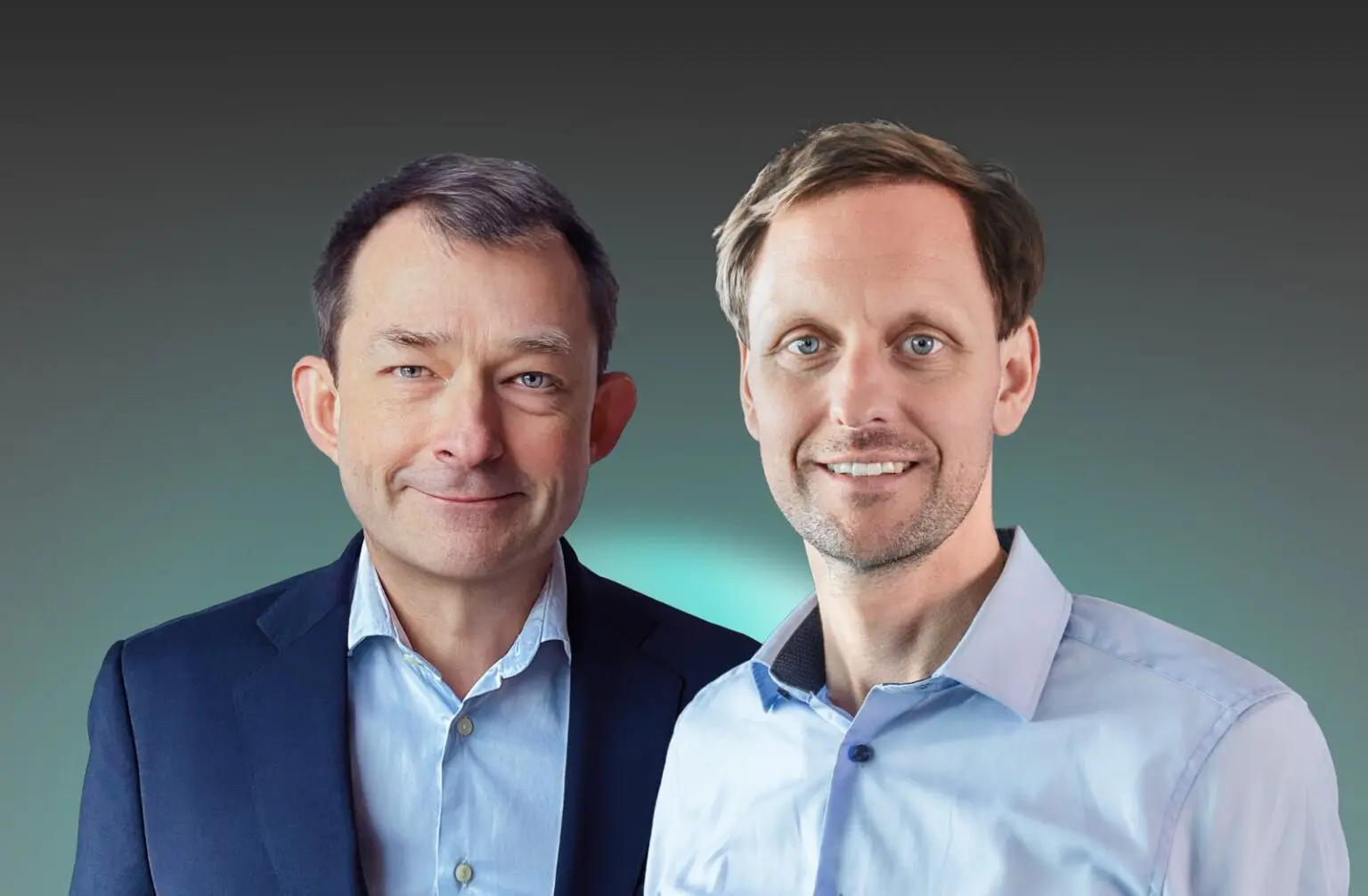
IQM Quantum Computers has consolidated its leadership, appointing Jan Goetz as sole CEO effective January 1st, following a board resolution. This shift from a co-CEO structure signals a new phase of growth for the Finnish firm, a global leader in superconducting quantum computers founded in 2018. Notably, IQM surpassed competitors in the past year, selling and shipping more on-premises quantum computers than any other company, alongside completing the largest Series B funding round in quantum computing outside of the US. “Moving to a single-CEO structure reflects the maturity of the organisation and positions IQM to deliver the next phase of sustainable global expansion and long-term growth,” said Dr. Sierk Poetting, Chairman of IQM’s Board of Directors, as the company focuses on scaling quantum technology for commercial applications.
Jan Goetz Appointed Sole CEO of IQM Quantum Computers
This structural shift accompanies the appointment of Søren Hein as Chief Operating Officer and Deputy CEO, signalling a strategic move to capitalize on recent successes and accelerate growth. The transition also sees Mikko Välimäki step down from his commercial role, transitioning to an advisory position until March 31, 2026, ensuring stability during the leadership change. Founded in 2018, IQM has rapidly expanded, now boasting a global presence with over 300 employees across eleven countries, including Finland, Germany and the United States.
Goetz, who spun IQM out of Aalto University and VTT Technical Research Center of Finland, has secured over $600 million in capital for the company since its inception. He stated: “IQM is well positioned to meet the evolving needs of AI-driven organisations and high-performance computing centres.” Hein added: “IQM has built an incredible team and culture of innovation.”
Søren Hein Named COO and Deputy CEO
Hein brings over three decades of experience as a technology executive and investor to the Finnish firm, a key player in the rapidly evolving field of superconducting quantum computing. Prior to joining IQM, Hein led deeptech investments at MIG Capital, the firm which participated in IQM’s seed funding round in 2019, demonstrating existing familiarity with the company’s trajectory. Hein’s previous roles also include co-founding and leading a startup focused on electric motors, and serving as Chief Technology Officer for the Wireless Systems business unit at Infineon, showcasing a diverse technical background. He anticipates strengthening operations and accelerating the adoption of quantum technology to support long-term commercial success.
“I am delighted to welcome Søren to his new role. We will continue to expand and strengthen our leadership team to prepare for the next phase of strong growth, in line with our technology roadmap and long-term vision.”
Goetz
IQM’s Growth: From 2018 Founding to Market Leadership
The company has established a global footprint, now operating in locations spanning France, Germany, Japan, and the United States, alongside its Finnish headquarters and a team exceeding 300 employees. This expansion has been fuelled by significant investment, with IQM raising over $600 million of capital since its inception. A key strategic shift, effective January 1st, sees co-founder Dr. Jan Goetz assume the role of sole CEO, signalling a move toward greater organizational maturity. “Our dual CEO approach has served IQM well over the past two years, and I want to thank Mikko Välimäki for his significant contributions,” added Poetting.
IQM utilizes superconducting qubits, which are formed by integrating Josephson junctions into planar circuits. These qubits function as artificial atoms, leveraging quantum phenomena like superposition and entanglement to perform computations. Operationally, the qubits must be maintained at millikelvin temperatures, colder than deep space, using dilution refrigerators to minimize thermal noise and counteract decoherence, a process critical for sustaining the fragile quantum states required for computation.
The deployment of on-premises systems is crucial for sensitive industrial applications, minimizing the latency associated with transmitting proprietary data to cloud quantum services. This localized infrastructure allows organizations, such as pharmaceutical companies or financial institutions, to integrate the quantum processing unit (QPU) directly into their existing high-performance computing (HPC) clusters, enabling rapid simulation of molecular dynamics or complex optimization problems.
Despite significant advances in qubit counts, the industry remains challenged by noise and error rates. Current quantum processors often operate in the NISQ (Noisy Intermediate-Scale Quantum) era. Addressing this requires advanced error mitigation techniques, such as quantum error correction codes, which are computationally intensive and necessitate increasing qubit overhead to ensure the stability and reliability of large-scale, fault-tolerant quantum computation.
Looking forward, IQM’s approach emphasizes quantum advantage in solving practical business problems rather than simply increasing qubit size. The successful scaling relies heavily on hybrid quantum-classical algorithms, where the classical hardware handles data preprocessing and post-processing, allowing the quantum chip to focus on the computationally hardest parts of the problem, maximizing immediate commercial utility.
IQM’s focus remains on scaling quantum computers for both industrial and commercial applications, aiming to meet the demands of AI-driven organizations and high-performance computing centers.



See today’s quantum computing news on Quantum Zeitgeist for the latest breakthroughs in qubits, hardware, algorithms, and industry deals.