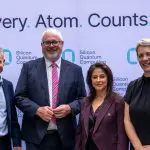
IonQ will deliver multiple generations of quantum systems to the Defense Advanced Research Projects Agency after securing a Stage C agreement potentially worth $300 million. The advancement follows successful completion of earlier stages in DARPA’s Quantum Benchmarking Initiative, validating IonQ’s approach to building large-scale, fault-tolerant quantum computers, the company says. “Advancing to Stage C is a significant vote of confidence in IonQ’s technology roadmap and architecture for delivering quantum computing at utility scale,” said Niccolo de Masi, IonQ Chairman and CEO. Running through 2029, DARPA will independently verify and validate IonQ’s Superion quantum systems.
DARPA Validates IonQ’s Roadmap to Utility-Scale Quantum Computing
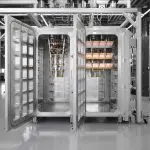
IonQ’s Superion 256 quantum computer is now undergoing rigorous, independent testing by the Defense Advanced Research Projects Agency, marking the commencement of Stage C within DARPA’s Quantum Benchmarking Initiative. This phase, running through 2029, will subject multiple generations of IonQ’s quantum systems to exhaustive validation against the company’s technical roadmap, assessing performance and scalability. The agreement underpinning this verification has a potential value of up to $300 million, contingent on future appropriations and DARPA funding decisions.
DARPA’s selection of IonQ for Stage C follows successful completion of Stages An and B, where the company first defined a technical concept for a utility-scale quantum computer and then developed a detailed research and development roadmap. Stage A focused on establishing the foundational technical concept, while Stage B detailed the designs and risk-mitigation plans necessary to achieve IonQ’s proposed system.
The initiative is designed to determine if quantum computing systems can achieve utility scale, where computational value surpasses cost, and IonQ is among the first companies to reach this advanced stage of evaluation, according to the company. “We’ve long believed that winning the quantum race requires more than achieving technical milestones. It requires building systems that can be manufactured reliably and at scale, and that are designed to solve some of the world’s most complex problems.” That is happening today, with our sixth-generation quantum computer, Superion 256.
IonQ’s strategy emphasizes simplification and scalability, a departure from approaches that prioritize increasing complexity. Chris Ballance, IonQ President of Quantum Computing, explained this philosophy, stating that this focus on manufacturability and operational reliability is intended to accelerate the deployment of quantum solutions for commercial, scientific and security applications.
Throughout the QBI process, IonQ will continue to expand its manufacturing capabilities and customer base, offering Superion systems through all major cloud providers since 2021, the firm reports. The company previously achieved 99.99% two-qubit gate fidelity in 2025, a world record in quantum computing performance, and has already collaborated with organizations like Amazon Web Services, AstraZeneca and NVIDIA, IonQ reports. These partnerships have yielded a 20x performance increase over previous quantum solutions, accelerating innovation in fields such as drug discovery, materials science and financial modeling.
Headquartered in Park, Maryland, IonQ maintains operations across North America, Latin America, EMEA and APAC, positioning the company to serve a global market for quantum computing services. The company’s approach aims to make quantum platforms more accessible and impactful, and the ongoing DARPA validation process is an important step in demonstrating the viability of this vision.
Advancing to Stage C is a significant vote of confidence in IonQ’s technology roadmap and architecture for delivering quantum computing at utility scale.
Niccolo de Masi, IonQ Chairman and CEO
Source: https://ionq.com/news/ionq-advances-to-final-stage-of-darpas-quantum-benchmarking-initiative
See today’s quantum computing news on Quantum Zeitgeist for the latest breakthroughs in qubits, hardware, algorithms, and industry deals.