As quantum computers grow in complexity, a subtle obstacle is emerging that threatens to stall their progress. Researchers at the Helmholtz-Zentrum Dresden-Rossendorf (HZDR) demonstrate in New Journal of Physics that frequent, even minor, disruptions can trigger the quantum Zeno effect, effectively causing certain quantum computations to freeze. This previously overlooked issue is particularly relevant for adiabatic quantum computers, which rely on qubits continuously adapting as their energy landscape changes. “The quantum Zeno effect is a previously overlooked obstacle to a certain class of quantum computers,” says Dr. Gernot Schaller, head of Quantum Technologies at HZDR’s Institute of Theoretical Physics. The team’s findings suggest that as the number of qubits increases, these computers become increasingly vulnerable to external disturbances, potentially halting calculations altogether.
Adiabatic Quantum Computers & Ground State Operation
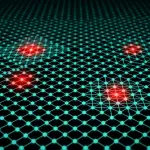
Adiabatic quantum computers, designed to tackle complex problems beyond the reach of conventional machines, face a subtle but significant limitation: even minor disruptions can impede their operation. These computers function by maintaining qubits in their ground state, the lowest energy level, and solving problems by gradually altering the energy landscape surrounding them. This method, considered robust and independent of the specific hardware used, relies on qubits continuously adapting to the changing ground state; however, the HZDR team’s theoretical model reveals increasing sensitivity to disturbances as the number of qubits scales up. The more qubits are interconnected, the smaller the necessary changes to the energy landscape, making the system vulnerable to even minuscule environmental influences. Each disturbance acts as an unwanted measurement, slowing the system’s evolution, and in extreme cases, halting computation entirely.
Professor Ralf Schützhold, Institute Director, emphasizes that even with shielding against electromagnetic radiation and cooling to near absolute zero, environmental impacts cannot be fully eliminated. “Using the spin-echo method, we can apply coherent pulses to reduce the coupling of qubits to their environment,” Schützhold suggests, proposing active measures to mitigate the effect. “Our study shows that we can only develop powerful quantum computers when we factor in environmental impacts from the very beginning,” he summarizes.
But despite all these measures, environmental impacts on the qubits can never be fully eliminated,” says Schützhold.
Schützhold. According
The pursuit of increasingly complex quantum computers faces a subtle but significant hurdle; researchers are discovering that the very act of computation can be impeded by environmental interactions. This isn’t a matter of hardware failure, but a fundamental limitation imposed by the physics governing these delicate systems. As the number of interconnected qubits increases, the necessary adjustments to the energy landscape become smaller, amplifying the effect of even minor disturbances. “This is where the quantum Zeno effect kicks in,” says Dr. Gernot Schaller. “In the worst case, a calculation could even freeze completely,” Schaller notes. The team’s findings, published in New Journal of Physics, emphasize that future quantum computer development must proactively account for these environmental impacts from the outset to overcome this previously overlooked obstacle.
The quantum Zeno effect is a previously overlooked obstacle to a certain class of quantum computers.
Dr. Gernot Schaller, head of Quantum Technologies at HZDR’s Institute of Theoretical Physics
Researchers are actively addressing the quantum Zeno effect, a phenomenon that threatens to impede the scaling of adiabatic quantum computers, with strategies focused on both shielding and active qubit manipulation. Institute Director Prof. Ralf Schützhold explains that adiabatic algorithms “can be executed by quantum computers largely independently of the hardware that is used,” but even this robustness is challenged by environmental interference. Protecting qubits requires more than just maintaining extremely low temperatures and shielding against electromagnetic radiation; these measures alone are insufficient to eliminate all external impacts. “Each disturbance acts like an unwanted measurement, slowing down the system’s evolution,” notes Dr. Gernot Schaller. To counteract this, the team proposes employing the spin-echo method, which complements passive shielding and creates a multi-layered approach to preserving qubit coherence.
This is where the quantum Zeno effect kicks in,” says Schaller.
Schaller. Even
Source: https://www.hzdr.de/presse/qzeno
See today’s quantum computing news on Quantum Zeitgeist for the latest breakthroughs in qubits, hardware, algorithms, and industry deals.