Horizon Quantum Computing is the Singapore company that builds software for quantum computers rather than the machines themselves, and in 2026 it became the first pure-play quantum software business to trade on a major public exchange. Founded in 2018 by the physicist Joe Fitzsimons, Horizon writes the compilers, languages and development tools that let ordinary programmers run code on quantum hardware, a software-first bet in a field dominated by hardware makers. This is the commercial history of Horizon Quantum Computing, from a Singapore startup to a Nasdaq listing under the ticker HQ, with a close look at the hardware testbed it has assembled to prove its software works on real machines.
1. A software-first quantum company. Horizon Quantum Computing builds the software layer for quantum computing, the compilers, languages and tools that turn quantum hardware into something a normal programmer can use, rather than building the quantum processors themselves.
2. Singapore roots, founded in 2018. Horizon was founded in 2018 by the quantum physicist Joe Fitzsimons and is headquartered in Singapore, where it has become one of the region’s most visible quantum companies.
3. The first listed pure-play software stock. Horizon trades on the Nasdaq under the ticker HQ after a March 2026 merger, making it the first pure-play quantum software company to list on a major United States exchange.
4. It runs its own multi-modal hardware testbed. In December 2025 the company became the first quantum software firm to own and operate its own quantum computer, a superconducting system in Singapore, and it has since agreed to add a trapped-ion machine so its tools are tested across two very different architectures.
5. Its flagship product is Triple Alpha. The main product is Triple Alpha, an integrated development environment for quantum software, paired with a high-level programming language called Beryllium designed to hide the complexity of quantum hardware from the developer.
6. Funded by major venture backers. Horizon raised about 21 million dollars privately before going public, led by an 18.1 million dollar Series A from Sequoia, with Entrepreneur First among its earliest backers, and the 2026 SPAC then added a 110 million dollar PIPE.
What Horizon Quantum Computing does
Horizon builds the software that sits between a programmer and a quantum computer, the tools that take ordinary code and turn it into instructions a quantum machine can run. Most quantum companies pour their money into building physical processors, but Horizon decided that the harder and more valuable problem was making those processors usable. Its products aim to let a software engineer write quantum applications without first becoming a quantum physicist, lowering the barrier that has kept the field small and dependent on a handful of specialists.
That focus makes the company unusual among public quantum names, almost all of which are hardware makers or full-stack providers. Horizon sits in the same broad area as the wider quantum software ecosystem, supplying the compilation and development layer rather than the qubits underneath. The company argues that as quantum hardware improves, the bottleneck will move to software, and that owning that layer is where lasting value will sit. It is a classic platform bet, applied to a field that does not yet have a settled programming model.
There is a second strand to what the company does that is easy to miss from the software label alone. To make its compilers trustworthy, Horizon now owns and operates real quantum hardware, a superconducting testbed in Singapore that it uses to benchmark its tools against the messy behaviour of physical qubits. That combination, a software company that also runs metal, is the thread that ties the rest of this story together, and it is the part of the business that has changed most in the past year.
Origins as a Singapore software startup
Horizon was founded in 2018 by Joe Fitzsimons, a quantum physicist who had worked on quantum algorithms, blind quantum computation and quantum security before turning to commercial software. The company set up in Singapore, drawing on the city-state’s research base and its national push to become a quantum hub, and it took its first institutional backing through the Entrepreneur First company-builder programme. From the beginning the plan was to attack the software problem rather than to compete in the costly race to build better qubits, a position that looked contrarian when most of the money in the field was flowing into hardware.
The company grew from that small base into one of the most prominent quantum names in Asia, expanding its engineering team and later opening its first office outside Singapore as it scaled. Joe Fitzsimons has remained chief executive throughout, giving the business a consistent founder-led direction as it moved from an early-stage startup toward a public company. That continuity of leadership is a recurring thread in the commercial story, and it matters for a deep-tech firm whose roadmap stretches years beyond any single product release.
The early funding picture was modest by the standards of hardware rivals, which is consistent with a software thesis that needs talent more than fabrication plants. A 2020 seed round got the company moving, and a larger Series A in 2023 gave it the runway to build out Triple Alpha and pursue the testbed that would later define it. We cover the relevant rounds in Quantum Zeitgeist’s reporting, and the funding section below puts the numbers in order against the later public listing.
Why Horizon bet on software, not hardware
The strategic choice that defines the company is its decision to stay out of the hardware race. Building quantum processors is enormously expensive and crowded, with well-funded rivals pouring billions into superconducting and trapped-ion machines. Horizon reasoned that those machines would be commodified over time, and that whoever made them easy to program would capture a durable position regardless of which hardware won. The bet is that programming languages and compilers outlive the chips they target, the way the C language outlived the processors it was first written for.
That decision shapes how the company makes money and how it works with the rest of the industry. Rather than selling boxes, it sells access to tools and aims to run on many different kinds of quantum hardware, positioning itself as a layer that any machine can plug into. The approach also lets Horizon partner with hardware companies instead of fighting them, working with processor makers such as Rigetti and trapped-ion specialists rather than trying to out-build them. Every hardware partner becomes a target platform rather than a competitor, which is a more comfortable place to sit in a capital-hungry field.
There is a clear historical analogy that the company leans on. In classical computing, the firms that wrote the dominant compilers, operating systems and developer tools captured enormous value without ever fabricating a chip. Horizon is betting that the same split will emerge in quantum, and that being early to the software layer gives it a structural advantage when the hardware finally matures. The risk, of course, is that the hardware makers build good-enough software of their own, a tension we return to in the competitive landscape below.
Triple Alpha, Beryllium and automatic algorithm discovery
Horizon’s flagship product is Triple Alpha, an integrated development environment for quantum software that the company has built up over several years. Triple Alpha is meant to be the place where a developer writes, compiles and tests quantum programs, taking high-level code and turning it into something that can run on real hardware. The company has described it as a full development stack rather than a single tool, and the proceeds from its listing are earmarked partly to keep refining it. In practice it is both an editor and a compilation engine, with the in-house testbed wired in so that code can be pushed to physical qubits without leaving the environment.
Underneath Triple Alpha sits a high-level programming language that Horizon calls Beryllium, designed so that a programmer can express an algorithm without hand-writing the low-level circuit. The promise is that the compiler does the hard work of mapping that code onto a specific machine, the same way a classical compiler hides the details of a processor from the person writing the program. Together Triple Alpha and Beryllium are the company’s answer to the question of how the next wave of developers will write quantum software, and they are the assets the public-market money is meant to sharpen.
The most ambitious idea in the product is automatic algorithm discovery, the goal of letting the compiler find quantum routines inside classical source rather than asking a human to design a circuit by hand. The aspiration is that a developer could write a problem in familiar, classical-looking code, and the compiler would recognise where a quantum subroutine could help and generate it. If that works at scale it would collapse the skills barrier that keeps quantum programming niche, which is exactly the moat the company is trying to build. It is also the hardest claim to validate, which is one more reason the firm wants real hardware in the loop rather than simulators alone.
The hardware testbed and why a software company runs one
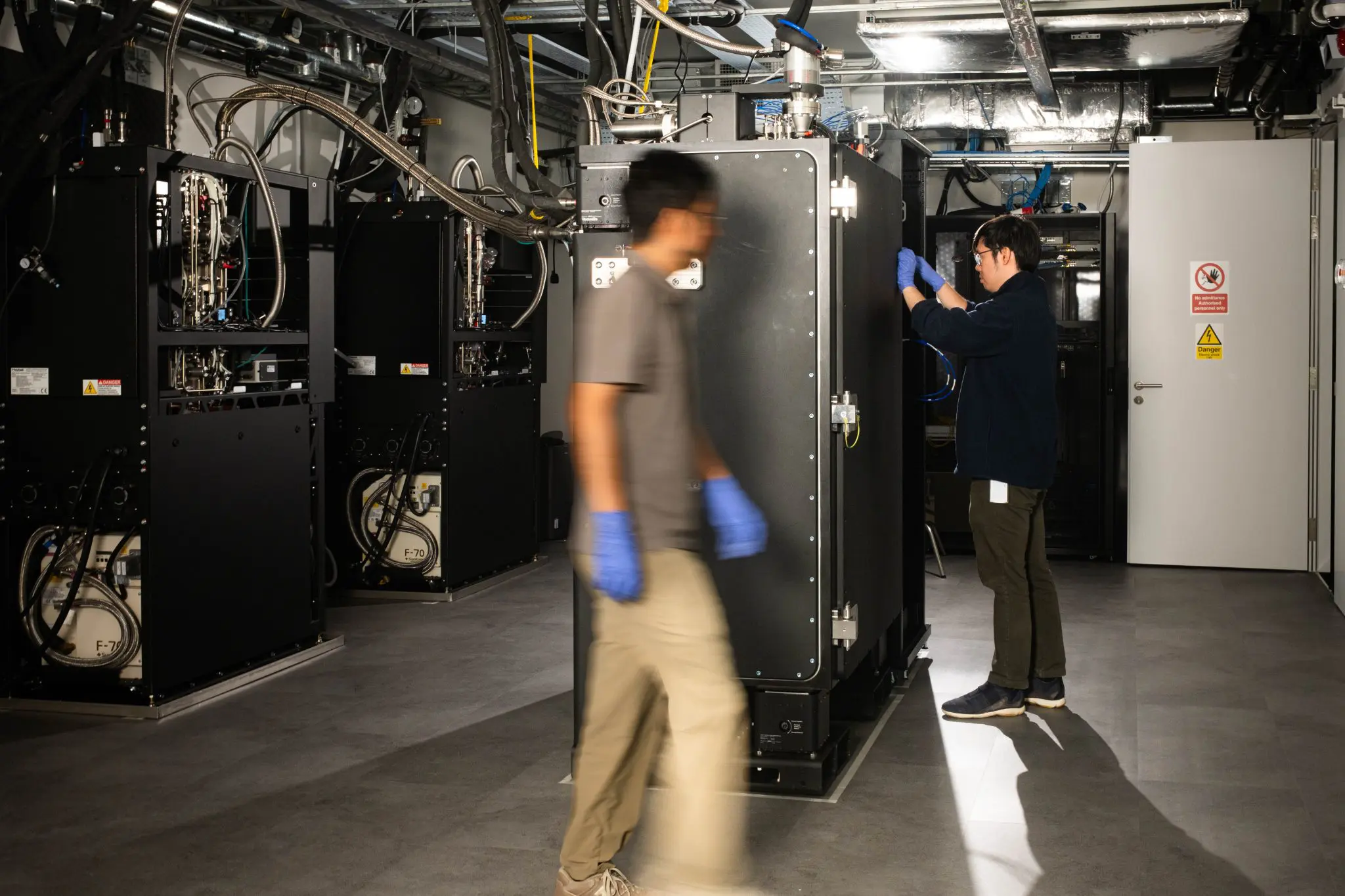
The single most distinctive thing about Horizon today is that a software company runs its own quantum hardware. For most of its life the firm tested its tools on simulators and on other people’s cloud machines, but it concluded that simulators hide the imperfections that matter most and that rented cloud time is too slow and too shared for the tight loop its compiler work needs. Owning a machine changes the economics of iteration, because engineers can run thousands of small experiments against real qubits without queuing behind other customers.
The technical reason is more important than the convenience. A compiler that only ever targets a perfect simulator will produce circuits that fall apart on real hardware, where qubits decohere, gates misfire and crosstalk creeps in between neighbours. By owning a machine the company can do hardware-aware compilation, where the compiler is tuned against the measured behaviour of a specific device, and it can run real-device benchmarking of Triple Alpha and Beryllium rather than trusting idealised numbers. It can also do error characterisation, building a detailed picture of how a given chip fails so the software can route around those weaknesses.
That loop, from compiler output to physical execution and back to the compiler, is the whole point. Pushing a circuit onto a real device, measuring how far the result drifts from the ideal, and feeding that back into the next compilation pass is how the company turns abstract claims about its tools into evidence. It is worth stating plainly that none of this makes Horizon a qubit manufacturer. The firm did not design or fabricate a single qubit in its testbed, and it has been explicit that it integrates best-in-class third-party hardware rather than trying to build processors of its own.
Inside the testbed, layer by layer
The Singapore machine is an integration of three vendors’ products, each handling a different layer of the stack, and understanding it means understanding what each layer does. A superconducting quantum computer is really a chilled chip, a wall of control electronics and a software layer that ties them together, and Horizon supplied the last of those while buying in the first two. The table below summarises the verified components, and the layer notes underneath explain each one in plain English.
| Layer | Vendor and product | What it does |
|---|---|---|
| The cold | Maybell Quantum dilution refrigerator | Keeps the processor within a fraction of a degree of absolute zero so the qubits stay coherent. |
| The control | Quantum Machines OPX1000 | Generates and reads the microwave pulses that drive and measure every qubit in real time. |
| The processor | Rigetti Novera QPU, nine qubits | The physical chip that holds the superconducting qubits and runs the quantum operations. |
| The software | Horizon Triple Alpha and Beryllium | Compiles high-level code into circuits and orchestrates the run on the device. |
The Maybell cryostat
Superconducting qubits only behave quantum-mechanically when they are cooled to within a few thousandths of a degree of absolute zero, far colder than deep space. That cooling is the job of a dilution refrigerator, and Horizon’s testbed uses a system from Maybell Quantum, a Denver company known for high-density cryogenic platforms. Maybell’s large-volume design is built to hold more wiring and more qubits in a single fridge than conventional cryostats, which matters for a testbed that the company intends to grow over time. The cold layer is unglamorous but foundational, because every gate and every measurement above it depends on the qubits staying coherent long enough to compute.
Choosing a high-capacity fridge is a statement of intent rather than a one-off purchase. A larger cryogenic envelope leaves headroom to wire in more qubits and more control lines later, so the testbed can scale without the company ripping out and replacing its most expensive single component. For a software firm that wants its compiler tested against progressively larger devices, that headroom is exactly the kind of future-proofing worth paying for up front.
The Quantum Machines OPX1000 control system
Between the warm world of software and the cold world of qubits sits the control electronics, and this is where Horizon uses the OPX1000 from Quantum Machines, an Israeli specialist in quantum control. The OPX1000 is a high-density controller that generates the precisely shaped microwave pulses that drive each qubit, reads back the faint signals that encode a measurement, and does so with the low latency that feedback and error handling demand. In a real machine the control layer is doing an astonishing amount of work, because every logical instruction the compiler emits has to become a stream of analogue pulses timed to nanoseconds.
The control layer matters enormously for a compiler company, which is the reason Horizon cares which controller sits in its rack. The quality of the pulses, the speed of the feedback and the flexibility of the control software all shape what a compiler can actually ask the hardware to do, so a more capable controller widens the design space the compiler can explore. Quantum Machines has publicly demonstrated its platform driving Rigetti’s Novera chip to a 99.5 percent two-qubit gate fidelity, which gives a sense of how tightly the control and processor layers have to be matched for the whole stack to perform.
The Rigetti Novera QPU
The processor itself is a Novera QPU from Rigetti Computing, the company’s first commercially available chip and the heart of the Singapore testbed. The Novera is a nine-qubit superconducting processor based on Rigetti’s fourth-generation Ankaa-class architecture, with the nine tunable transmon qubits laid out in a three-by-three square lattice and connected by twelve tunable couplers. That tunable-coupler design is what enables fast, high-fidelity two-qubit operations, because the coupling between neighbouring qubits can be switched on only when a gate is needed and switched off the rest of the time to suppress crosstalk. The product also ships with a separate five-qubit chip for single-qubit testing, and it is fabricated in Rigetti’s dedicated Fab-1 facility.
The path of that chip to Singapore is itself part of the story. Rigetti announced the Singapore-based testbed collaboration in April 2024 and delivered the Novera QPU to Horizon for installation, and the system came online as a fully operating machine by December 2025. Buying Rigetti’s commercial QPU rather than building one is the clearest possible expression of the software-first model, because the company gets a known, characterised, supportable processor to compile against without taking on any of the fabrication risk. For readers who want the deeper hardware picture, our guide to the leading superconducting quantum companies sets Rigetti’s Ankaa line in context.
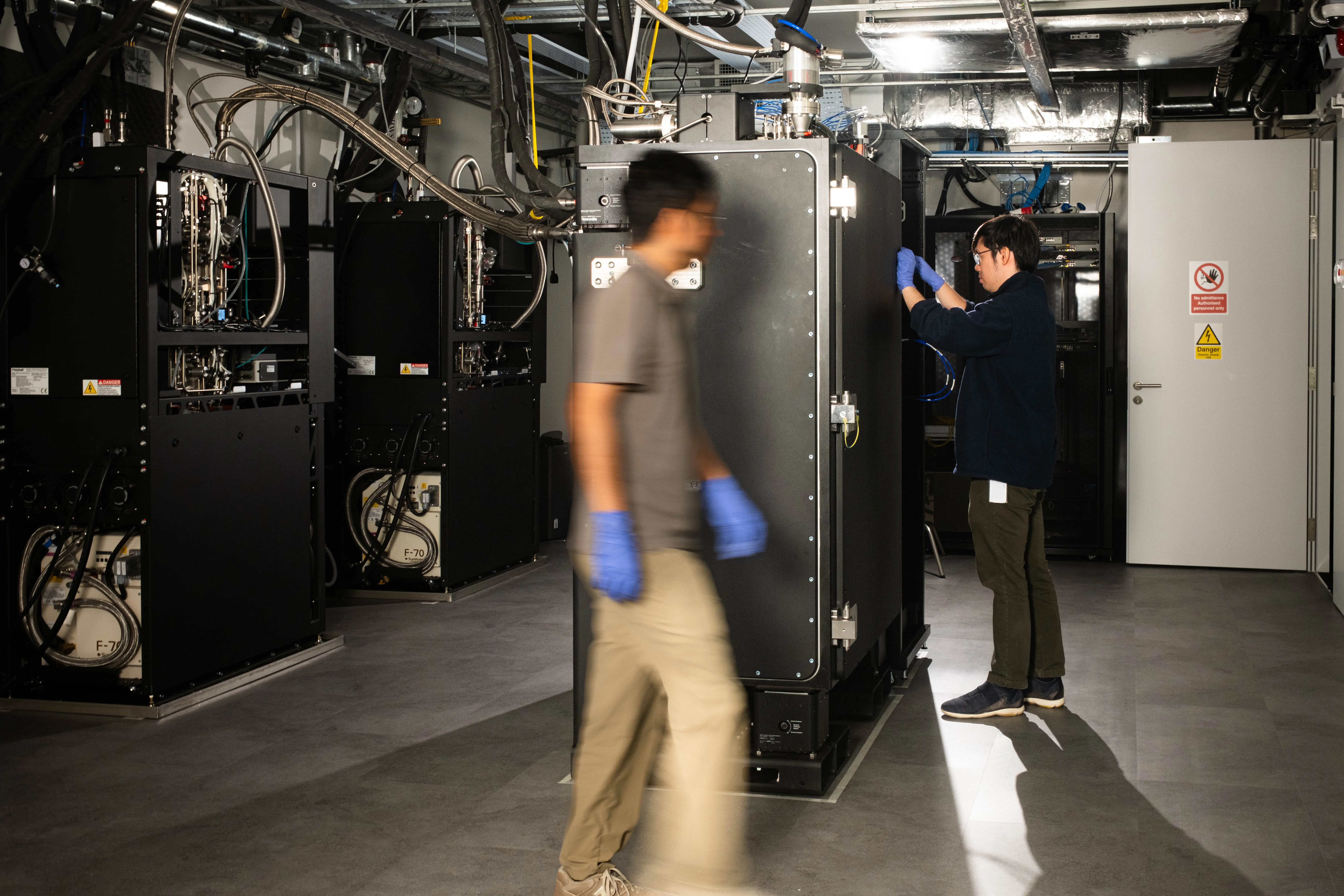
The December 2025 own-machine milestone
On 3 December 2025 the company announced that it had brought the integrated system online and become, in its own words, the first quantum software company to own and operate its own quantum computer. The framing is precise and worth keeping precise, because it is a claim about a software company owning hardware rather than a claim about building the world’s best machine. Joe Fitzsimons summed up the reasoning by saying that tight integration between hardware and software offers the shortest path to useful quantum computing, which is the thesis the whole testbed is meant to prove.
Some of the coverage went further and described the system as Singapore’s first quantum computer deployed for commercial use, a line that ran in CNBC’s reporting on the launch. That stronger phrasing is press framing rather than a technical record, and it reflects the state of the local market rather than any global milestone, so it is fair to attribute it rather than to assert it. We have kept the verified claim, that this is the first software company to own and run such a machine, separate from the looser regional one to avoid overstating what the launch represents.
What the milestone really signals is a change in how the company validates itself. Before December 2025 its evidence rested on simulators and shared cloud access, and after it the firm could point to circuits compiled by Triple Alpha and executed on a machine it controls end to end. For a business whose entire pitch is that it makes quantum hardware usable, owning a working device is the most credible demonstration available, and it converts a software claim into something prospective customers and investors can see running.
Going multi-modal with the IonQ trapped-ion system
If the December 2025 machine proved the model on superconducting hardware, the next step was to prove it on a completely different kind of qubit. On 9 April 2026 the company announced a strategic agreement with IonQ, finalised on 31 March 2026, to purchase one of IonQ’s first sixth-generation, chip-based 256-qubit trapped-ion systems. This is a purchase of one machine, not an acquisition of the company, and getting that distinction right matters because the two would mean very different things. You can follow the deal through our coverage of the planned 256-qubit trapped-ion system from IonQ.
The IonQ system is a very different beast from the Rigetti chip, and that difference is the whole point. Trapped-ion qubits are held in electromagnetic fields rather than printed on a superconducting chip, they operate at room temperature rather than near absolute zero, and IonQ’s forthcoming design promises all-to-all connectivity, microwave gate operations and gate fidelities quoted at 99.99 percent. Adding it turns Horizon’s single-modality testbed into a multi-modal platform spanning superconducting and trapped-ion hardware, which the company has described as putting it among only a few efforts worldwide to operate commercial systems of more than one modality.
The strategic logic follows directly from the software thesis. A compiler that is genuinely hardware-agnostic has to prove it can target architectures that behave nothing alike, and superconducting and trapped-ion machines are about as different as two gate-model quantum computers get. By running both, the company can show that Triple Alpha and Beryllium are not quietly tuned to one vendor’s quirks, which is central to the pitch that it is a neutral layer any machine can plug into. Joe Fitzsimons framed the deal as bringing trapped-ion qubits and world-leading gate fidelities to the testbed in pursuit of broad quantum advantage for developers, language that keeps the focus squarely on the software rather than the silicon.
How the testbed strategy compares
It helps to place this testbed approach against the two more familiar models in the industry. Pure-play hardware makers such as IonQ, Rigetti and D-Wave design and fabricate their own qubits and live or die by the physics of their devices, carrying enormous capital costs and long development cycles. Horizon deliberately avoids that path, buying finished processors instead of building them, so it never takes on fabrication risk or the multi-year timelines that come with pushing a qubit technology forward.
At the other extreme sit cloud-only software firms that write tools but never touch a machine, relying entirely on remote access to hardware they do not control. Horizon’s testbed strategy threads between the two, keeping the asset-light economics of a software company while owning just enough hardware to close the compiler feedback loop. The company gets the validation benefits of real devices, including hardware-aware compilation and honest benchmarking, without the balance-sheet weight or the scientific risk of being a chip maker.
That hybrid position is unusual and is part of what makes the company interesting to watch. It is asking investors to value it as a software platform while it does something software platforms rarely do, which is operate physical quantum machines across multiple modalities. Whether that combination proves to be the best of both worlds or an awkward middle ground is one of the open questions the public company now has to answer in front of the market.
Commercial milestones and partnerships
Horizon has spent the past few years building a network of hardware partners and proof points around its software. It first announced its hardware testbed in partnership with Rigetti and Quantum Machines in 2024, a project that eventually became the company’s own in-house machine, and it has taken part in quantum networking work in Singapore. In early 2026 it went further, entering the strategic agreement to purchase one of IonQ’s chip-based 256-qubit trapped-ion systems, adding a second hardware architecture and turning the testbed into a multi-modal platform that spans two very different qubit technologies.
- 2018Joe Fitzsimons founds Horizon Quantum Computing in Singapore.
- 2020The company raises a seed round to build out its software stack.
- 2023An 18.1 million dollar Series A led by Sequoia funds the testbed and Triple Alpha.
- Apr 2024Rigetti and Quantum Machines partner on the Singapore hardware testbed, with a Novera QPU bound for Horizon.
- Sep 2025The company agrees a SPAC merger with dMY Squared Technology Group.
- Dec 2025The integrated quantum computer comes online in Singapore, a first for a software company.
- Mar 2026Shareholders approve the merger and Class A shares begin trading on the Nasdaq as HQ.
- Apr 2026A strategic agreement to buy a 256-qubit trapped-ion system from IonQ makes the testbed multi-modal.
The IonQ deal matters because it reinforces the company’s promise to run on many kinds of hardware. By testing on both a superconducting machine and a trapped-ion system, the firm can show that its compiler and tools are not tied to one architecture, which is central to its pitch as a neutral software layer. Each partnership also gives the company a public proof point, a concrete machine it can point to rather than an abstract claim about portability, and that kind of evidence is what a software thesis ultimately rests on.

Horizon funded its early growth through venture capital before turning to the public markets. It raised a seed round in 2020, and an 18.1 million dollar Series A in 2023 led by Sequoia, bringing private funding to roughly 21 million dollars before the public listing, which then added a 110 million dollar PIPE. The investor base grew to include Entrepreneur First, which seeded the company at the very start, alongside a roster of technology and deep-tech funds drawn to the software-first thesis. By the standards of hardware rivals raising hundreds of millions, that private total was deliberately lean, which is consistent with a business that spends on engineers rather than fabrication.
Private capital took the company a long way, but a software firm chasing a global developer market needs scale and visibility that venture rounds alone struggle to provide. A public listing offered a deeper pool of funding, a tradable currency for deals and a higher profile in a field where credibility matters. By 2025 the company had decided to take that step, setting up the merger that would put it on the Nasdaq and give it the balance sheet to expand the testbed and accelerate Triple Alpha. The decision also fit the moment, with public-market appetite for quantum names running unusually hot.
The HQ listing on the Nasdaq
This article describes Horizon Quantum Computing’s history and its listing for general information, and nothing here is investment advice. Quantum stocks are volatile and early stage, so always check the latest filings and do your own research before making any decision.
Horizon went public through a business combination with dMY Squared Technology Group, a listed special purpose acquisition company, in a deal first announced in September 2025 with an enterprise value of roughly 503 million dollars. dMY Squared’s shareholders approved the combination on 17 March 2026, and the merged company completed the deal shortly after. The transaction was framed as making the firm the first pure-play quantum software company to list on a major United States exchange, a distinction that set it apart from the hardware-led names that had gone public before it.
On 20 March 2026 the company’s Class A ordinary shares began trading on the Nasdaq under the ticker symbol HQ, with its warrants listed under HQWWW. You can read Quantum Zeitgeist’s coverage of the moment Horizon began trading on the Nasdaq and of the original 503 million dollar SPAC deal that set it up. The listing turned a private Singapore startup into a public quantum software stock almost overnight, with all the scrutiny and reporting obligations that brings.
The closing brought in roughly 120 million dollars in gross proceeds before expenses, money the company has said it will use to accelerate research and development, expand its hardware testbed and refine Triple Alpha. Because the firm is a software business rather than a hardware maker, its costs are weighted toward engineering talent rather than fabrication, which shapes how that capital is spent and how long it should last. As a newly listed company it now reports its results in public, beginning with its first quarter as a public company, and those filings are where the real numbers behind the story will appear.
Competitive landscape
The company competes in a market that does not yet have a settled winner, which is both its opportunity and its risk. On one side sit the open-source frameworks and vendor toolkits that already dominate how people write quantum programs today, from broad ecosystems backed by the largest hardware makers to community projects used in universities. Those tools are free and entrenched, so any commercial software layer has to offer something materially better to win developers away.
On another side sit the hardware companies themselves, most of which ship their own software stacks alongside their machines. Names such as IonQ, Rigetti and D-Wave all provide development tools tuned to their own devices, and a hardware-agnostic challenger has to prove that running across many machines beats running well on one. Horizon’s answer is its compiler technology and its multi-modal testbed, which together are meant to show that portability does not have to mean mediocrity, but that case still has to be won in front of working developers.
The clearest way to grasp the field is to compare the layers directly, and our guides to the superconducting and trapped-ion hardware makers show how crowded the layer below Horizon has become. The company’s wager is that this crowding is exactly why a strong, neutral software layer is valuable, because someone has to make all those different machines speak a common language.
Applications and use cases
The applications that motivate the company are the same ones that motivate the wider industry, with the difference that Horizon wants to make them reachable by ordinary developers. Optimisation problems in logistics and finance, simulation of molecules and materials in chemistry, and quantum machine learning are the families of workloads where useful quantum advantage is most often discussed. In each case the obstacle is the difficulty of expressing the problem as a quantum circuit, which is precisely the gap the company’s tools target.
Because the company sells tooling rather than answers, its near-term value lies in shortening the distance between a domain expert and a working quantum prototype. A chemist or a quant should be able to describe a problem in code they already understand and let the compiler handle the translation, instead of hiring a specialist to hand-build circuits. That is the practical face of the automatic algorithm discovery ambition, and it is where the testbed earns its keep, because a tool that claims to make these workloads runnable has to be demonstrated on real hardware.
Roadmap and outlook
The roadmap that the company has signalled is built around three moving parts that have to advance together. The first is the software itself, where Triple Alpha and Beryllium need to keep maturing toward the automatic algorithm discovery at the core of the long-term pitch, an effort the listing proceeds are meant to fund. The second is the testbed, which has to grow from a single nine-qubit superconducting machine into a multi-modal platform once the IonQ trapped-ion system arrives, proving the tools are genuinely portable across architectures.
The third part is the business, where a newly public company has to turn a listing and a credible technology story into durable revenue. The clearest near-term tests are simple to state. Triple Alpha and Beryllium have to win real developers, the IonQ and Rigetti testbeds have to demonstrate that the tools are hardware-agnostic in practice, and the public company has to show progress in its quarterly filings. None of those outcomes is guaranteed, but each is measurable, which makes the company unusually easy to track against its own stated goals.
Leadership
Horizon is led by its founder and chief executive Joe Fitzsimons, a quantum physicist whose research spanned quantum algorithms, blind quantum computation and quantum security before he turned to building a company. His continued presence at the top has given the firm a single, consistent technical vision from its 2018 founding through its venture rounds and its 2026 listing. That founder continuity is unusual in a field where leadership often turns over as companies professionalise, and it means the software-first thesis has had the same advocate throughout.
Founder-led direction cuts both ways for a young public company, and it is worth holding both sides in view. The upside is a clear, conviction-driven strategy that has not wavered between hardware and software, which is part of why the firm reached a public listing intact. The risk is the concentration of vision in one person at a company that now answers to public shareholders, which raises the usual questions about how leadership and governance scale as the business grows. How the team broadens around the founder is one of the quieter things to watch.
Risks to watch
For all the momentum, the company carries the familiar risks of an early-stage quantum business that has just gone public. The technology bet is the largest, because automatic algorithm discovery and a fully hardware-agnostic compiler are hard problems that no one has solved at scale, and the value of the firm rests on delivering them. If the hardware makers ship good-enough software of their own, the case for an independent layer weakens, which is the competitive risk that shadows the whole strategy.
There are commercial and market risks layered on top of the technical ones. Quantum stocks are volatile and early stage, revenue in the field is small relative to the valuations, and a SPAC-listed company faces extra scrutiny over how its enterprise value translates into real results. The testbed strategy, while clever, also adds operational complexity and cost that a pure software firm would avoid, so the company has to show that owning hardware pays for itself in better tools. As always, the filings rather than the headlines are where these risks will be tested, and nothing here is investment advice.
Horizon Quantum Computing by the numbers
For anyone trying to place the company, a handful of facts frame the business better than any single headline. It is a software-first business whose value rests on how widely its tools are adopted and how well they run across different machines, rather than on near-term profit. Its progress is best read through product releases, hardware partnerships and the terms of its public listing.
What comes next will decide whether the firm becomes the default software layer for the industry or one option among several. Triple Alpha and Beryllium have to win real developers, the IonQ and Rigetti testbeds have to prove the tools are hardware-agnostic, and the public company has to turn its listing into durable revenue. You can follow the company’s own announcements on the Horizon Quantum Computing official site, and track each development as it happens through Quantum Zeitgeist’s ongoing coverage.
Horizon Quantum Computing FAQ
What does Horizon Quantum Computing do?
Horizon builds software for quantum computers rather than the machines themselves. It makes compilers, a high-level language and an integrated development environment so that ordinary programmers can write quantum applications without first becoming quantum physicists, positioning itself as the software layer of the quantum stack.
What is the Horizon Quantum stock ticker?
Horizon Quantum Computing trades on the Nasdaq under the ticker symbol HQ, with its warrants listed under HQWWW. The shares began trading on 20 March 2026 after the company merged with the listed shell dMY Squared Technology Group, and nothing here is investment advice.
Is Horizon Quantum a public company?
Yes, Horizon is a public company. It listed on the Nasdaq on 20 March 2026 through a business combination with dMY Squared Technology Group, becoming the first pure-play quantum software company to trade on a major United States exchange.
Where is Horizon Quantum Computing based?
Horizon is headquartered in Singapore, where it was founded in 2018. The city-state’s research base and national quantum programme helped the company grow, and it later opened its first office outside Singapore as it expanded.
What is Triple Alpha?
Triple Alpha is Horizon Quantum Computing’s flagship product, an integrated development environment for quantum software. It is where developers write, compile and test quantum programs, and it works with a high-level language called Beryllium that lets programmers express algorithms without hand-writing low-level quantum circuits.
What is Beryllium?
Beryllium is the high-level programming language inside Triple Alpha, designed to hide the complexity of quantum hardware from the developer. A programmer expresses an algorithm in Beryllium, and Horizon’s compiler maps that code onto a specific machine, the same way a classical compiler hides the details of a processor.
Does Horizon Quantum own a quantum computer?
Yes, in December 2025 Horizon became the first quantum software company to own and operate its own quantum computer. The machine sits at its Singapore headquarters and combines a Maybell cryostat, a Quantum Machines OPX1000 control system and a Rigetti Novera processor, which the company uses as a testbed for its software.
What hardware is in the Horizon testbed?
The superconducting testbed integrates a Maybell dilution refrigerator for cooling, a Quantum Machines OPX1000 controller for the microwave pulses, and a nine-qubit Rigetti Novera QPU built on the Ankaa-class architecture. Horizon supplies the software layer and did not build any of the qubits itself.
Why does a software company run its own quantum computer?
Owning a machine lets Horizon do hardware-aware compilation and benchmark Triple Alpha and Beryllium against real qubits rather than idealised simulators. The testbed closes the loop between compiler output and physical execution, which is the most credible way for a software firm to prove its tools work on real hardware.
What is the IonQ deal about?
In April 2026 Horizon signed a strategic agreement to purchase one of IonQ’s first sixth-generation, chip-based 256-qubit trapped-ion systems. The purchase adds a second hardware modality alongside the superconducting machine, turning the testbed into a multi-modal platform and helping prove the software is hardware-agnostic.
Who founded Horizon Quantum Computing?
Horizon was founded in 2018 by Joe Fitzsimons, a quantum physicist who serves as the company’s chief executive. He has led the company from an early-stage Singapore startup through its venture rounds and its 2026 listing on the Nasdaq.
How much money has Horizon raised?
Horizon raised roughly 21 million dollars privately before going public, led by an 18.1 million dollar Series A from Sequoia in 2023 and an earlier 2020 seed round, with Entrepreneur First among its first backers. The 2026 SPAC merger then added a 110 million dollar PIPE and brought in about 120 million dollars in gross proceeds at close.
How is Horizon different from quantum hardware companies?
Companies such as IonQ, Rigetti and D-Wave build the quantum processors, whereas Horizon builds the software that runs on top of them. That software-first model lets Horizon work across many kinds of hardware instead of betting on one, making it the first listed pure-play quantum software business rather than another hardware maker.
Disclaimer. This article is for informational purposes only and does not constitute investment, financial or professional advice. The quantum technology industry evolves rapidly and information may become outdated. Always conduct your own research and consult qualified advisers before making investment decisions. Investing in quantum computing companies involves significant risk, including the potential loss of your entire investment, and past performance is not indicative of future results.




See today’s quantum computing news on Quantum Zeitgeist for the latest breakthroughs in qubits, hardware, algorithms, and industry deals.