Achieving substantial reductions in logical errors during quantum computation previously necessitated large code distances and significant qubit overheads. Graph neural networks now predict when a decoder will fail without requiring additional decoding steps. Artificial intelligence models enhance quantum computer reliability by identifying and discarding calculations likely to produce incorrect results before full processing is completed. These new techniques assess the potential for failure within the decoding process itself, avoiding repeatedly checking computations which is computationally expensive.
The team demonstrated key error reductions, approximately 3700x and 740x reductions in logical error rates for and BB codes at realistic physical error rates, representing progress towards dependable machines. This process mirrors identifying typos in written text, finding indicators of mistakes without needing to re-read everything, allowing flawed results to be rejected early on.
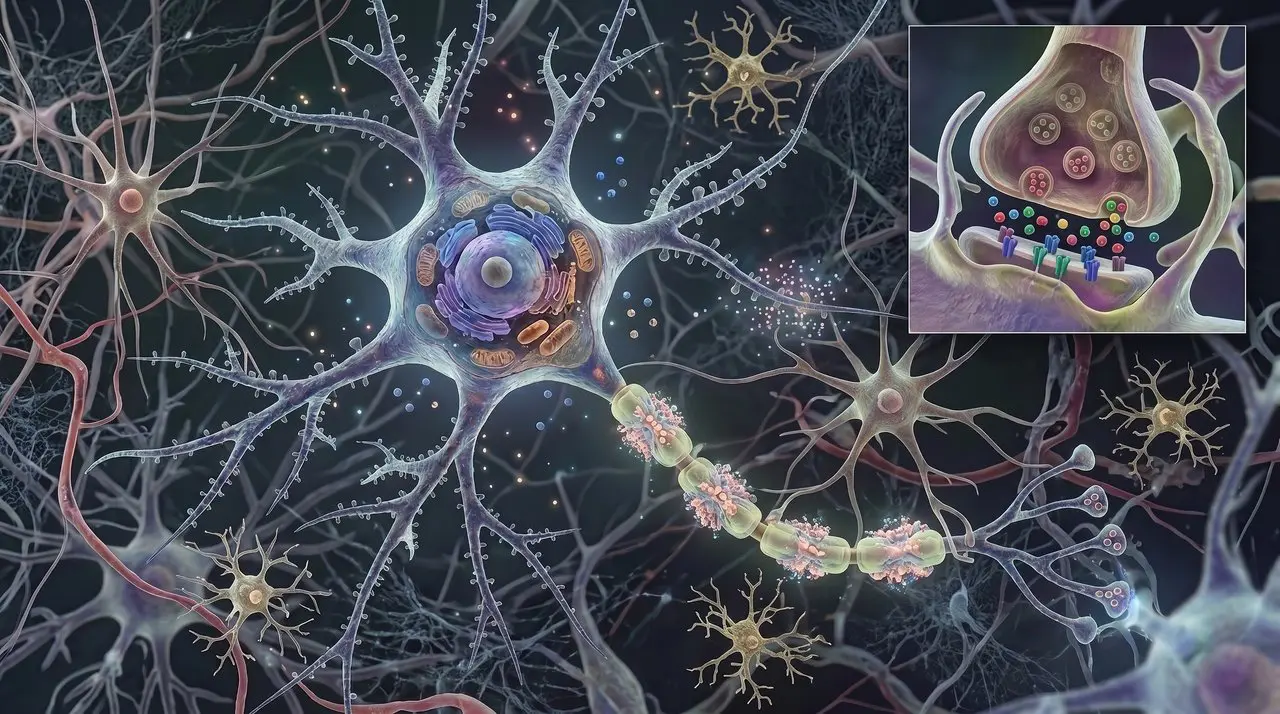
The approach utilises graph neural networks which learn patterns from error data much like social media algorithms analyse connections between users to predict preferences. Demonstrating reductions up to 3700 times better performance with certain types of codes, these advancements bring dependable machines closer to reality but raises a vital question: how can we optimise the balance between accepting enough computations and minimising logical failures for practical quantum processing.
Predictive graph neural networks minimise errors in quantum computation
Graph neural networks are central to this new approach; they learn patterns from data similarly to how algorithms used on social media analyse connections to predict user preferences. Training these networks using syndrome information, akin to identifying typos in written text, revealed error locations without complete re-evaluation, allowing anticipation of decoder failure during quantum error correction. This predictive capability enables post-selection: discarding computations likely to produce incorrect results before completion, thereby avoiding wasted resources.
The team evaluated their method with rotated surface and bivariate bicycle codes subjected to uniform depolarising circuit-level noise during testing, showing strong performance. Retaining ninety percent of computational shots yielded approximately 3700 and 740 times reductions in logical error rates for surface and BB codes respectively, given realistic physical error rates.
Predictive Post-Selection Dramatically Reduces Logical Errors in Quantum Codes
Error rates dropped sharply; retaining ninety percent of computations resulted in roughly 3700x and 740x reductions in logical errors for rotated surface and bivariate bicycle (BB) codes, demonstrating substantial gains over previous techniques. This predictive capability allows flawed calculations to be discarded early on, mirroring the process of identifying typos before finishing a document while matching leading complementary gap methods and avoiding repeated calls to computationally expensive decoders.
A novel post-selection technique delivers significant improvements in logical qubit reliability by discarding predicted failures; it utilises graph neural networks alongside syndrome information, eliminating repetitive decoding cycles. Specifically, retaining ninety percent of computational results yielded approximately 3700x and 740x reductions in error rates for rotated surface and bivariate bicycle codes respectively, figures comparable with leading complementary gap methods but achieved using less computation. The approach uses detector measurements, parity checks indicating errors, as input features for its predictive model, enabling early identification of problematic calculations through a Tanner graph representing relationships between faults and detectors.
Machine learning predicts and mitigates computation failures in early stage quantum codes
This new approach utilising graph neural networks offers a promising route towards improved quantum error correction by intelligently filtering computations; however, current scope presents limitations. Success was demonstrated with rotated surface and bivariate bicycle codes under uniform depolarising noise but real-world devices suffer from more complex “correlated” errors where qubits fail together due to physical proximity or shared control lines. It is important to acknowledge that these demonstrations used simplified noise models as actual quantum computers experience complicated errors involving simultaneous qubit failure because of their arrangement or components.
Nevertheless, the work establishes an essential principle: machine learning can proactively identify potentially failing calculations before completion. Reducing logical error rates by up to 3700 times for certain code types represents substantial progress towards practical fault tolerance. Achieving reductions, up to 740 times better performance with bivariate bicycle codes, demonstrates intelligent filtering enhances reliability beyond simply increasing qubit numbers or refining existing schemes like complementary gap methods. This predictive capability raises questions regarding optimal acceptance rates and balancing computational resources against minimising logical failures as systems scale toward more complex tasks and larger code distances.
The researchers demonstrated that graph neural networks successfully predict decoder failure in quantum computations using only syndrome measurements. This allows the rejection of shots likely to produce errors, resulting in a reduction of logical error rates by approximately 3700x for [[72,12,6]] bivariate bicycle codes and 740x for [[144,12,12]] codes at specified physical noise levels. The method achieves comparable performance to existing techniques without requiring additional decoding steps. Authors suggest further work could explore optimal acceptance rates as systems increase in complexity.
👉 More information
🗞 Graph Neural Post-selection for Quantum Error Correction
✍️ Conor Carty and Roberto Bondesan (Imperial College London); Tamas Noszko and Joschka Roffe (The University of Edinburgh)
🧠 ArXiv: https://arxiv.org/abs/2610.00504
See today’s quantum computing news on Quantum Zeitgeist for the latest breakthroughs in qubits, hardware, algorithms, and industry deals.