Dr. Chunyu Guo, Research Group Leader at the Max Planck Institute for the Structure and Dynamics of Matter, will receive the 2026 Nicholas Kurti Science Prize for his work with Kagome metals. The award recognizes Dr. Guo’s discovery of many-body quantum coherence in strain-free microstructures under high magnetic fields, advancing understanding of correlated topological matter. “I am truly honored to receive the Nicholas Kurti Science Prize and to join its distinguished group of past recipients,” said Dr. Guo, emphasizing the importance of the conditions central to his research.
Kagome Metals Research Reveals Many-Body Quantum Coherence
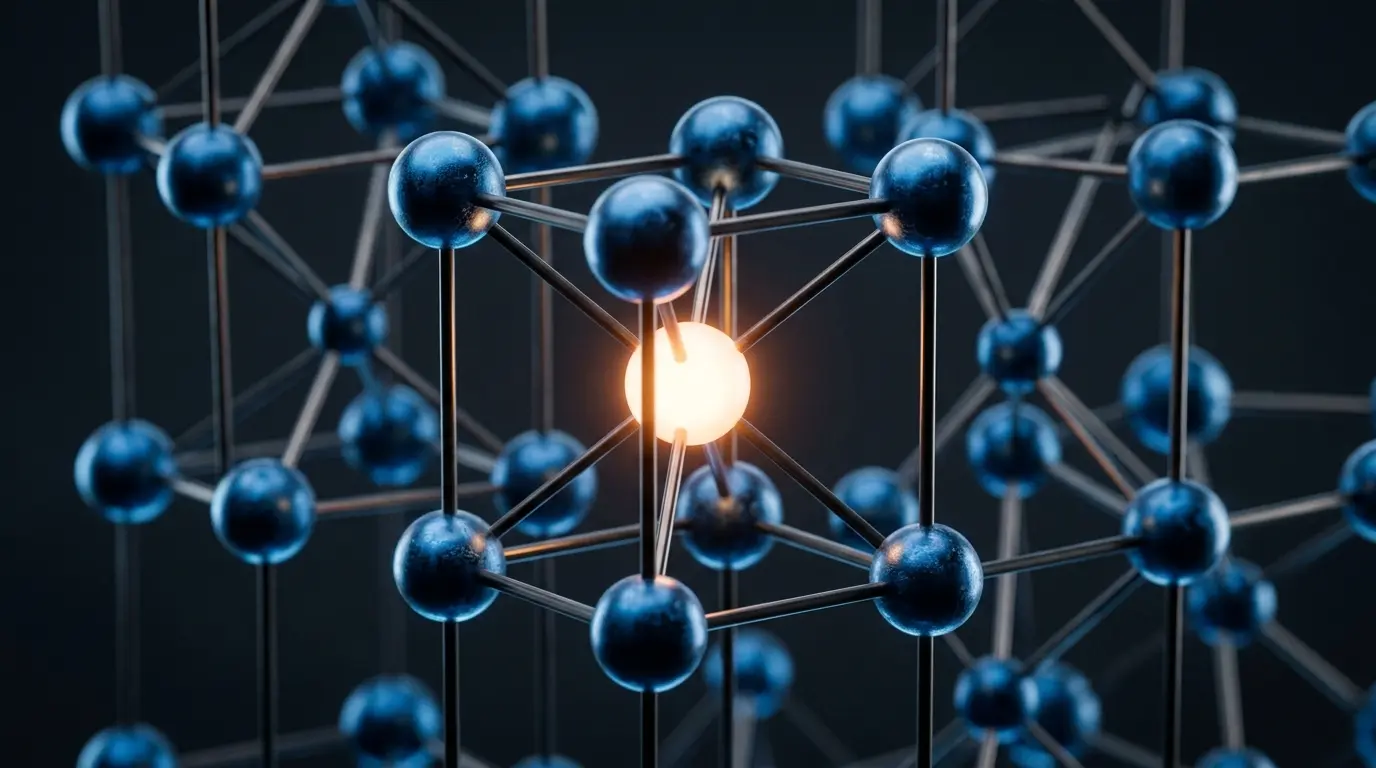
Dr. Guo’s research team demonstrated long-range quantum coherence in the normal state of the kagome metal CsV3Sb5, revealing collective electron behavior over distances exceeding conventional expectations even at relatively high temperatures. The team’s approach involved meticulously crafted microstructures to minimize strain, a critical factor in isolating and observing these subtle quantum effects under strong magnetic fields, Nicholas Kurti Science Prize says. This discovery builds on Dr. Guo’s work since 2022, where he developed a microstructure-based transport approach to investigate correlated electronic order within kagome metals.
This technique allowed his group to reveal non-reciprocal transport, driven by an underlying chiral electronic state, and to determine that the observed symmetry breaking is spontaneous. Establishing kagome metals as highly tunable systems, this finding resolved a long-standing question regarding the origin of their unique electronic properties. Dr. Guo also contributed to understanding unconventional superconductivity in UTe2, a material exhibiting unusual magnetic field-dependent behavior.
His group showed that the superconducting characteristics of UTe2 change significantly with applied magnetic field, providing experimental data for refining theoretical models of this complex material. A representative from Quantum Design stated, “It is always a pleasure to award the Nicholas Kurti prize, and we are proud to support young scientists such as Dr. Guo.” They added that his work exemplifies the spirit of the prize and highlights the importance of curiosity-driven and conceptually bold research in advancing the field of quantum materials science and condensed matter physics. Dr. Guo’s 2024 European Research Council (ERC) Starting Grant of €1.5 million over five years will further support exploration of quantum functionality in kagome metals for frustrated electronics development.
His work exemplifies the spirit of this prize, and underpins the importance of curiosity-driven and conceptually bold research in advancing the field of quantum materials science and condensed matter physics.
Matthew Martin, Managing Director at Quantum Design Oxford
Dr. Guo’s Career Trajectory and ERC Starting Grant
This award builds on a trajectory that began with doctoral research, where early work indicated topological transport could endure even with strong electron interactions. Following this, Dr. Guo accepted a postdoctoral position at the École polytechnique fédérale de Lausanne (EPFL) in Switzerland, focusing on novel topological responses at the mesoscopic scale. His work has been highly cited and published in leading physics journals including Nature and Nature Physics.
The ERC grant, specifically for the project “Free-Kagome,” will allow Dr. Guo to further investigate the potential of these materials for frustrated electronics. He credits Professor Philip J. W. Moll and Dr. Carsten Putzke with providing guidance and support throughout his eight years in Europe, alongside his PhD supervisor, Professor Huiqiu Yuan and other collaborators.
I am truly honored to receive the Nicholas Kurti Science Prize and to join its distinguished group of past recipients. This recognition is especially meaningful to me because it highlights the importance of low temperatures and high magnetic fields – conditions central to my scientific career.
Dr Chunyu Guo, W2 Research Group Leader at the Max Planck Institute for the Structure and Dynamics of Matter
Source: https://qd-oxford.com/
See today’s quantum computing news on Quantum Zeitgeist for the latest breakthroughs in qubits, hardware, algorithms, and industry deals.