IBM Quantum Compute Service is introducing directed execution, a new approach that maintains performance on its 100+ qubit systems while giving users transparency and control over circuit behavior. The shift addresses a longstanding challenge; previously, increased control often came at a performance cost in complex quantum systems.
This model rebuilds the underlying machinery to allow users to customize algorithmic primitives and direct how circuits run, a capability described as giving an “explicit, composable way to express how your circuits run.” Directed execution builds on the framework used in recent demonstrations of quantum advantage through trusted computation, and positions IBM Quantum Compute Service as a platform for exploring advanced error mitigation and correction techniques.
Map the problem
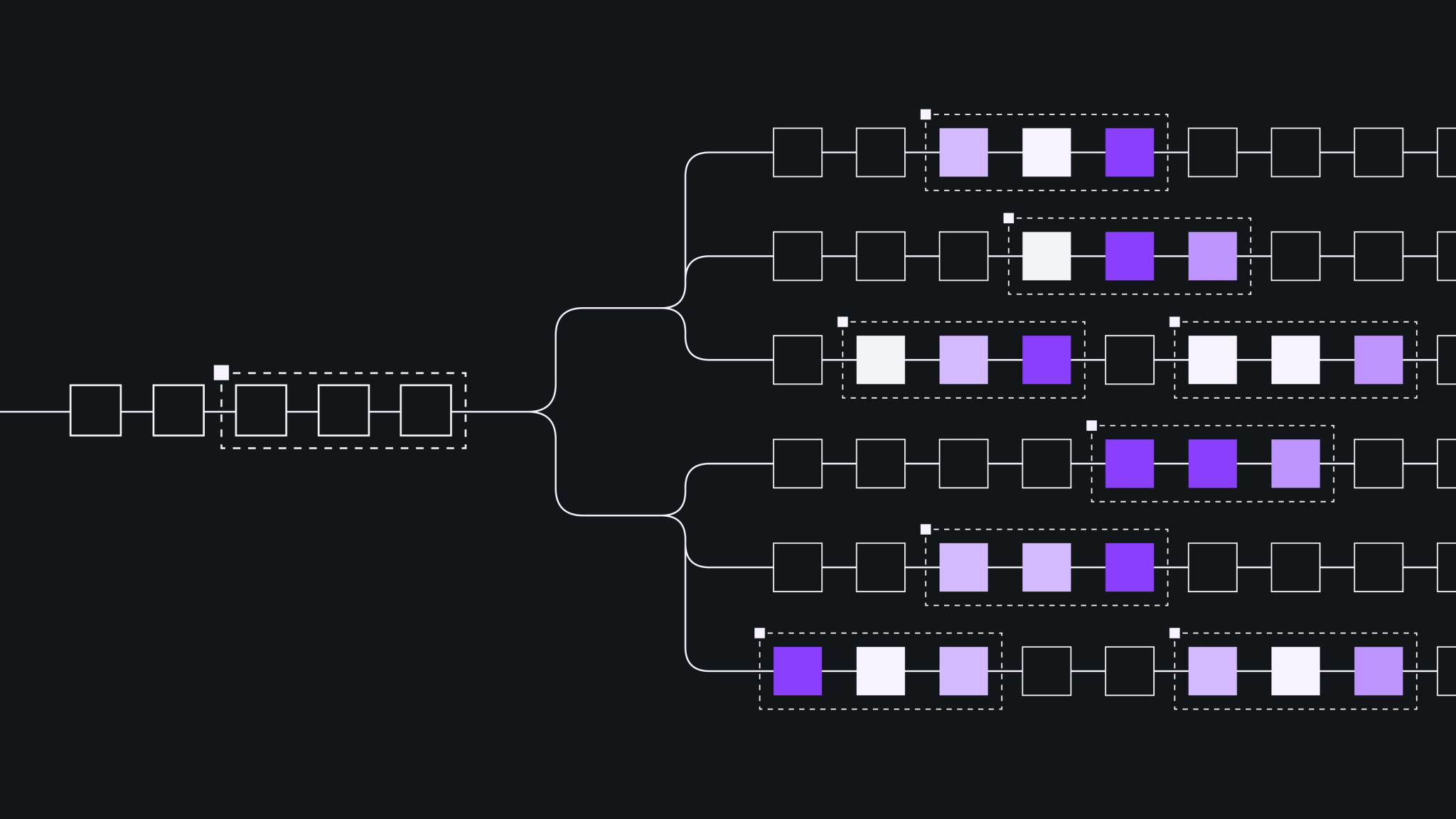
This approach moves beyond simply running circuits and facilitates the exploration of complex quantum phenomena, particularly in experiments requiring multiple circuit executions with varied parameters. The ability to define these elements upfront streamlines workflows for advanced quantum research, reducing the need for post-processing and manual adjustments. Previously, workloads involving large families of circuit variants for techniques like twirling, randomization, and noise learning demanded significant manual assembly on the client-side.
Directed execution eliminates this need by allowing users to define the variations within the execution framework itself, automating the process and accelerating experimentation. The key is that the system handles the generation and submission of these circuit variants, freeing researchers to focus on analysis and interpretation.
IBM Quantum Compute Service’s shift from “backend.run” to Sampler and Estimator primitives, and then back to a single entry point with directed execution, demonstrates a deliberate evolution in design. This iterative process acknowledges that earlier methods, while improving performance, created a “black box” where internal circuit behavior remained opaque. The company reports that directed execution on 100+ qubit systems maintains performance while providing this increased transparency and control, a feat previously difficult to achieve.
Researchers can now specify the exact sequence of operations and the way data is processed, opening up possibilities for fine-tuning experiments and optimizing performance for specific tasks. Consider the implications for quantum error correction, where precise control over circuit execution is paramount. Directed execution allows researchers to implement and test novel error correction codes with greater flexibility and efficiency.
Circuit Optimization with Boxing, Transpilation, and Shaded-Lightcone Bounds
To streamline advanced quantum experiments, researchers can now use tools for circuit optimization including transpilation and the calculation of shaded-lightcone bounds. This approach groups circuit instructions into annotated “boxes” using a module called Samplomatic, allowing for targeted error mitigation strategies based on a detailed analysis of potential error propagation. The system’s architecture facilitates the computation of forward bounds, identifying errors that can be safely left uncorrected without significantly impacting the final result.
The process begins with transpiling the circuit, a standard step in preparing quantum code for execution on specific hardware, and then applying the boxing pass manager. This manager, according to documentation, supports strategies for both active twirling and individual noise modification, tailoring the error mitigation to the specific characteristics of the quantum system.
By annotating these boxes with measurement information, the system gains a more granular understanding of how errors might propagate throughout the circuit, enabling a more efficient allocation of resources for error correction. The documentation provides code examples demonstrating the use of generate_boxing_pass_manager and compute_forward_bounds functions, illustrating the practical implementation of these techniques. Calculating shaded-lightcone bounds is central to this optimization process, as it allows researchers to prioritize error mitigation efforts on the most critical parts of the circuit.
These bounds define a region of influence for each qubit, indicating which operations are most likely to affect its state. By focusing on errors within this region, the system can reduce the computational overhead associated with full error correction, while still maintaining a high level of accuracy.
The documentation highlights the use of merge_bounds to combine these individual bounds into a comprehensive error map, providing a clear view of the circuit’s vulnerability to noise. The shift to this model represents a deliberate evolution in IBM’s approach to quantum computing, acknowledging that previous methods, while achieving performance gains, often created a “black box” experience for users.
Noise Characterization, Scale Computation, and Circuit Execution
Workloads consisting of “large families of circuit variants” now benefit from an automated process, reducing the burden of client-side preparation and accelerating research into advanced quantum algorithms. This efficiency stems from a shift in how the IBM Quantum Compute Service handles circuit execution, moving beyond a “backend.run” model to a system using “Sampler and Estimator primitives” before converging on a unified approach. The system’s architecture facilitates detailed noise characterization by enabling users to learn the noise present on each unique layer of a quantum circuit.
This is achieved through a component, which analyzes specific instructions and generates noise maps. These maps, represented as “”, are then used to compute local error scales, transforming into per-error values. The process allows researchers to quantify the impact of noise on specific circuit elements, providing a granular understanding of error sources.
The resulting data informs the construction of optimized template circuits, designed to minimize the effects of noise during execution. “Samplomatic” automatically generates template circuits and associated “samplex” data, which are then incorporated into a. The program, configured with a specified number of shots and the previously generated noise maps, executes the circuit and collects results. This automated workflow allows for rapid iteration and experimentation, enabling researchers to explore a wider range of error mitigation strategies.
The ability to analyze error patterns is particularly valuable for experiments involving complex quantum states and algorithms. This is a key benefit, as users previously faced a trade-off between performance and visibility into circuit behavior. The system’s architecture allows for the creation of combined with “samplex” data, then executed as a single job.
This process begins with the component, which analyzes unique two-qubit instructions to generate noise maps. Finally, “Samplomatic” builds the template circuit and “samplex” data, which are incorporated into a for execution.
Recovering Mitigated Expectation Values with TREX and Postselection
builds on the directed execution model by enabling recovery of expectation values after error mitigation, a process previously complicated by the need for extensive client-side assembly of circuit variants. The system now incorporates TREX, alongside postselection, to refine raw results and yield mitigated expectation values, streamlining an important step for advanced quantum experiments. Specifically, the mask is computed using the post_selector function, then applied to the executor_expectation_values function alongside trex_scale_factors and a gamma_factor to achieve this refinement.
The result, as demonstrated in recent testing, is a 3.4x reduction in sampling overhead while maintaining comparable accuracy when using the Shaded Light Cone (SLC) method in conjunction with Post Error Correction (PEC). For a complete analysis of the noise model setup and parameters, researchers can follow the provided tutorial. Directed execution is not solely focused on mitigation; it is also the foundation for hands-on error-correction research.
The same client-side control that facilitates the shaping of hardware noise into Pauli noise for mitigation also empowers users to construct and investigate error-correcting codes on current hardware. IBM’s recent spacetime mitigation of logical errors, for example, layers PEC on top of post-selected Quantum Error Correction (QEC) to sharply reduce sampling overhead, and Qiskit Paulice brings postselected quantum error correction to the platform.
Researchers have also implemented distance-5 surface codes on IBM Quantum Nighthawk, achieving up to a 2.8x improvement in the logical error rate per round by identifying and routing the code around underperforming components. That level of control extends even below the circuit level, allowing users to govern the timing of gates, perform fast qubit resets and access soft measurement information. The Executor primitive is the initial implementation of the directed execution model, with plans for additional capabilities in the future.
Eventually, it will evolve into a more generic execution interface capable of flexibly shifting classical pre- and post-processing between client and server, extending the client-side transparency currently available for pre-processing to encompass post-processing as well. Because it represents the most flexible framework available, new error mitigation and correction research is initially implemented on Executor, establishing it as a platform designed for long-term extension. For users transitioning existing code to the client-side primitives, the process is now aided by an AI-powered migration tool.
Published alongside this release, the Qiskit AI skill ports code from qiskit-ibm-runtime onto the new Sampler and Estimator, flagging any breaking changes. The tool handles migrations from both V1 and legacy server-side V2 primitives, and covers changes to the IBM Quantum Compute Service API over the years.
The migration helper is open source and available in the Qiskit/skills Github repository, allowing users to add it to their AI coding assistant and automate the mechanical aspects of the transition. “It’s also the lowest-friction way to get started,” the documentation states, encouraging users to migrate first and then explore the advanced tools at their own pace. To begin using directed execution, users are advised to upgrade their environment to the latest version of qiskit-ibm-runtime, which automatically places workloads on the new model, even without directly calling Executor.
Detailed documentation is available for Samplomatic, Executor, Qiskit Noise Learning and Qiskit Mitigation, and the PEC with shaded lightcones tutorial provides an end-to-end example of the combined capabilities. Existing users of Sampler and Estimator will find their code remains compatible, with the advanced features of directed execution available when they are ready to explore them.




See today’s quantum computing news on Quantum Zeitgeist for the latest breakthroughs in qubits, hardware, algorithms, and industry deals.