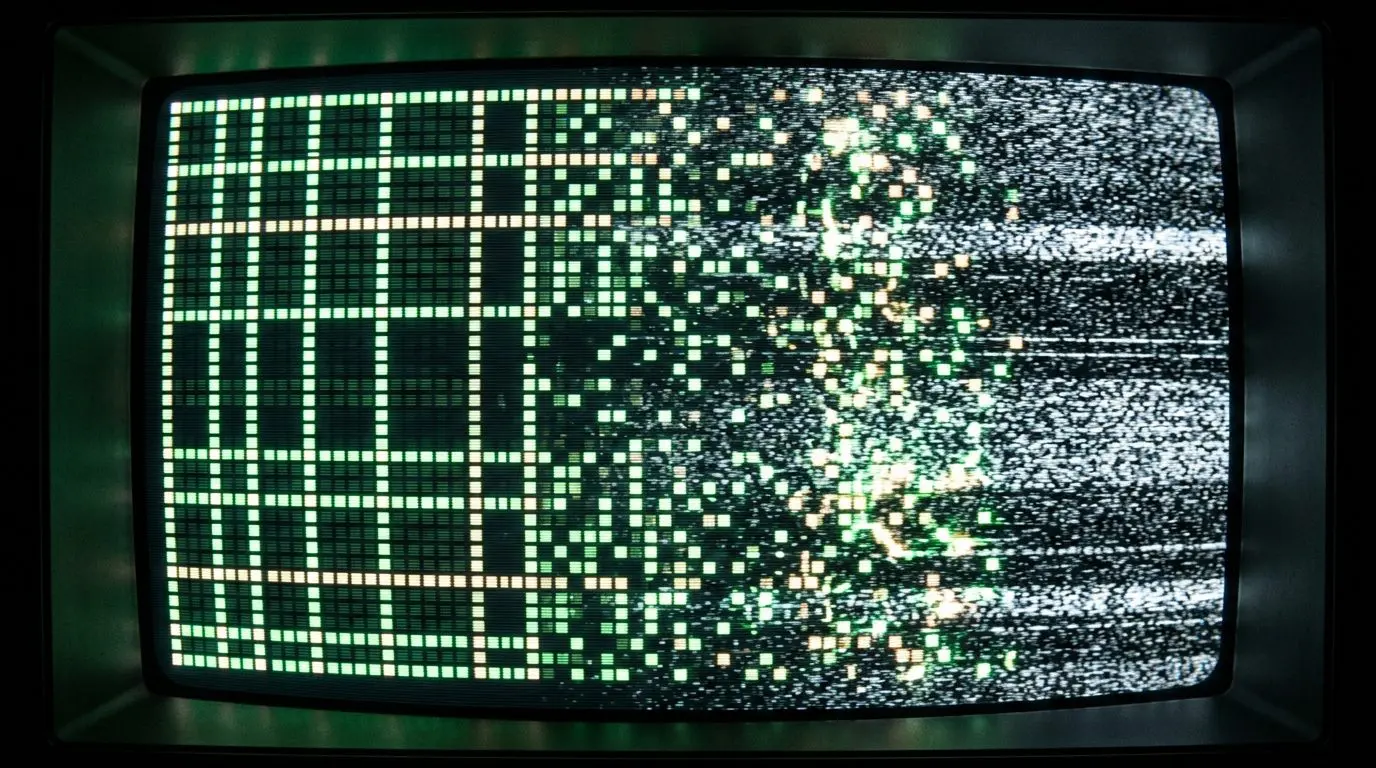
Approximately zero point three Tesla represents the moderate magnetic field used during repetitive readout of nitrogen-vacancy centres within diamond. Experimentally accessing quantum projection noise, a key factor for sharply improved sensitivity, remained challenging until now, but quantum-projection-noise-resolved readout from a strongly interacting ensemble has been achieved. This achievement improves readout fidelities by nearly an order of magnitude and allows direct observation of how intrinsic dipolar interactions shear quantum projection noise into an anisotropic profile.
A way to dramatically improve the sensitivity of diamond-based sensors used for detecting weak magnetic fields and other signals is now available. By overcoming limitations with sensor readout, specifically resolving ‘quantum projection noise’, performance from collections of nitrogen-vacancy centres within diamonds has increased more than tenfold. This advance enables observation of interactions between individual sensors; understanding these connections will enable further optimisation for even greater precision in future applications.
Diamond-based sensors used for detecting faint magnetic fields and other subtle signals have been significantly improved. These sensors rely on tiny defects within diamonds, nitrogen-vacancy (NV) centres, which act like atom-sized compass needles sensitive to their surroundings. Until recently, fully harnessing these sensors was limited by inherent uncertainty in measurement, imagine trying to pinpoint the exact location of a bouncing ball, this ‘quantum projection noise’ restricts how accurately information can be read out from each sensor.
Researchers successfully resolved this quantum projection noise in collections of NV centres, boosting readout performance tenfold and allowing them to observe interactions between individual sensors via forces similar to those between small bar magnets known as dipolar interactions. Understanding these connections is vital for optimising future sensing applications; further refinement may unlock even greater precision and new possibilities within solid-state quantum sensing.
Direct resolution of quantum projection noise enhances diamond sensor sensitivity
Readout fidelities improved by nearly an order of magnitude. Resolving direct quantum projection noise, a longstanding obstacle to accessing regimes promising substantial gains in sensitivity for diamond-based sensors, was achieved through this breakthrough. Previously obscured by measurement uncertainty, observation of this fundamental limit allows researchers to see how interactions reshape quantum noise into anisotropic profiles within dense nitrogen-vacancy centre ensembles.
Opportunities for exploring advanced sensing techniques such as spin squeezing and entanglement enhancement are now unlocked using readily available solid-state systems. Gate fidelity increased five-fold, marking a key step towards realising fully optimised quantum sensors with unprecedented precision and expanded application potential across diverse fields including materials science and biology.
Examining four distinct regions with varying densities of these defects revealed a clear link between NV concentration and anisotropic profiles; specifically, at higher densities dipolar interactions rapidly shaped the noise profile, an effect absent when dynamic decoupling techniques suppressed those interactions. The team quantified spin readout noise across each region, finding values ranging from approximately 1.9x 10 4 down to just 1.2 for certain samples, while also determining maximum repetitive readouts reaching up to 170 in some areas.
Nuclear spin memory enables enhanced sensitivity in nitrogen-vacancy centre ensembles
Repetitive readout was central to this work via nuclear memory. An intrinsic property of the nitrogen-vacancy centre allowed repeated assessment of its quantum state without immediately destroying information. This technique exploits the 15N nuclear spin within each defect as a temporary storage location for quantum data, preserving coherence between measurements. By reading out the NV centre multiple times using this internal store, scientists effectively accumulated signal and reduced measurement uncertainty, similar to taking many photographs of a moving object to obtain a clearer image.
This approach proved vital because it enabled resolution of subtle noise characteristics previously obscured in diamond sensors, paving the way for detailed analysis of interactions between individual sensing elements. The team employed repetitive measurement at approximately 0.3 Tesla to enhance readout fidelity nearly tenfold, allowing direct observation of these subtleties and facilitating analysis of sensor interactions within the two-dimensional sample layer which was less than 7 nanometres thick.
Nuclear spin storage enhances precision beyond simple noise reduction
Overcoming fundamental limits to measurement precision is crucial when pursuing increasingly sensitive quantum sensors; nitrogen-vacancy centres in diamond offer a promising route towards this goal due to their unique atomic properties. However, the findings reveal that simply reducing readout noise isn’t enough for improved performance, repetitive measurements introduce time delays which can negate any gains if not carefully managed. This highlights an often overlooked consideration in sensor development despite achieving quantum-projection-noise limited readout with these centres. A major step toward fully realising the potential of these defects for sensitive measurements has been demonstrated through resolution of quantum-projection-noise from strongly interacting ensembles. Observing how intrinsic dipolar interactions reshape quantum noise into anisotropic profiles, patterns dependent on direction, provides new insights into optimising sensor performance beyond merely decreasing measurement uncertainty.
Researchers resolved quantum projection noise using a two-dimensional ensemble of nitrogen-vacancy centres in diamond, demonstrating improved readout fidelity by nearly ten times compared to previous methods. This achievement means scientists can now directly observe subtle interactions between individual sensors within the material and better understand their collective behaviour. By utilising the NV centre’s internal 15N nuclear memory for repetitive measurements at approximately 0.3 Tesla, they were able to characterise these interactions as an anisotropic profile. The authors suggest this work facilitates direct measurements of spin squeezing and entanglement-enhanced sensing in solid state systems.
👉 More information
🗞 Direct Observation of Dipolar-Driven Anisotropic Quantum Projection Noise in a Solid-State Spin Ensemble
✍️ Tasuku Ono, Weijie Wu, Haopu Yang, Lillian B. Hughes Wyatt, Benjamin Brenner, Che Liu, Collin Fan, Chris R. Laumann, Jonathan N. Hallén, Emily J. Davis, Ania C. Bleszynski Jayich and Norman Y. Yao
🧠 ArXiv: https://arxiv.org/abs/2609.16106



See today’s quantum computing news on Quantum Zeitgeist for the latest breakthroughs in qubits, hardware, algorithms, and industry deals.