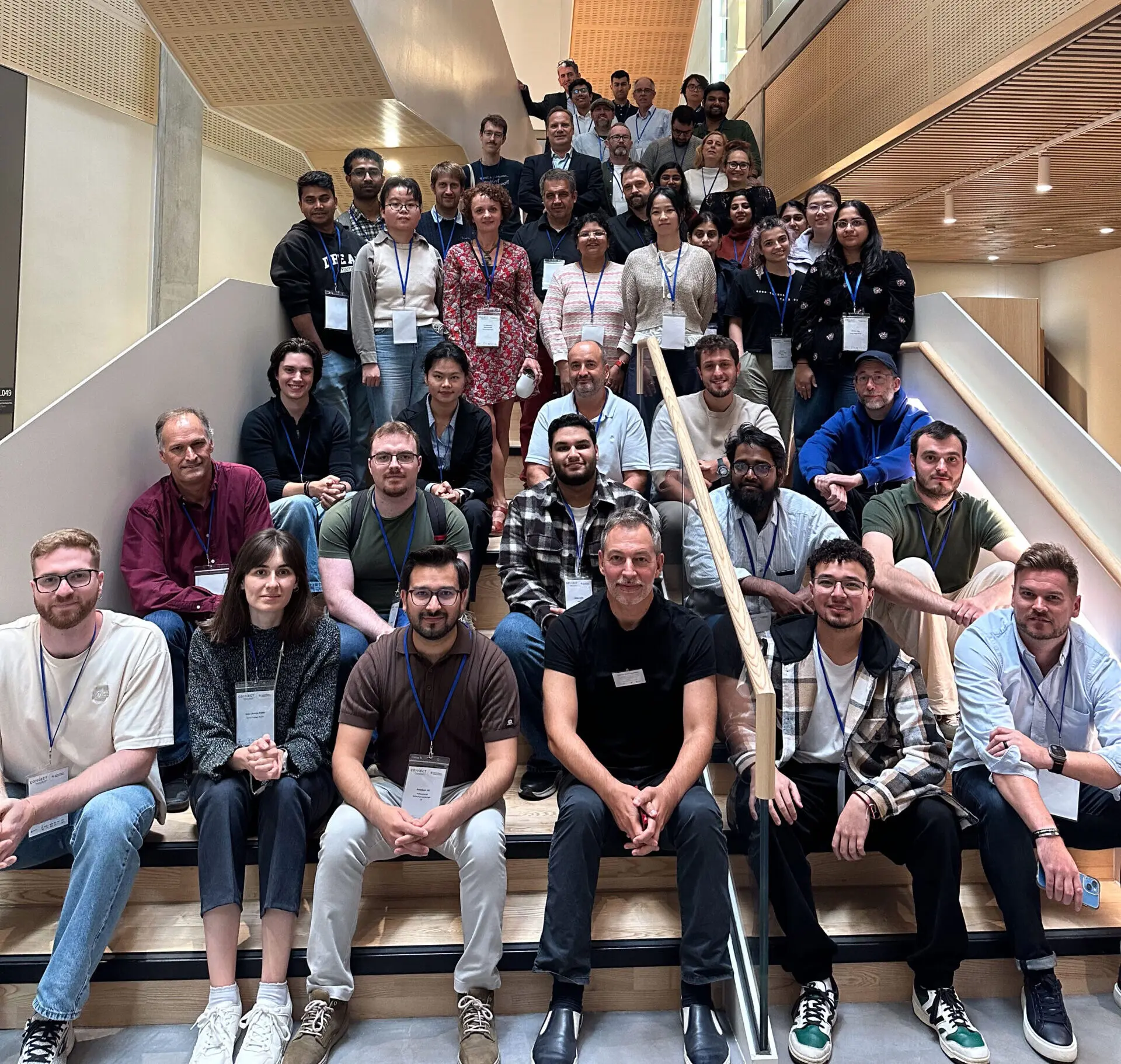
Professor Marko Lončar of Harvard University recently outlined a vision for linking disparate quantum computers using photonics, a technology already central to modern communications. The Summer School on Optical Communication 2026, held from September 2-5 at Trinity College Dublin, brought together experts exploring how optical technologies can extend beyond data transmission to tackle challenges ranging from quantum networking to earthquake detection. Researchers also examined how optical fibre could function as a global sensor network, monitoring seismic activity beneath the ocean floor.
Optical Fibre Networks Enable Global Sensing and AI Efficiency
Optical fibre networks are now being investigated for their potential to detect seismic events occurring beneath the ocean floor, a capability that could significantly improve global earthquake monitoring. Mikael Mazur of Nokia Bell Labs presented research detailing how existing subsea telecommunications cables could function as a large-scale sensor network, extending monitoring to regions currently lacking dedicated seismic equipment. This repurposing of infrastructure offers a cost-effective alternative to deploying new, specialized sensors in challenging marine environments.
Professor Ioannis Tomkos of the University of Patras explored how shifting signal processing from electronic components to the optical domain could alleviate bandwidth and power limitations, critical considerations as AI applications become increasingly complex. This approach aims to improve connectivity speeds while simultaneously reducing the environmental impact of data processing, a growing concern within the technology sector. Industry collaboration is proving vital to translating these research concepts into practical applications.
Aurora Telecom’s national fibre network, for example, provides a live testing ground for advanced optical and quantum communications experiments between Dublin and Galway. “The pace of innovation in communications technology is accelerating, making collaboration between industry and academia more important than ever,” said James Freeman, Fibre Manager in Aurora Telecom.
“Aurora Telecom works closely with CONNECT on active research programmes, with our national fibre network providing a platform for the development, testing, and validation of next-generation optical and quantum communications technologies.” This partnership highlights the importance of bridging the gap between theoretical research and real-world infrastructure deployment.
Professor Marko Lončar focused on the role of photonics in connecting disparate quantum computing systems, envisioning a future where modular quantum processors can be linked to create more powerful machines. “The question now is how we can use that expertise to connect quantum systems and enable the next generation of quantum technologies.” His presentation detailed technologies that could facilitate the creation of larger, interconnected quantum computing architectures, overcoming limitations imposed by the physical constraints of individual processors.
The potential for optical fibre to be a global sensor network extends beyond earthquake detection, with researchers also examining its use for environmental monitoring and infrastructure health assessment. Dr Kaida Kaeval of Tallinn University of Technology presented work on combining data from communications networks with dedicated sensing equipment to monitor critical infrastructure, emphasizing the need for cost-effectiveness, reliability and standardized industry practices for widespread adoption.
Professor Dan Kilper, Director of CONNECT at Trinity College Dublin, emphasized the value of interdisciplinary exchange in driving innovation, the company says. “Events like this are about much more than the technical programme,” he said. “They bring students, researchers and industry together to exchange ideas, learn from one another and build connections. This mix of perspectives is often where a conversation becomes an idea, an idea leads to collaboration and, ultimately, that collaboration leads to real-world impact.” The summer school’s format, bringing together diverse expertise, reflects a growing recognition that complex challenges require collaborative solutions.
The integration of machine learning techniques is further enhancing the capabilities of optical networks. Professor Massimo Tornatore of Politecnico di Milano outlined how machine learning algorithms can optimize network performance, allocate resources efficiently, monitor system health, and proactively manage failures.
The hands-on AI hackathon led by Dmitrii Briantcev, a CONNECT postdoctoral researcher, provided participants with practical experience in applying these techniques to a digital twin of an optical network. The development of quantum key distribution, a secure communication method based on quantum mechanics, also received attention. Professor Marco Lucamarini of the University of York discussed the challenges of extending the transmission range of quantum key distribution systems, strengthening their security and creating smaller, more deployable devices.
Photonics already connects our information world through optical fibres. The question now is how we can use that expertise to connect quantum systems and enable the next generation of quantum technologies.
Marko Lončar, Professor of Harvard University


See today’s quantum computing news on Quantum Zeitgeist for the latest breakthroughs in qubits, hardware, algorithms, and industry deals.