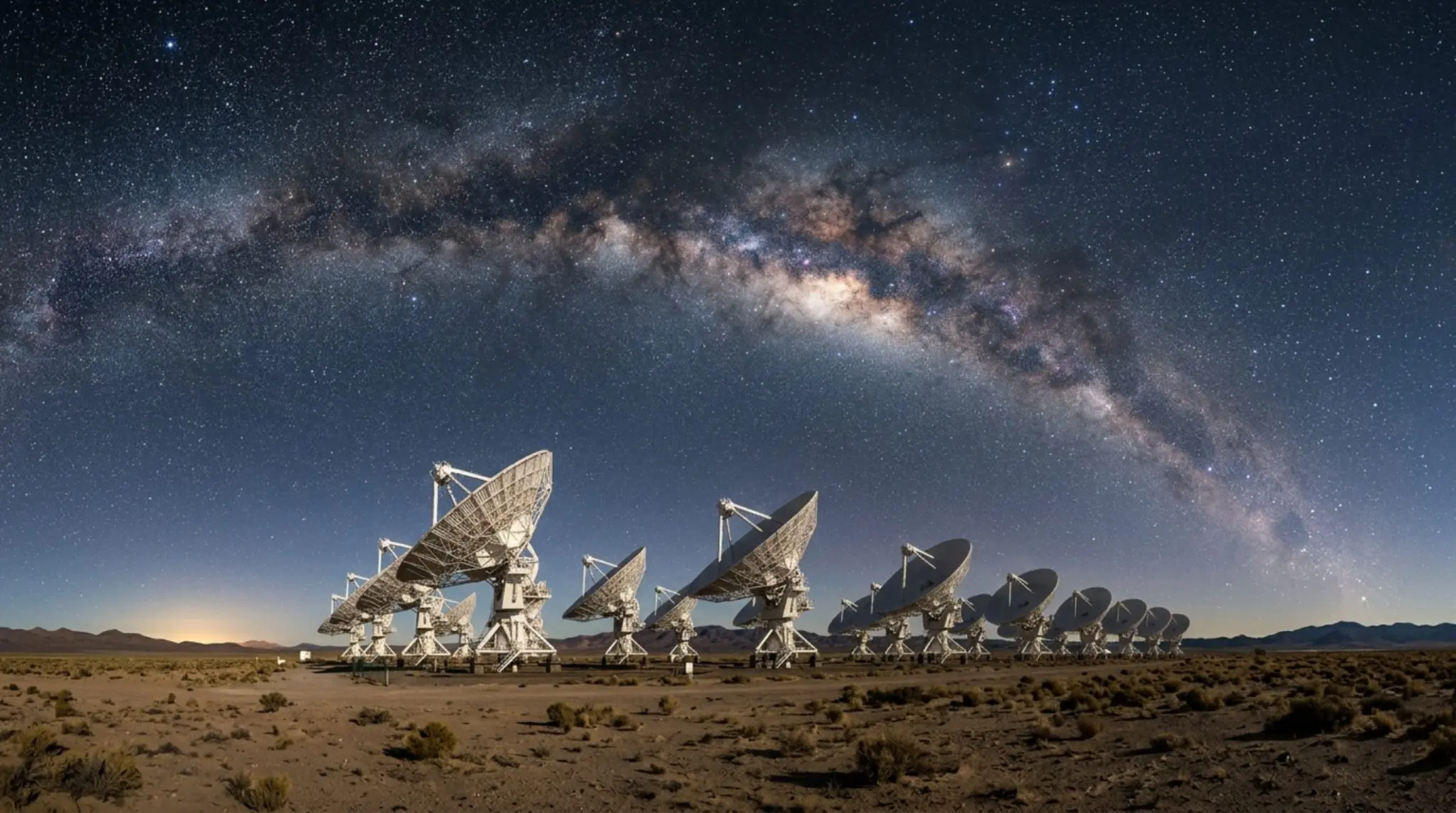
Scientists are using a 550-metre distance between the Telescopio Nazionale Galileo and the Nordic Optical Telescope at the Roque de los Muchachos Observatory to pioneer a new approach to astronomical observation. As part of the La Palma Quantum Interferometer (LPQI) project, institutions in Spain, Italy, Taiwan and the Nordic countries are collaborating to connect telescopes with quantum technology, aiming to combine captured light and function as a single instrument.
Valentín Martínez Pillet, director of the Instituto de Astrofísica de Canarias (IAC), said, “The LPQI represents a strategic commitment to developing technologies at the Roque de los Muchachos Observatory that can transform the way we observe the universe.” The project anticipates first scientific results in spring 2028, with an angular resolution of 160 microseconds of arc.
LPQI Pathfinder Links TNG and NOT Telescopes for Initial Validation
This first phase focuses on achieving precise time synchronisation between the telescopes via fibre-optic links, a necessity given the project’s demand for accuracy to the picosecond, one trillionth of a second, the distance light travels in 0.3 millimetres. Technical sessions at the LPQI Workshop 2026, held from 8 to 10 September at IACTEC in La Laguna, addressed challenges in ultra-fast electronics, cooling systems and data analysis using artificial intelligence to support this synchronization. Researchers are developing Single Photon Avalanche Diode (SPAD) sensors, microchips designed to detect individual photons and record their arrival with picosecond temporal resolution, for integration into both the NOT and TNG telescopes.
Spanish teams are currently characterizing these sensors for astronomical applications, which is an important step toward combining visible light captured by the telescopes and effectively creating a single, more powerful instrument, Roque de los Muchachos Observatory says. “The Pathfinder will enable us to measure the angular size of the brightest stars and will be the first step towards a wider network of telescopes equipped with spectrographs,” explained Francisco Prada, principal investigator of the LPQI project and a research professor at the Instituto de Astrofísica de Andalucía (IAA-CSIC).
Beyond the immediate scientific goals, the LPQI project envisions broader impacts for La Palma, with potential benefits extending to agriculture and tourism. “Science can contribute to a more technologically advanced and water-efficient agriculture, and to tourism with greater added value linked to astronomy, nature and knowledge,” stated representatives at the workshop, adding, “More than science.
An island that discovers. A society that prospers.” Combining the captured photons with starlight, they believe, could enable us to access information that has hitherto been inaccessible and lay the foundations for a new generation of quantum telescope networks in the ORM.
Combining these photons with starlight could enable us to access information that has hitherto been inaccessible and lay the foundations for a new generation of quantum telescope networks in the ORM.
Luis Fernando Rodríguez, a collaborator with the LPQI, principal investigator at the Free-Space Optical Communications (FSOC) laboratory and head of the IAC’s Department of Electronics
Quantum Photons and FIRNAS Spectrograph Enhance Future ORM Networks
The LPQI project’s first spectrograph, FIRNAS, will enhance sensitivity and integration of the Isaac Newton Telescope into the developing quantum network, according to Arturo Manchado, FIRNAS’s principal investigator and head of the LPQI at the IAC. Designed specifically for this purpose, FIRNAS splits starlight into different bands, a technique intended to improve measurement precision and facilitate the telescope’s inclusion in the larger LPQI infrastructure. This calibration and installation of the system by Spanish partners is scheduled for this autumn. These techniques, if successful, promise to reconstruct images with increased precision, potentially unlocking previously inaccessible data. The IAC will lead the development of adaptive optics systems within the project, further solidifying its role in advancing the field. The 550-metre distance already used between telescopes is a foundation for future expansion, with dotted lines on project schematics indicating potential connections to additional observatories.
The Pathfinder will enable us to measure the angular size of the brightest stars and will be the first step towards a wider network of telescopes equipped with spectrographs.
Francisco Prada, principal investigator of the LPQI project, an affiliated researcher at the IAC and a research professor at the Instituto de Astrofísica de Andalucía (IAA-CSIC)
This initial success is intended to allow for a more extensive network, potentially linking multiple telescopes to function as a single, powerful instrument. The project’s long-term vision extends beyond simply improving resolution. The team also explores quantum clock synchronization techniques to enhance the precision of measurements.
FIRNAS will split starlight into different bands to improve the sensitivity of measurements and facilitate the integration of the Isaac Newton Telescope into the future LPQI network.
Arturo Manchado, FIRNAS’s principal investigator and head of the LPQI at the IAC
The LPQI represents a strategic commitment to developing technologies at the Roque de los Muchachos Observatory that can transform the way we observe the universe. For the IAC, this project reinforces the Observatory’s role as a leading centre for astronomical innovation and opens up new opportunities for scientific and technological collaboration, with the potential to generate knowledge and capabilities that can also contribute to the development of La Palma.
Valentín Martínez Pillet, director of the Instituto de Astrofísica de Canarias (IAC)


See today’s quantum computing news on Quantum Zeitgeist for the latest breakthroughs in qubits, hardware, algorithms, and industry deals.