Researchers have demonstrated a quantum key distribution protocol capable of generating secure keys at a rate of 410 bits per second over 27 kilometers of fiber. The work, led by Qiang Zeng at the Beijing Academy of Quantum Information Sciences, addresses a longstanding vulnerability in quantum communication: dependence on trusted devices at the transmitter. This new transmitter-device-independent (TDI) QKD protocol uses quantum steering and photon storage to eliminate transmitter-side vulnerabilities, helping to “bridge the gap between security and practicality for real-world QKD deployments.”
Quantum Steering Formalizes Transmitter-Device-Independence
Quantum steering now provides the foundation for a newly formalized approach to transmitter-device-independence in quantum key distribution (QKD), addressing a longstanding vulnerability in existing systems. While measurement-side device independence has received considerable attention, the potential for compromised transmitter components has remained an implicit, yet critical, security concern. Researchers have demonstrated a protocol that eliminates these transmitter-side vulnerabilities by using faithful quantum steering and incorporating photon storage, a technique previously lacking in this area of QKD development.
This advancement centers on the ability to certify nonlocal correlations in an asymmetric model, effectively establishing transmitter-device-independence and moving beyond the limitations of earlier one-sided device-independent (1sDI) protocols. Existing 1sDI approaches, while using quantum steering as a security resource, were susceptible to a signaling loophole in the transmitter-receiver architecture; this new work directly addresses that flaw.
The team’s protocol relies on a key element: storing the photon intended for Alice until she releases her input, preventing premature exposure and potential exploitation by a malicious local source embedded within the transmitter. The need for this photon storage arises from the fact that existing 1sDI-QKD demonstrations often treat Alice’s detection and the source as a single entity, inadvertently compromising the no-signaling condition. Once Alice’s input information becomes accessible, a compromised transmitter could theoretically hijack the intended states for Bob by sending predetermined signals in reverse along the distribution channel.
By isolating this information through photon storage, the protocol ensures Bob’s outcome remains independent of Alice’s input, a critical step towards achieving true transmitter-device-independence. The storage time itself is dictated solely by the measurement time interval of Bob’s devices, allowing for a viable communication channel length.
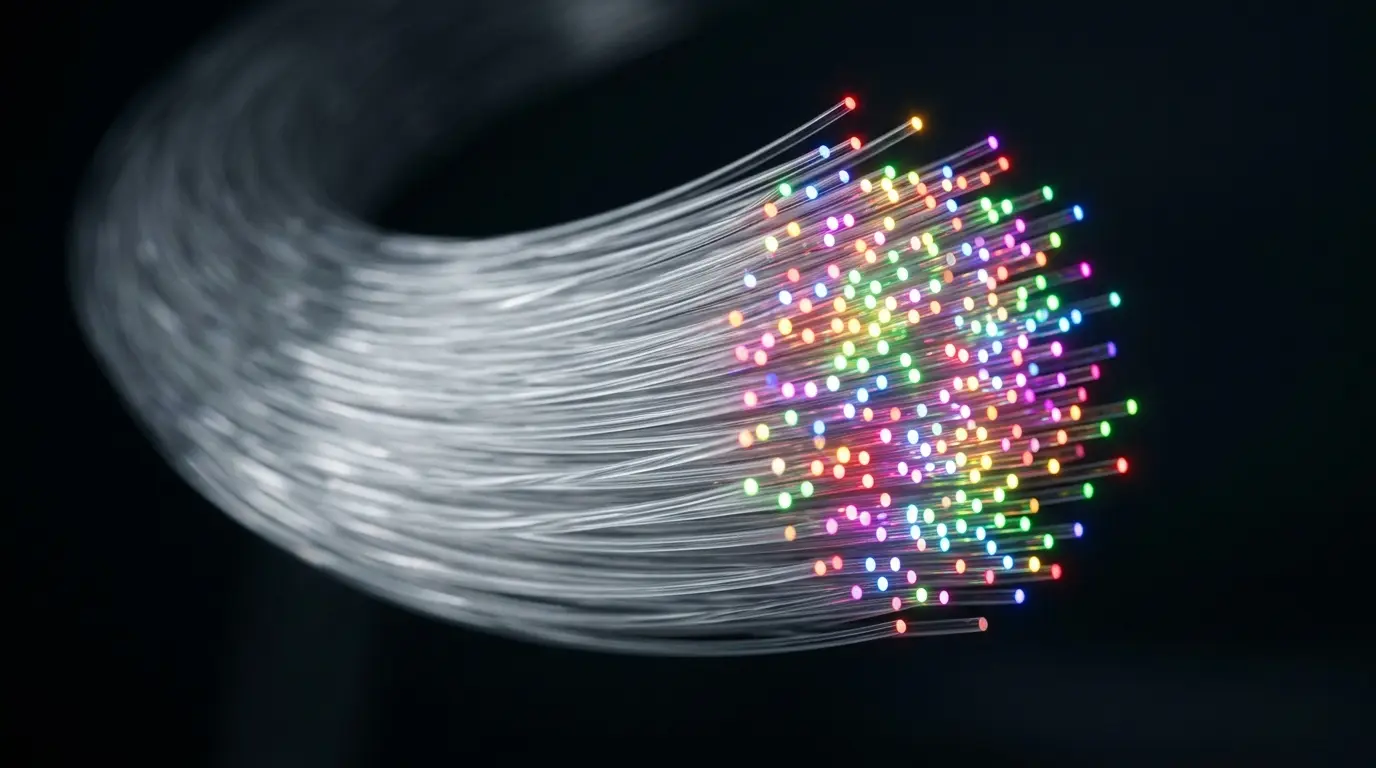
In a proof-of-principle experiment we validate the feasibility of the TDI protocol, achieving a key-rate in the asymptotic limit of 410 bps over 27 km spool fiber. The team used a narrowband filter and superconducting nanowire single-photon detectors to optimize signal detection and minimize noise. The researchers emphasize that this protocol implements quantum steering certification; observing a violation of steering inequalities guarantees a non-classical state distribution from Alice to Bob, thereby establishing transmitter-device-independence.
This certification process relies on Alice obtaining outcomes from a set of three possibilities, with a third outcome representing a failure to detect a photon, typically due to transmission loss. The successful demonstration of steering nonlocality confirms the absence of local hidden state models, a necessary requirement for secure key distribution.
This distance represents a step towards realizing longer-distance secure communication, a key challenge for practical QKD deployments. The team’s approach differs from previous attempts to create long-lived quantum systems for entangled state generation, which often faced experimental complexity comparable to that of device-independent QKD. The protocol introduces a photon storage, thereby eliminating transmitter-side device vulnerabilities.
“The photon for Alice is stored until her information is released,” the researchers explain. This formalization of transmitter-device-independence, built upon faithful quantum steering, represents an advancement in the pursuit of practical and secure quantum communication networks.
By closing the signaling loophole inherent in previous 1sDI-QKD implementations, the protocol offers a robust defense against sophisticated attacks targeting the transmitter. The successful demonstration of a key rate over 27 kilometers of fiber suggests a viable path towards bridging the gap between theoretical security and real-world deployment, offering a more resilient and trustworthy foundation for future quantum communication systems.
27km Fiber Validation of TDI-QKD Protocol
The successful validation of a transmitter-device-independent (TDI) quantum key distribution (QKD) protocol demonstrates a significant advance in securing quantum communication networks against sophisticated attacks. This experiment, detailed in recent work, achieved a key rate in the asymptotic limit of 410 bits per second, a figure indicating the speed at which secure cryptographic keys can be generated and distributed. Unlike previous approaches, this protocol specifically addresses vulnerabilities inherent in the transmitter component, a longstanding yet often implicit weakness in QKD systems.
The core innovation lies in the protocol’s ability to eliminate the signaling loophole, a potential pathway for attackers to gain information about the key being generated. This is accomplished through the introduction of a photon-storage mechanism, where the photon intended for Alice’s measurement is held until her information is released, ensuring that her input choices are independent of Bob’s detection events.
This temporal separation is important; the experiment used a 30-meter fiber to create a 150-nanosecond delay, effectively isolating Alice’s actions from any immediate influence on Bob’s measurements. The team calibrated the measurement interval of the detector to 50 nanoseconds, a precise setting necessary for the protocol’s functionality. The experimental setup involved a fully photonic system using polarization encoding, a common method for representing quantum information.
The transmitter itself comprised three key elements: an entanglement source, the fiber-based photon storage and a measurement module. This configuration allowed the researchers to rigorously test the protocol’s feasibility and performance under realistic conditions. The achieved key rate was calculated using the Devetak-Winter bound, a mathematical framework for assessing the security of QKD protocols. This calculation relies on quantifying the extent to which Eve, a potential eavesdropper, and Alice can reproduce Bob’s outcomes, with lower values indicating greater security.
Estimating Eve’s potential knowledge is a challenging task, and the researchers employed recently developed numerical techniques to perform the security analysis. The protocol’s compatibility with measurement-device-independent (MDI) protocols, or entanglement swapping protocols, suggests a pathway toward extending the transmission distance of secure quantum communication. The no-click outcomes, those instances where a detector does not register a photon, cannot be safely discarded, which establishes a detection-efficiency threshold on Alice’s device.
This requirement, while demanding, is a necessary consequence of the protocol’s commitment to eliminating transmitter-side vulnerabilities, while the work builds on the one-sided device-independent (1sDI) framework, but goes further by formally establishing transmitter-device-independence. “The proposed TDI-QKD eliminates side-channel vulnerabilities in the transmitter without sacrificing the key-rate performance,” the researchers state, highlighting the protocol’s practical advantages.
Asymmetric Quantum Steering Secures Key Distribution
Quantum steering certification establishes transmitter-device-independence, a critical advancement for secure communication networks, by verifying non-classical correlations in an asymmetric model. The team’s approach formalizes transmitter-device-independence based on faithful quantum steering, introducing a photon storage mechanism to close this loophole and eliminate vulnerabilities inherent in the transmitter itself.
This innovation moves beyond simply using steering as a security resource, instead building a protocol fundamentally reliant on its properties for device independence. A key limitation of prior discrete-variable 1sDI-QKD proposals was their experimental unrealizability and susceptibility to coherent attacks, despite theoretical promise of communication distances comparable to conventional QKD systems. This new protocol overcomes these hurdles through careful architectural design.
This demonstration is significant because it addresses a longstanding yet implicit problem in quantum key distribution: transmitter-side device dependence, which has received less attention than measurement-side independence. By decoupling Alice’s input from the distribution channel until after Bob’s measurement, the protocol prevents a malicious local source within the transmitter from hijacking states intended for Bob, a scenario previously possible in existing 1sDI-QKD implementations.
The process of verifying security involves Alice and Bob randomly selecting inputs and accumulating outcomes alongside associated time-tags, a method that allows for the identification and exclusion of rounds where the no-signaling condition is violated. Bob publicly announces his input choices, and the pair reconciles rounds for security analysis, with Alice comparing time-tags to ensure informational independence between her input and Bob’s outcome. This rigorous process culminates in the computation of a conditional probability distribution, essential for establishing the secure key.
The approach’s reliance on faithful quantum steering, rather than specific internal mechanisms, further enhances its adaptability and resilience. The successful validation of the protocol’s feasibility, coupled with its strong loss tolerance and elimination of transmitter-side vulnerabilities, positions it as a promising candidate for future secure communication infrastructure.
👉 More information
🗞 Transmitter-device-independent quantum key distribution
✍️ Qiang Zeng, Abhishek Mishra, Haoyang Wang and Zhiliang Yuan
🧠 DOI: http://link.aps.org/doi/10.1103/szl5-8dsr
See today’s quantum computing news on Quantum Zeitgeist for the latest breakthroughs in qubits, hardware, algorithms, and industry deals.