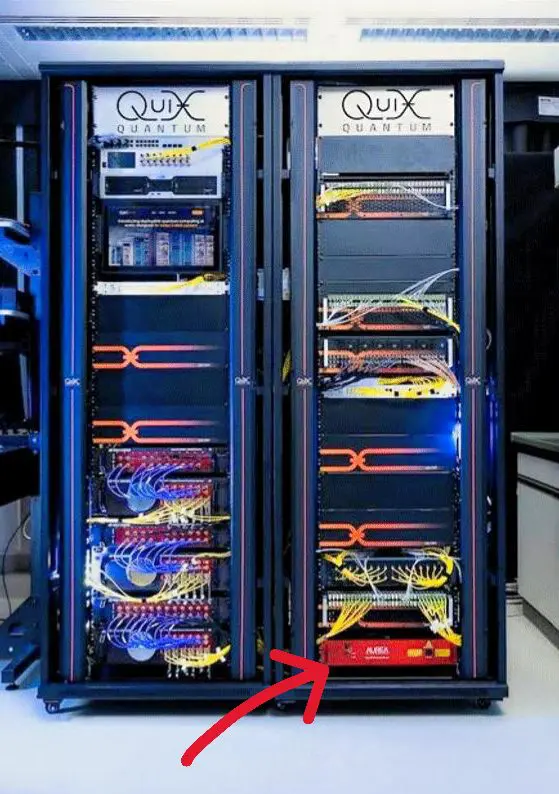
AUREA Technology’s ultrafast pulsed laser is a critical building block within Carina, a new photonic quantum computing architecture unveiled by QuiX Quantum in July. Carina represents a move toward practical quantum systems designed to operate at room temperature and integrate into existing data centers, a milestone highlighted by Forbes. This collaboration positions AUREA Technology as a key supplier for the advancement of photonic quantum computing in Europe.
AUREA Ultrafast Laser Enables QuiX Quantum’s Carina Photonic Qubits
QuiX Quantum’s new Carina photonic quantum computer relies on an ultrafast pulsed laser supplied by AUREA Technology to generate the photons necessary for qubits. The AUREA Technology laser serves as a critical component, specifically used to “pump the integrated photon source” within the Carina architecture, directly enabling the creation of these fundamental quantum particles.
Jérôme Prieur, co-founder and CEO of AUREA Technology, underscored a growing need for robust, industrially produced photonic components as quantum computing moves beyond laboratory experiments; he stated that “Photonic quantum computing requires much more than outstanding individual components,” emphasizing the need for precision and reliability across sources, lasers, detectors, and integrated photonics. AUREA Technology has expanded its expertise beyond quantum communications to encompass a wider range of photonic building blocks for quantum networking and sensing.
This development supports European quantum computing efforts, positioning AUREA Technology as a key supplier of these essential photonic elements within the region. The Carina project, developed within the German Aerospace Center’s DLR Quantum Computing Initiative, demonstrates that the future of quantum technologies depends on the availability of high-performance, scalable components for system integrators. AUREA Technology anticipates supporting further advancements in scalable photonic quantum computing following this achievement by the QuiX Quantum team.
Photonic quantum computing requires much more than outstanding individual components. Sources, lasers, detectors, timing and integrated photonics must work together with exceptional precision and reliability.


See today’s quantum computing news on Quantum Zeitgeist for the latest breakthroughs in qubits, hardware, algorithms, and industry deals.