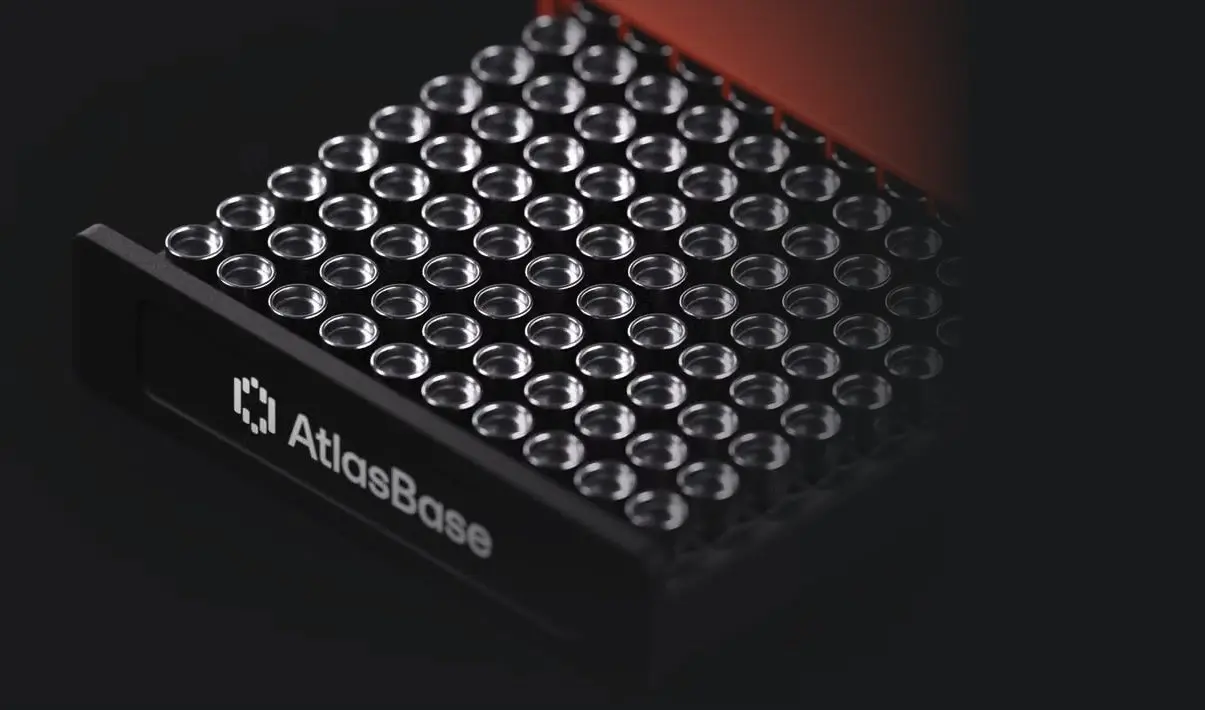
AtlasBase has created a new molecular computing platform powered by Thalia, a chip with 5.6 billion electro-chemical synthesis sites, a 700x increase over existing DNA synthesis chips. The company reports that a single day of production on Thalia now achieves what previously took the entire synthetic DNA industry a full year to manufacture.
This addresses critical cost and turnaround time issues for scaling molecular computing, which stores and processes data directly within synthetic DNA. “For 2 billion years, DNA has flourished as nature’s data platform,” said Jeff Treuhaft, CEO of AtlasBase, “We’re now harnessing that same architecture for computing at a scale that was never before possible.”
Thalia Chip Enables Petabyte-Scale Synthetic DNA Creation
AtlasBase has achieved petabyte-scale synthetic DNA creation with its new Thalia chip, a development that dramatically alters the feasibility of molecular computing for enterprise applications. The chip contains 5.6 billion electro-chemical synthesis sites, a density that allows for the production of synthetic DNA at a rate previously unattainable. This leap in production capacity directly addresses longstanding limitations in cost and turnaround time, critical hurdles for scaling DNA-based technologies beyond research labs.
The Thalia chip’s architecture is built upon existing CMOS manufacturing processes, a strategic decision that facilitates scalability and commercial viability for integration into modern data center designs. Unlike traditional methods of DNA synthesis, which are often slow and expensive, AtlasBase’s approach uses established semiconductor fabrication techniques to create synthetic DNA at a rapid pace.
This allows for the efficient archiving of massive enterprise datasets into synthetic DNA, offering incredibly dense and durable long-term preservation, the company says. The company envisions this as a complement to existing silicon-based infrastructure, rather than a replacement, providing a new data layer optimized for longevity and specialized computational tasks, according to AtlasBase. “Molecular storage can fundamentally change that by preserving our most valuable creative assets for generations, without the constant migration and maintenance that plagues today’s solutions,” said Bill Baggelaar, former CTO of Sony Pictures Entertainment and co-author of the MovieLabs 2030 Vision.
Beyond simple storage, the AtlasBase platform enables in-memory computation, where data is both stored and processed within the synthetic DNA itself. This capability allows for solving complex computational problems with significantly improved efficiency, particularly for workloads that benefit from massively parallel processing.
The company is initially targeting applications in digital preservation, enterprise archiving, and complex optimization challenges across industries like media, finance, logistics, and scientific research. Shuki Bruck, Gordon and Betty Moore Professor Emeritus at Caltech, noted that “For more than 30 years, scientists have explored how DNA can serve as a medium for information storage and computation,” and that AtlasBase is now building the infrastructure to translate these capabilities into practical systems for enterprise IT and AI.
The implications of this technology extend far beyond data storage and processing speed; the inherent stability of synthetic DNA offers a solution to the growing problem of data longevity. Traditional storage media require constant migration and maintenance to prevent data loss, a costly and complex undertaking. Synthetic DNA, however, is remarkably durable and can preserve information for centuries, potentially millennia, with minimal intervention.
This makes it an ideal solution for archiving critical data assets that must be retained for long periods, such as legal records, scientific data, and cultural heritage materials. The company’s long-term vision is to establish a data-center-scale infrastructure that can support the growing demands of AI and data-intensive workloads. This includes not only the Thalia chip itself but also the necessary software and tools for managing and accessing data stored in synthetic DNA.
The platform is designed to be scalable, allowing enterprises to easily expand their molecular storage and compute capacity as their needs evolve. The development of Thalia and the accompanying molecular computing platform represents a step towards realizing the full potential of DNA as an information storage and processing medium. While challenges remain in terms of cost, scalability, and integration with existing IT infrastructure, AtlasBase’s approach offers a promising path forward.
The company’s focus on using established semiconductor manufacturing techniques and its commitment to building a complete end-to-end solution position it as a key player in the emerging field of molecular computing. AtlasBase is delivering a new enterprise data layer where “in memory” computation works efficiently, bringing molecular computing into commercial reality at IT scale.
For 2 billion years, DNA has flourished as nature’s data platform, an incredibly capable structure for processing the information that defines every living thing.
Jeff Treuhaft, CEO of AtlasBase


See today’s quantum computing news on Quantum Zeitgeist for the latest breakthroughs in qubits, hardware, algorithms, and industry deals.