The U.S. Department of Commerce will provide Diraq with $38 million in research and development funding to advance domestic production of silicon-based quantum processor chips. This investment, awarded through the CHIPS and Science Act, aims to bolster infrastructure for Diraq’s fault-tolerant quantum computers using its proprietary silicon spin qubit technology.
“Quantum computing will be a core technology of the next decade, and we need to be ready to deploy it at a truly commercial scale to see the maximum benefit,” said Andrew Dzurak, Founder and CEO of Diraq. The funding supports Diraq’s strategy of combining Australian scientific expertise with expanded U.S. research, commercialization, and manufacturing capabilities.
CHIPS Act Funding Accelerates Silicon Quantum Chip Production
Diraq aims to achieve a system with 150,000 physical qubits by 2029, a goal now bolstered by a $38 million research and development award from the U.S. Department of Commerce. This funding specifically targets the design and development of large-scale quantum logic units, essential for scaling up quantum computing capabilities, and positions Diraq uniquely within the current CHIPS Act recipients as the sole silicon spin company involved.
manufacturing and research infrastructure, a trans-Pacific approach deemed critical for building fault-tolerant quantum computers at scale, the company says. Access to leading semiconductor manufacturers and specialized supply chains is paramount, as achieving utility-scale operation demands more than just qubit development; it requires a robust ecosystem for production and testing. Diraq’s recent expansion into Palo Alto, Chicago, Los Angeles, and Albuquerque demonstrates a commitment to establishing this U.S, according to the company. presence.
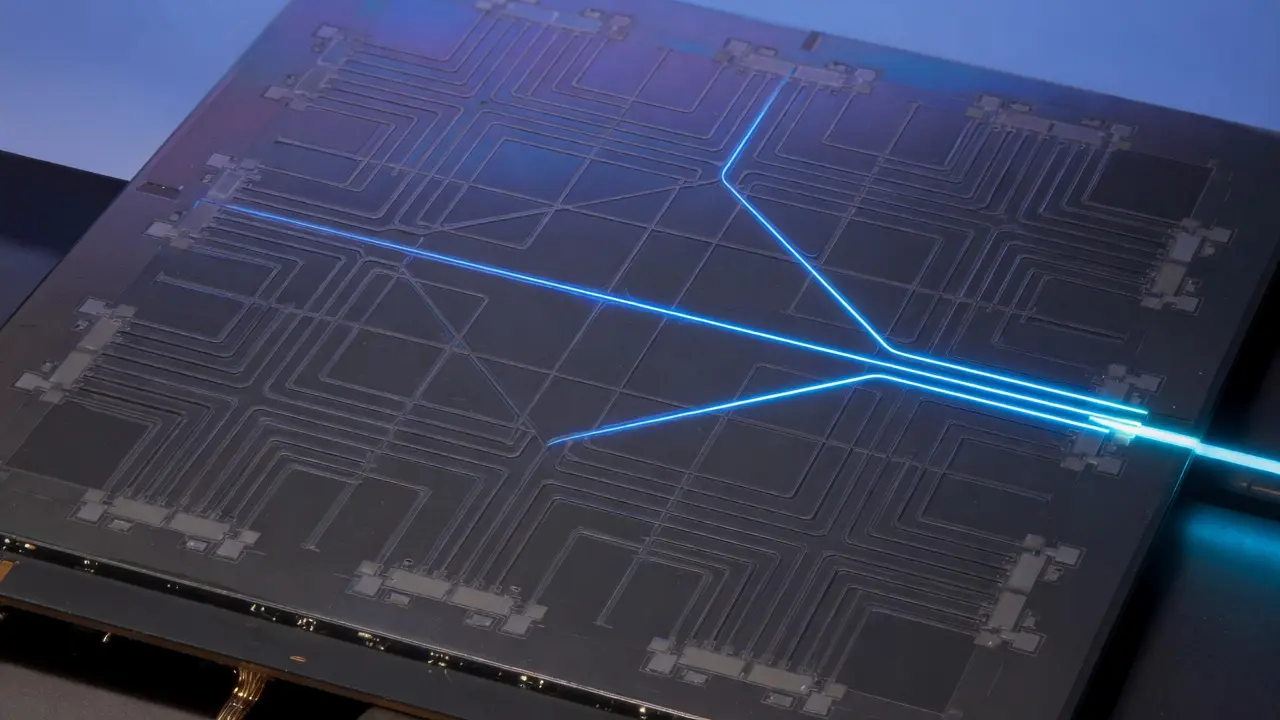
Diraq’s technology distinguishes itself through its compatibility with existing semiconductor manufacturing processes, using the same materials found in conventional silicon chips. This approach offers a pathway to integrating millions of qubits onto a single chip, a significant advantage over other quantum modalities that can require the footprint of a football field. The company’s compact quantum computers currently occupy the space of four standard server racks, offering a scalable and economical solution for commercial deployment.
The need for multiple quantum computers, each with millions of qubits, to address complex problems across industries like pharmaceuticals, agriculture, and energy makes this scalability important. The company’s progress extends beyond funding. Diraq recently deployed the world’s first silicon spin quantum computer within a commercial data center, in collaboration with Equinix. Diraq was also selected by the U.S. Defense Advanced Research Projects Agency to advance to Stage C of the agency’s Quantum Benchmarking Initiative, the final stage of the world’s most rigorous program evaluating whether any quantum computing approaches can achieve utility-scale operation by 2033.
Diraq envisions a future where quantum computers work alongside classical computing infrastructure, using the strengths of each to tackle many-sided challenges. “We’re proud to be the only silicon spin company included in this round of CHIPS funding, and look forward to supporting the research and development of utility-scale, fault-tolerant quantum computing,” Dzurak added.
Quantum computing will be a core technology of the next decade, and we need to be ready to deploy it at a truly commercial scale to see the maximum benefit.
Andrew Dzurak, Founder and CEO of Diraq



See today’s quantum computing news on Quantum Zeitgeist for the latest breakthroughs in qubits, hardware, algorithms, and industry deals.