By summer 2027, the University of Cambridge will deploy a 256-qubit quantum computer from IonQ, establishing a key hub for advanced quantum research in the United Kingdom. The installation marks the next phase of a 10-year strategic partnership between the University and IonQ, designed to accelerate discovery across quantum science and engineering.
“By bringing quantum computing, networking, sensing and security research together at Cambridge, we are accelerating the timeline between academic discovery and commercial quantum advantage,” said Niccolo de Masi, Chairman and CEO of IonQ. Professor Fehmi Cirak and Dr. Amit Agrawal have had their projects selected by a joint steering committee comprising business and scientific leaders from the University and IonQ.
Cambridge and IonQ Launch Quantum Research Collaboration
Professor Fehmi Cirak, a computational structural engineer, and Dr. Cirak’s team intends to use quantum computing to accelerate calculations currently intractable for classical computers, aiming to solve complex engineering problems beyond present capabilities. They plan to test new computational methods on IonQ systems, hoping to substantially speed up calculations used in structural analysis. “We would like to show that our computational methods can accurately predict the response statistics of engineering structures, even on today’s noisy quantum computers,” Cirak stated, outlining the project’s core objective.
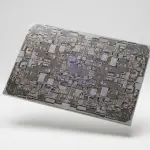
Agrawal’s research centers on improving the efficiency of light collection from individual ions, a critical component for building scalable quantum networks. Current light collection methods using lenses capture only a small fraction of emitted light, limiting the speed and range of quantum communication. Agrawal’s team is developing flat mirrors with nanoscale patterns to create efficient light-collecting cavities, aiming to capture between 60% and 80% of the emitted light, a significant improvement over the 20% achieved with high-end lenses.
“Today, the light is usually collected with a lens which catches only a small fraction of what the ion emits. A cavity does better but cavity mirrors are normally curved and shaped one at a time. Our mirrors are flat with the curvature written into a nanoscale pattern, so many identical cavities can be made at once and lined up with a standard fibre array,” Agrawal explained. This focus on light capture is not merely academic. It directly addresses a bottleneck in quantum networking.
Each link in a quantum network requires photons from both communicating quantum computers, and increasing the collected light proportionally increases the speed of establishing that link. “Each link needs light from both machines, so doubling the light collected makes linking four times faster,” Agrawal added. The team hopes to create mirrors reflecting at least 99.5% of the light, coupled with a working array of cavities connected via optical fibers.
The official launch of the IonQ Quantum Innovation Centre is an exciting milestone in our partnership with IonQ, which will help Cambridge and the UK stay at the forefront of the quantum revolution.
Professor Mete Atatüre, Head of the Cavendish Laboratory, Department of Physics, where the Centre is based
Cirak’s Quantum Algorithm Aims to Solve Engineering Dynamics
Professor Fehmi Cirak’s project addresses a critical limitation in structural engineering: the computational expense of accurately modeling complex systems under uncertainty. Current methods for predicting structural failure, particularly in scenarios like earthquakes or high winds, demand simulations of vast numbers of possibilities, a process hampered by the computational resources required. Cirak intends to use quantum algorithms to circumvent this bottleneck, potentially unlocking solutions to problems presently intractable for even the most powerful classical computers.
The approach focuses on directly computing probability distributions governing structural response, rather than simulating individual scenarios. Cirak’s team will test these methods on the forthcoming IonQ systems, establishing a direct link between theoretical advancements and practical implementation on leading-edge quantum hardware. He added, “I am excited about the opportunities the Centre is creating for us to collaborate with colleagues in engineering, the sciences and mathematics across.”
This project builds on our quantum computational mechanics research, which we began about three years ago and have since expanded to include two PhD students and a postdoctoral researcher.
Professor Cirak
Agrawal’s Meta-Mirror Arrays Enhance Trapped-Ion Quantum Computing
Dr. Amit Agrawal’s research centers on enhancing light capture within trapped-ion quantum computers through the development of nanoscale patterned flat mirrors, a departure from traditional lens-based collection methods. These mirrors, designed to function as miniature optical cavities, aim to significantly improve the efficiency of reading quantum information stored in individual ions by directing emitted light into optical fibers. Agrawal stated, outlining the broader implications of improved light collection.
The team is now exploring a different approach to cavity design, focusing on maximizing light coupling and array integration. A key goal for the project is achieving a reflection rate of at least 99.5%. This enhanced light capture is critical because each quantum link requires photons from multiple ions; doubling the collected light theoretically quadruples the speed of establishing connections between quantum processors. The team envisions a design that could be directly integrated into IonQ’s trap chips, streamlining the manufacturing process and potentially accelerating the deployment of more powerful quantum computers.
Each link needs light from both machines, so doubling the light collected makes linking four times faster.
Dr Amit Agrawal

See today’s quantum computing news on Quantum Zeitgeist for the latest breakthroughs in qubits, hardware, algorithms, and industry deals.