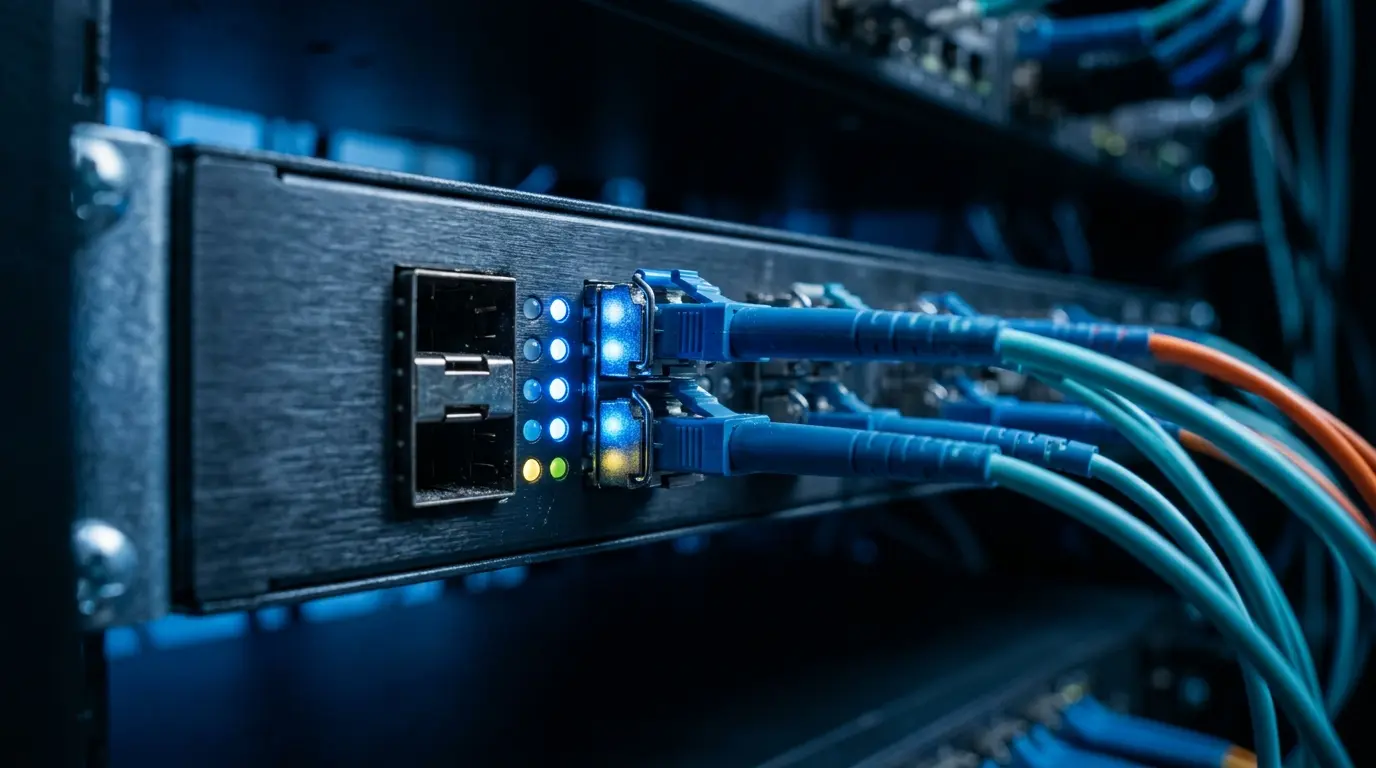
With 90 percent of IT professionals reporting increased data center infrastructure costs over the past year, SEALSQ Corp is expanding its Quantum Highway to connect hubs across the United States, India and Europe. This initiative aims to provide secure access to specialized computing resources while keeping sensitive data localized.
Interconnecting these hubs will use WISeQey Corp’s public key infrastructure to authenticate data exchanges, bolstering cybersecurity protections against evolving threats. A recent 11:11 Systems survey found that more than two in five respondents named cyberattacks as their top data center concern, highlighting the need for solutions like SEALSQ’s.
WISeQey PKI and Hardware Roots of Trust Secure Inter-Hub Data Exchange
This authentication process extends beyond simple data verification, establishing a chain of trust rooted in hardware security modules within each data center. The company intends this system to allow enterprises, research institutions and governments to access specialized computing resources while maintaining control over sensitive data within jurisdictional boundaries. A survey of more than 700 professionals working in IT infrastructure, cybersecurity and backup and disaster recovery revealed that 69% reported experiencing at least one cyberattack.
SEALSQ’s approach integrates these hardware modules with its parent company’s PKI. Beyond authentication, the system incorporates post-quantum cryptography to address the long-term threat of quantum computers breaking current encryption standards. Encrypted communications collected could be vulnerable in the future, and SEALSQ’s strategy aims to future-proof data security by employing algorithms resistant to attacks from both classical and quantum computing.
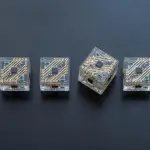
This proactive measure is coupled with Miraex’s photonic interconnect technology, which facilitates the integration of quantum hardware into existing data center infrastructure. Quantum connectors are designed to couple compatible quantum devices to optical equipment and fiber infrastructure, enabling both intra-hub and inter-hub communication. Within each hub, these connectors link quantum hardware to the data center’s optical infrastructure, while between hubs, they are intended to support future optical links where equipment and fiber performance meet the requirements for transmitting quantum signals.
Customers can also submit selected jobs to remote quantum processors over conventional networks, protected by this post-quantum cryptographic layer. The existing Quantum Highway footprint, encompassing locations in Switzerland, France, Spain and the United States, is the foundation for this expanded, secure network. Geneva provides cryptographic trust infrastructure, while Lausanne contributes Miraex’s photonics expertise.
SEALSQ’s investment in EeroQ in Chicago further strengthens the U.S, the company says. quantum computing ecosystem, linking it directly to the Quantum Highway. The company is also actively pursuing expansion into the Asia Pacific region, with plans to support regional customers in managing cryptographic keys locally and evaluating quantum key distribution on suitable optical links. This global expansion is supported by partnerships, such as the agreement with Kaynes in Sanand, Gujarat, where a new facility will combine semiconductor packaging, testing and secure credential provisioning.
The planned Post-Quantum Semiconductor and Cybersecurity Center in the Canton of Jura, contingent upon CHF 40-60 million in investment, would add another hub to the network. Similarly, an expansion of the Quantix Edge Security Center in Murcia, Spain, would increase data center capacity alongside existing semiconductor and post-quantum security activities. The group’s new Quantum Center of Excellence in Geneva provides a dedicated space for engineering teams and partners to demonstrate the interoperability of post-quantum chips, hardware-backed identity and secure communications across data center environments.


See today’s quantum computing news on Quantum Zeitgeist for the latest breakthroughs in qubits, hardware, algorithms, and industry deals.