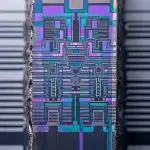
WISeQey Corp. (NASDAQ: WQEY; SIX: WQEY) launched WISeTrust.com on November 23, 2026, a new assessment and assurance framework designed to bolster digital security for governments and enterprises. The service addresses a critical gap in cryptographic visibility, helping organizations prepare for the evolving threat of quantum computing before it compromises internet transactions.
WISeTrust is built around three pillars, GOVERN, COMPLY and VERIFY, and aims to make digital trust “demonstrable,” according to the company, with a focus on cryptographic discovery and post-quantum readiness. This framework maps to standards like the EU AI Act and ISO/IEC 42001, providing a clear approach to crypto-agility.
WISeTrust Framework: Govern, Comply, and Verify Digital Trust
WISeQey’s newly launched WISeTrust.com framework delineates assessment and assurance roles, separating implementation from verification to ensure objective evaluation of cryptographic security postures. This separation establishes distinct functions for scoping, assessing, mapping controls, structuring evidence and coordinating assurance readiness, preventing inherent biases in self-assessment. The framework’s structure moves beyond simply offering a technological tool, instead providing a comprehensive system for organizations to evaluate and strengthen their digital defenses.
The framework’s three pillars, GOVERN, COMPLY and VERIFY, are designed to align with existing regulatory obligations and standards, including the EU AI Act, ISO/IEC 42001 and ISO/IEC 27001. This mapping facilitates adherence to multiple requirements with a single assessment. WISeQey emphasizes that discovery of existing cryptographic vulnerabilities is the essential first step toward building resilience, and crypto-agility is the foundation for maintaining that resilience over time, the company says. The company’s existing Public Key Infrastructure, digital identity, and trust services are intended to integrate with WISeTrust, creating an end-to-end architecture for trusted Internet transactions.
WISeQey views cryptographic trust as the “invisible infrastructure of the Internet,” essential for secure financial transactions, digital identities, connected devices and AI interactions. “Trust is the invisible infrastructure of the Internet,” said a company representative. “Every financial transaction, digital identity, connected device, AI interaction and secure communication depends on cryptography. Yet today, many organizations do not have a complete inventory of the cryptographic technologies protecting their most critical assets.” The launch of WISeTrust.com is intended to address this gap, making cryptographic trust visible, measurable and manageable.
The company’s ambition extends beyond immediate security concerns, anticipating a future where trust is continuously verified and security evolves alongside emerging technologies. “The Internet of the future will not simply require more encryption,” they stated. “It will require an architecture in which trust can be continuously verified, cryptographic risks can be identified and security can evolve as rapidly as the technologies it protects. WISeTrust.com represents a step toward that vision.
Trust is the invisible infrastructure of the Internet. Every financial transaction, digital identity, connected device, AI interaction and secure communication depends on cryptography. Yet today, many organizations do not have a complete inventory of the cryptographic technologies protecting their most critical assets.
Carlos Moreira, Founder and CEO of WISeQey
Quantum Readiness Assessment Identifies Cryptographic Exposure & Dependencies
Many organizations currently lack a comprehensive understanding of their cryptographic deployments, including the algorithms used and the management of associated keys and certificates, creating vulnerabilities as quantum computing advances. WISeQey’s forthcoming Quantum Readiness Assessment, delivered through its Quantum Center of Excellence, will scan and audit an organization’s cryptographic assets to establish a baseline of security, according to the company. This assessment will evaluate exposure to quantum computing threats and identify dependencies on algorithms like RSA and elliptic-curve cryptography that will require future migration to post-quantum cryptography.
The assessment’s capabilities extend beyond simple inventory. It will classify cryptographic risk by evaluating algorithms, key lengths and configurations against evolving security standards. A key deliverable is a decision-ready security baseline, intended to inform executive decisions, cybersecurity investment and preparation for new regulations surrounding post-quantum cryptography.
Future iterations of the assessment are planned to include remediation guidance and a crypto-agility layer, enabling organizations to transition between cryptographic algorithms as security needs change. This proactive approach addresses a growing concern: the possibility of adversaries collecting encrypted data now for decryption once quantum computers become powerful enough, a practice known as harvest now, decrypt later. The emergence of standardized post-quantum cryptographic algorithms, such as NIST’s ML-KEM and ML-DSA, provides a pathway for migration, but organizations must first understand their existing cryptographic dependencies.
“Through its VERIFY pillar and the upcoming Quantum Readiness Assessment, WISeTrust is intended to support this transition by providing the discovery, assessment and intelligence layer necessary to help organizations develop structured post-quantum migration strategies,” according to the company. The assessment will identify cryptographic algorithms, protocols, certificates, keys and related security dependencies across supported enterprise environments, providing a detailed inventory for informed decision-making. This detailed analysis is important for prioritizing systems for migration toward quantum-resistant security and ensuring a smooth transition in a rapidly evolving threat landscape.
WISeQey’s WISeTrust Maps to AI, ISO, and NIST Standards
WISeQey’s approach to cryptographic assurance distinguishes itself through a separation of roles within the WISeTrust framework; assessment, implementation, and verification are handled by distinct entities, bolstering the independence of the process. This design ensures that evaluations are technology-neutral, driven by risk and evidence needs rather than vendor-specific solutions, and that formal assurance conclusions originate from qualified, independent auditors.
The company’s technology can then address identified gaps in identity, authority, and workflow, but the core assessment remains unbiased, protecting the credibility of outcomes for stakeholders. WISeQey believes organizations will require the ability to update cryptographic infrastructure without wholesale redesigns of applications and systems, a capability the framework aims to facilitate.
This proactive stance acknowledges that the transition to post-quantum cryptography is a continuous process, not a singular event, and that adaptability is paramount. Beyond quantum readiness, WISeQey’s ambition with WISeTrust.com extends to securing increasingly complex digital interactions involving autonomous AI agents, machine-to-machine transactions and the expanding Internet of Things, the firm reports. The company envisions a future where cryptographic trust is a verifiable property of every digital exchange, and organizations can continuously monitor the foundations of their digital operations.
“As digital interactions increasingly involve autonomous AI agents, machine-to-machine transactions, Internet of Things devices, financial platforms and distributed computing infrastructure, cryptographic trust must become a fundamental and verifiable property of every digital exchange,” the company states. This continuous verification capability is intended to support a more integrated approach to authentication, encryption and digital signatures, complementing WISeQey’s existing Public Key Infrastructure services.
SEALSQ & WISeTrust: Complementary Approaches to Quantum Security
WISeQey launched WISeTrust.com with a framework designed to assess cryptographic vulnerabilities and prepare organizations for post-quantum threats, complementing the hardware-focused security developed by its subsidiary, SEALSQ Corp (NASDAQ: LAES). While SEALSQ concentrates on securing cryptographic operations at the semiconductor level, WISeTrust.com aims to provide visibility into where quantum-resistant solutions, including those from SEALSQ, should be deployed within an organization’s infrastructure.
This strategic alignment allows WISeQey to address security across both hardware and assessment layers, creating a more comprehensive approach to digital trust, the company states. The launch of the WISeTrust.com website marks the initial phase of a development roadmap centered around the GOVERN, COMPLY and VERIFY pillars, establishing a system for demonstrable digital trust.
Space (Nasdaq: SAIQ) focused on secure satellite communications, and WISeID, providing digital identity and authentication solutions. SEALCOIN AG, another subsidiary, develops decentralized physical infrastructure network technology and the SEALCOIN platform. The company’s structure, with operating subsidiaries addressing distinct parts of the post-quantum cybersecurity landscape, suggests a deliberate strategy to build a complete digital trust ecosystem. This ecosystem spans identities, devices, semiconductors, cloud infrastructure and secure space communications, positioning WISeQey to address a wide range of security challenges.
WISeQey’s portfolio also includes WISe. ART Corp, which operates a marketplace using blockchain technology for trusted digital asset and NFT transactions, further demonstrating a commitment to securing diverse digital interactions.



See today’s quantum computing news on Quantum Zeitgeist for the latest breakthroughs in qubits, hardware, algorithms, and industry deals.