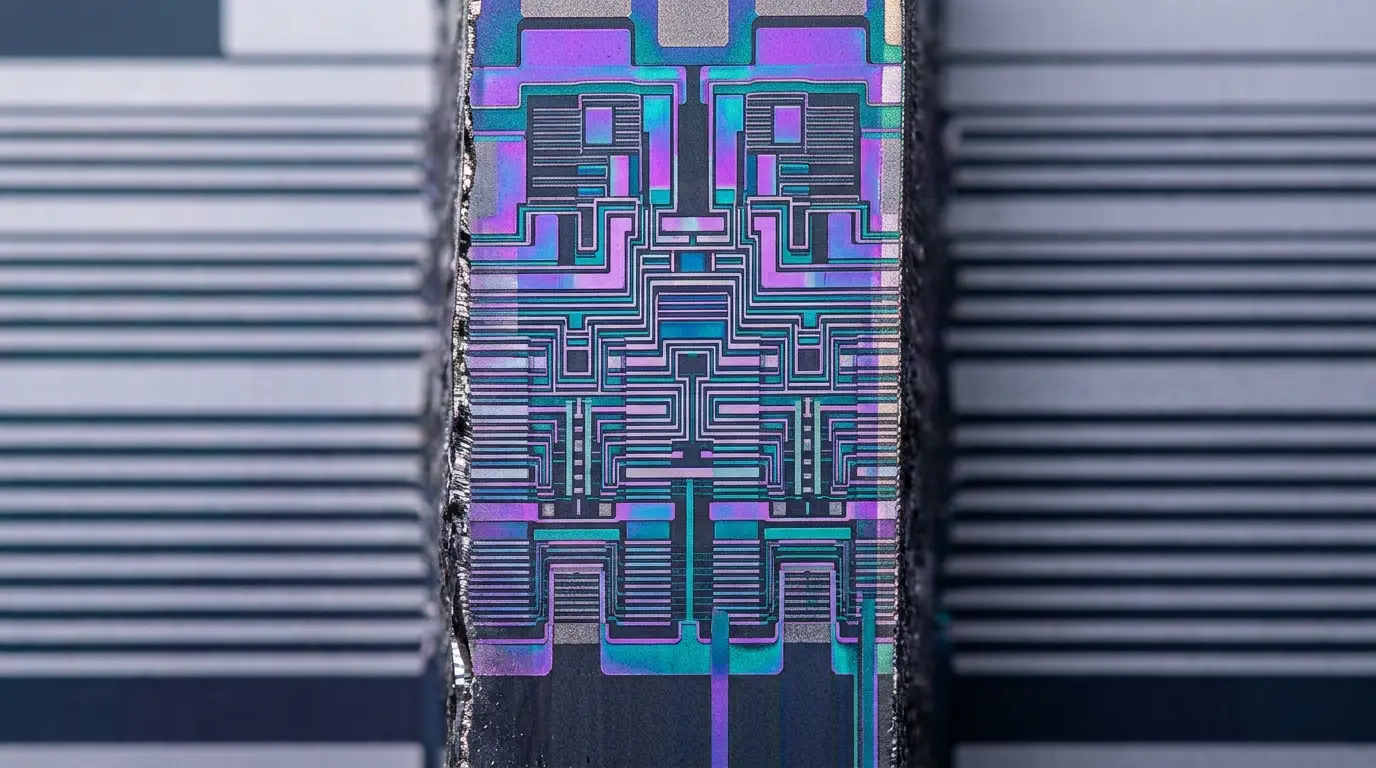
Photon Foundry, a new spin-out from Sydney, is building quantum hardware based on over a decade of research. The company, co-founded by SQA experts Dr Byron Villis, Professor Milos Toth and Professor Igor Aharonovich, aims to move quantum-light technology beyond laboratory experiments and into practical devices.
Dr Villis explains that “light is the fastest and most efficient way to transport information over long distances,” and adds that the smallest particle of light is called a photon, which will form the building blocks of future quantum networks. Photon Foundry is now focused on developing packaged devices to connect with existing light-based systems.
UTS Quantum-Light Research Drives Photon Foundry Spin-Out
Photon Foundry is adopting a staged commercialisation approach to mitigate both technical and investment risk, initially supplying single-photon samples to customers and using their feedback to guide future development. This model allows research and translation to happen concurrently; the company develops technology while the science continues to advance, Photon Foundry says. The foundation for Photon Foundry’s work was laid a decade ago when UTS researchers successfully produced single photons on demand from a flake of boron nitride at room temperature, a feat previously unachieved.
This breakthrough required further translation to become a viable component in quantum systems, a process now underway with the spin-out. Dr Villis also expressed personal enthusiasm for the opportunity to apply his research skills to building technologies with genuine impact, stating, “For researchers like me, it’s exciting to contribute to real-world applications.”
Ten years ago, UTS researchers produced single photons on demand from a flake of boron nitride at room temperature. At the time, nobody had done that before.
Byron Villis
Single-Photon Emitter Platform Enables Staged Commercialization
Photon Foundry’s commercial strategy centers on a single-photon emitter platform, initially supplying research-grade samples to customers to refine development and mitigate risk. This approach differs from many quantum start-ups focused solely on distant, large-scale quantum computing applications, allowing for revenue generation while simultaneously advancing core technology.
Professor Milos Toth, co-founder and CTO, explains that the team’s staged commercialisation approach helps reduce both technical and investment risk, with customer feedback directly guiding future iterations of the platform. The company’s initial products are designed to integrate with existing light-based systems, easing adoption for researchers already working with photonic infrastructure.
The current focus is on manufacturing these samples and developing packaged devices, a move supported by UTS’s Research to Impact program, which provides commercialisation assistance and access to facilities. “Turning a scientific breakthrough into a technology people can use takes more than great research. You need the right support to bridge the gap between discovery and application,” said co-founder and CSO, Professor Igor Aharonovich, from the UTS School of Mathematical and Physical Sciences.
Beyond sample provision, Photon Foundry intends to develop complete quantum components, which could ultimately support applications in secure communication, sensitive measurement and the broader development of future quantum technologies, according to the company. Professor Toth added that they are creating value today while building towards their longer-term vision.
Rather than waiting for a future quantum computing market to emerge, we are creating value today while building towards our longer-term vision.
Milos Toth



See today’s quantum computing news on Quantum Zeitgeist for the latest breakthroughs in qubits, hardware, algorithms, and industry deals.