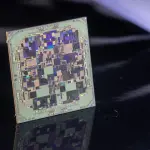
IonQ estimates a hypothetical quantum computer with 1,457 logical qubits could crack a single 256-bit elliptic-curve key used in Bitcoin’s secp256k1 curve in roughly 26 days. This calculation emphasises the urgency driving a federal mandate for Post-Quantum Cryptography (PQC); Executive Order 14412 requires high-value systems to implement PQC for key establishment by December 31, 2030.
The White House acknowledges the threat of adversaries “collecting United States information now, and decrypting it later,” suggesting current encryption may not be sufficient even before powerful quantum computers arrive. While PQC is now policy, Quantum Key Distribution remains a niche solution for the most sensitive links.
Shor’s Algorithm Threat & The Need for New Key Exchange
This assessment highlights the vulnerability of widely used cryptographic systems to Shor’s algorithm, a quantum algorithm developed in 1994 that efficiently factors large numbers, thereby breaking many public-key encryption schemes. While such a quantum computer does not yet exist, projections suggest its arrival within the next decade, prompting urgent action to secure sensitive data against future decryption. The White House recognizes the potential for a “harvest now, decrypt later” attack, where adversaries are actively collecting encrypted data with the intention of decrypting it once sufficiently powerful quantum computers become available.
This proactive threat model highlights the limitations of relying solely on current security measures, even before the widespread deployment of quantum computers. This policy directive prioritizes PQC as the primary solution for mitigating the quantum threat, although it does not preclude the use of complementary technologies.
PQC represents a software-based approach to key exchange, employing new mathematical problems designed to resist attacks from quantum computers. Unlike traditional public-key cryptography, which relies on the difficulty of factoring large numbers, PQC algorithms use alternative mathematical structures, such as lattices, to ensure security. The National Institute of Standards and Technology (NIST) has already selected ML-KEM as its primary choice for key establishment, demonstrating the maturity of PQC technologies, the company says.
However, NIST also chose HQC as a backup in 2025, acknowledging that even well-vetted cryptography can have imperfections, as demonstrated by the 2022 break of the SIKE candidate during the selection process. This layered approach, using multiple algorithms, enhances resilience against potential vulnerabilities.
QKD systems transmit encryption keys using single photons, and any attempt to intercept the photons introduces detectable errors, alerting the communicating parties to the presence of an eavesdropper. Unlike PQC, QKD is a hardware-based solution, requiring specialized equipment at both ends of the communication link. While QKD provides a high level of security, its practical limitations, such as range restrictions and the need for dedicated infrastructure, make it suitable for a limited number of high-value, long-lived connections.
The combination of PQC and QKD creates a layered defense strategy, providing enhanced security for sensitive data. PQC is a broad foundation, protecting systems across an enterprise, and QKD adds an additional layer of security for critical assets. IonQ itself employs this approach, using QKD to protect local fiber links among its Geneva sites and PQC to secure international VPN connections to Seoul.
Similarly, Slovakia’s national quantum network combines a QKD metro cluster with a QKD-PQC cross-country link, and Romania’s national QKD network spans over 1,500 kilometers with 36 links, according to NIST. This integration ensures that even if PQC algorithms are compromised, the secrets remain secure due to the physics-based security of QKD. However, the implementation of QKD requires careful consideration of specific criteria. Successful deployment necessitates control over both endpoints of the transmission, the availability of a suitable optical path, the need to protect secrets for decades, and a dedicated budget beyond that allocated for PQC.
The National Security Agency (NSA) currently does not recommend QKD for national security systems unless its limitations are overcome, and system owners should consult the NSA before implementation. The Department of Defense’s strategy goes further, explicitly excluding QKD, quantum networking and combined QKD-PQC solutions as acceptable security measures for quantum resistance. Despite these cautions, QKD remains a valuable tool for enhancing security in specific scenarios, particularly when combined with the broad protection offered by PQC.
PQC and QKD: Distinct Approaches to Quantum-Era Security
The federal mandate for post-quantum cryptography does not extend to quantum key distribution, which remains a specialized solution for securing particularly sensitive communication links. While PQC addresses the broad need for algorithm replacement, QKD offers an additional layer of security through the physical properties of quantum mechanics, creating a tiered approach to data protection. This distinction is important for mission owners transitioning to quantum-resistant cryptography and prioritizing resources effectively.
NIST’s selection process for PQC algorithms illustrates the inherent risks in relying solely on mathematical security. The candidate algorithm SIKE was broken in 2022, even after reaching the fourth round of evaluation. This outcome prompted the agency to choose HQC as a backup in 2025, demonstrating the value of diversifying cryptographic foundations to mitigate the impact of potential vulnerabilities.
HQC and ML-KEM, the primary choice for key establishment, use different mathematical principles, ensuring that a compromise of one does not automatically invalidate the other. This layered approach mirrors the combined use of PQC and QKD, providing redundancy and resilience against evolving threats. A key management and orchestration layer is essential for integrating PQC and QKD into existing systems, functioning as the central hub for key distribution and management.
This layer receives keys from both PQC key establishment and QKD hardware, delivering them to encryption systems, virtual private networks and hardware security modules. Critically, the orchestration layer combines the shared secrets from both sources to derive a single session key, ensuring continued security even if one layer is compromised. This integration allows organizations to use the strengths of both technologies, creating a more robust and adaptable security posture.
QKD’s suitability is not universal; it excels in specific scenarios like data-center-to-data-center links, command facilities and backup sites for critical labs. The technology’s reliance on physical infrastructure and the need for controlled transmission endpoints limit its scalability for widespread deployment. However, for high-value secrets requiring the highest level of protection, QKD can provide an invaluable additional layer of security. “QKD can provide an additional security layer,” the source states, highlighting its role as a complement to, not a replacement for, PQC.
Executive Order 14412 mandates PQC implementation for high-value assets and high-impact systems, with deadlines of December 31, 2030, for key establishment and December 31, 2031, for signatures. National security systems operate on independent schedules, but the order establishes a clear timeline for transitioning to quantum-resistant cryptography. A thorough inventory of cryptographic usage is the first step in this process, ensuring a complete understanding of the systems that require migration.
Owners must also consider the longevity of sensitive data, as data that will remain valuable for decades may benefit from the added security of QKD. The migration to PQC is not a one-time event. NIST’s schedule for updates extends to 2035, requiring systems to be designed for algorithmic agility. This means that encryption algorithms should be easily swapped without requiring complete system re-qualification, and QKD aligns with this long-term view, offering a future-proof security option for high-value risks.
“QKD fits within the same long-term view—while it isn’t necessarily a purchase to make during this migration, it is a worthwhile question to raise for high-value risks,” the source explains. PQC represents the foundational security layer all mission owners must implement, providing a software-based solution to replace vulnerable encryption algorithms.
Layered Security: Combining PQC with QKD for High-Value Assets
This calculation emphasises the need for proactive security measures, and explains the current focus on both cryptography and Quantum Key Distribution as complementary approaches. While PQC addresses the immediate threat through software-based solutions, QKD offers a fundamentally different security layer based on the laws of physics, creating a robust defense against evolving computational capabilities. This concern drives the current push to implement PQC, mandated by Executive Order 14412, requiring key establishment using PQC by December 31, 2030, and signatures by December 31, 2031.
However, for exceptionally sensitive data with long lifecycles, a layered approach combining PQC and QKD offers enhanced resilience. This strategy recognizes that even if vulnerabilities are discovered in PQC algorithms, the QKD layer can maintain security, as it relies on distinct physical principles.
This layer manages the delivery, rotation, and retirement of keys generated by both PQC and QKD systems, ensuring smooth integration with existing encryption tools, VPNs and hardware security modules. This approach is already being implemented in several national networks, including IonQ’s Geneva sites, which use QKD for local fiber links and PQC for international VPN connections. The benefit of QKD, in these instances, is not necessarily to replace PQC, but to add a secondary, physically-based layer of security.
However, for data expected to remain sensitive for decades, QKD offers an additional layer of protection. The company’s recent blog, Protecting the Network Before the Network Is Ready, provides further insight into these strategies. Their Quantum for the Mission newsletter offers monthly updates on policy, technology and quantum news for federal stakeholders.
Source: https://www.ionq.com/blog/pqc-and-qkd-what-mission-owners-need-to-know-about-quantum-era-security



See today’s quantum computing news on Quantum Zeitgeist for the latest breakthroughs in qubits, hardware, algorithms, and industry deals.