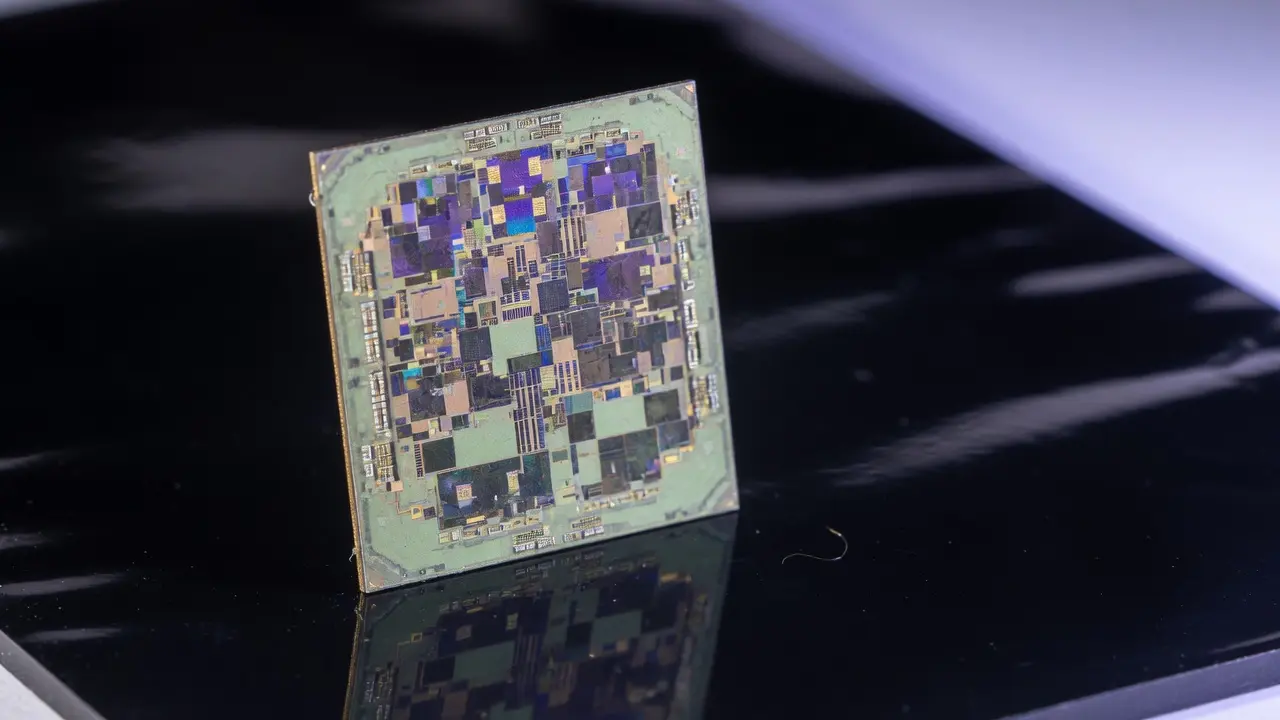
The Carl-Zeiss-Stiftung will fund two research projects at Mainz University, providing a total of some EUR 767,000 in funding. Researchers on the “NanoCool” project are addressing a critical limitation in computing. Conventional cooling systems are being overwhelmed by heat generated in tiny areas, hindering the development of more powerful computers and artificial intelligence. The team intends to exploit electron spin in chiral molecules, creating microscopic heat pumps that could lead to a new generation of energy-efficient AI hardware without the need for magnets or moving parts.
NanoCool: Spin Polarization for Chip Heat Removal
The NanoCool project is investigating how chiral molecules can function as microscopic heat pumps, first releasing then absorbing heat through controlled electron spin polarization. The funding supports not only NanoCool, but also a related project, MIRAGE, focused on high-frequency magnetic quantum effects. Professor Eva Rentschler at JGU is coordinating the NanoCool project, working alongside Professor Angela Wittmann of the Institute of Physics and Professor Yossi Paltiel of the Hebrew University of Jerusalem.
The team’s core concept centers on exploiting the spin of electrons, a quantum property that allows them to behave as miniature magnets, and manipulating this spin within specifically structured chiral molecules, Carl-Zeiss-Stiftung says. When an electric current passes through these molecules, the researchers aim to align electron spins, a process that initially releases heat; the subsequent loss of this alignment then allows the molecules to absorb heat, effectively creating a localized cooling cycle.
This method differs significantly from traditional cooling solutions, potentially eliminating the need for bulky magnets or mechanically moving parts. The Carl-Zeiss-Stiftung stated in its announcement that the NanoCool team intends to investigate this process and make the cooling effect viable for use directly on computer chips. The potential impact extends to the development of more powerful and energy-efficient artificial intelligence hardware, a field increasingly limited by thermal constraints.



See today’s quantum computing news on Quantum Zeitgeist for the latest breakthroughs in qubits, hardware, algorithms, and industry deals.