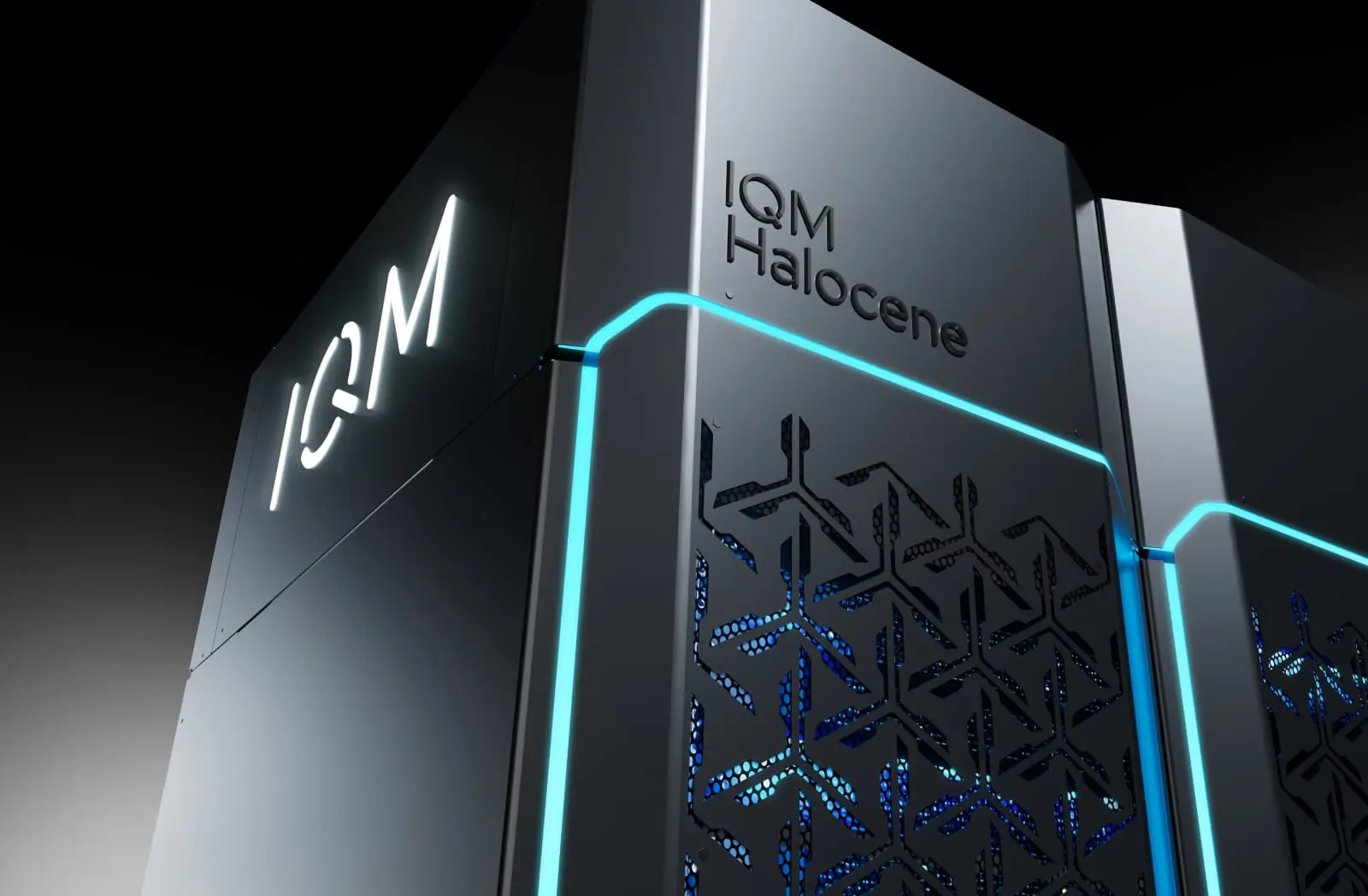
IQM Quantum Computers announced an upgrade program for its Halocene error-correction product line at SC26, establishing a pathway to systems exceeding 1,000 qubits. Building on experience integrating more quantum computers into high-performance computing centers than any other company, IQM now offers a smooth progression from the 150-qubit system introduced in November 2025. Customers can run hybrid workloads immediately and upgrade to each new Halocene system without downtime as they move toward fault-tolerant quantum computing. The LUMI AI Factory has chosen it for LUMI-IQ, which will be connected to the upcoming LUMI-AI supercomputer.
Halocene Upgrade Program: Scaling to Over 1,000 Qubits
IQM Halocene customers can now begin scaling toward systems exceeding 1,000 qubits through a newly announced upgrade program unveiled at SC26. The program provides a defined path from the existing 150-qubit Halocene system to future iterations with significantly increased qubit counts, designed to accelerate the development of fault-tolerant quantum computing. IQM’s HPC integration service accompanies each upgrade, connecting new Halocene systems to existing infrastructure, schedulers and GPU platforms for immediate productivity.
This approach prioritizes smooth transitions, allowing users to maintain software, workflows and skills across system generations. The company emphasizes practical deployment alongside existing high-performance computing resources, a strategy built on its experience integrating and upgrading more quantum computers in HPC centers than any other company.
IQM’s Co-Founder and CEO, Dr. Jan Goetz, stated that solving the physics is only half the challenge, and the other half is making quantum computing work commercially within the infrastructure organizations already run. This focus on commercial viability is reflected in the program’s design, which aims to eliminate downtime during upgrades and maximize value for each investment. “With Halocene now upgradable to over 1,000 qubits, our customers can start today, run hybrid workloads alongside their AI and HPC systems, and move to each new system without downtime,” said Dr. Goetz.
Integrating quantum computers into our supercomputing environment has shown us that the real value lies in continuity. Each IQM system we have added has built on the integration, software and expertise we developed with the previous one, so our users keep working while the technology moves forward. An upgrade path designed around that continuity is what supercomputing centers need on the way to fault-tolerant quantum computing.
Dr. Tobias Guggemos, Quantum Technologies Team Lead, LRZ
IQM’s HPC Integration Accelerates AI-Based Workloads
Early adoption of the Halocene upgrade path is already underway with the LUMI AI Factory, coordinated by CSC, IT Center for Science, which has selected IQM’s system for LUMI-IQ. This deployment will connect to the upcoming LUMI-AI supercomputer, demonstrating integration with a major European supercomputing initiative.
IQM emphasizes that the most valuable near-term applications of quantum computing will be hybrid, with quantum processors working alongside conventional CPUs and GPUs that power artificial intelligence and simulation, the company says. IQM describes the benefit of its approach to scaling quantum resources as providing “more value from every upgrade, without downtime.”
Solving the physics is only half the challenge. The other half is making quantum computing work commercially, inside the infrastructure organizations already run.
Dr. Jan Goetz, Co-Founder and CEO of IQM
See today’s quantum computing news on Quantum Zeitgeist for the latest breakthroughs in qubits, hardware, algorithms, and industry deals.