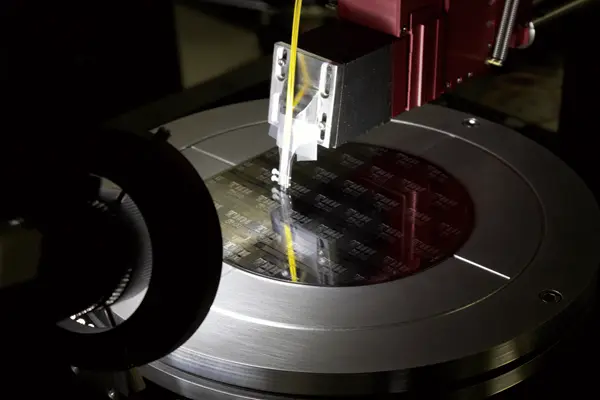
Xanadu Quantum Technologies reported $1.3 million in revenue for the third quarter of 2026, a 32% increase year-over-year, while continuing to invest heavily in loss reduction for its photonic quantum computers. Canada’s agreement for funding through Project OPTIMISM extension both provide support for the work Xanadu is already doing, the company says. “Loss is the engineering challenge between Xanadu and a utility-scale quantum computer,” said Dr. Christian Weedbrook, Founder and Chief Executive Officer, “and we continue to go after it from every direction.” Xanadu is also expanding its facilities to support these advancements.
Q3 2026 Revenue of $1.3M Driven by DARPA and Partnerships
Xanadu’s third quarter revenue reached $1.3 million, a 32 percent year-over-year increase fueled by funding from the Defense Advanced Research Projects Agency and ongoing partnership engagements. This revenue stream, however, did not prevent a net loss of $32.2 million for the quarter, a figure that reflects the company’s continued, substantial investment in research and development. As of September 30, 2026, Xanadu reported $286.5 million in cash and cash equivalents, providing a financial runway for its ambitious quantum computing initiatives.
The company’s operational strategy centers on reducing loss, a critical engineering hurdle in the development of utility-scale quantum computers, and recent progress in component performance is demonstrably accelerating that effort. A newly developed 7-millidecibel optical switch exemplifies this focus.
These advances support the company’s year-end 2026 system loss target of 10.2, initially outlined during its August Investor Day, and its longer-term goal of establishing a fully functional quantum data center. This roadmap projects up to 200 logical qubits by 2029, scaling to over 1,000 by 2031. Strategic partnerships are integral to Xanadu’s approach to scaling its technology and manufacturing capabilities. A recently announced multi-year collaboration with GlobalFoundries aims to advance Xanadu’s ultra-low-loss silicon nitride platform and superconducting nanowire single-photon detectors, or SNSPDs.
Faster detectors are expected to increase the clock rate of Xanadu’s machines and reduce the footprint and resource demands of qubit production. Simultaneously, the company is working with ASML, a leading supplier of semiconductor lithography equipment, to address waveguide loss, identified as the largest contributor to optical loss in its integrated photonic circuits.
The partnership is to develop compact, modular cryogenics that bring detector cooling into a data-center footprint, according to Xanadu. Xanadu’s architecture already requires minimal cryogenics, and the work is expected to further reduce the size and cost of the cryogenic system. Xanadu’s software development is also progressing, with the launch of Backline in collaboration with AMD. Backline is intended to address a critical challenge in scaling fault-tolerant quantum computers by building the classical computing infrastructure necessary for real-time processing and control.
The system demonstrated a median round-trip communication latency of 2.3 microseconds between an FPGA and CPU, and 4.5 microseconds between an FPGA and GPU, enabling high-speed classical processing and feedback, the company says. This heterogeneous computing approach integrates CPUs, GPUs and FPGAs through a unified software framework, allowing workloads like quantum error correction and real-time control to be executed on the most appropriate hardware.
Beyond technological advancements, Xanadu is actively cultivating relationships with industrial, academic and national research partners. A collaboration with Mitsubishi Chemical, supported by Canadian and Japanese innovation programs, has demonstrated the potential of quantum algorithms to accurately model key properties of EUV photoresist materials used in advanced semiconductor manufacturing. The companies are now developing a fault-tolerant quantum computing-ready software pipeline for semiconductor materials development.
Workforce development programs with Royal Bank of Canada and Booz Allen, alongside existing training initiatives with Lockheed Martin, are expanding the pool of skilled quantum computing professionals. A strategic research partnership with the University of Alberta focuses on developing quantum algorithms for cancer treatment.
Xanadu received provisional approval for up to $10 million in project funding under the Quantum Benchmarking Initiative, extending Stage B work and accelerating critical components of its R&D roadmap. Dr. Weedbrook further elaborated on the significance of Backline, stating, “Our launch of Backline with AMD represents an important step in building the classical computing infrastructure required for utility-scale quantum computing.”
Loss is the engineering challenge between Xanadu and a utility-scale quantum computer, and we continue to go after it from every direction: more tapeouts, better components, and manufacturing partners who can help us push further.
Dr. Christian Weedbrook, Founder and Chief Executive Officer of Xanadu


See today’s quantum computing news on Quantum Zeitgeist for the latest breakthroughs in qubits, hardware, algorithms, and industry deals.