
The question of “What is the coldest temperature we can possibly achieve” sparked decades of investment in Finland, ultimately establishing the nation as a global leader in superconducting quantum technologies. From this fundamental research, OtaNano, Finland’s national research infrastructure for nano-, micro and quantum technologies, emerged in Otaniemi, offering unique access to facilities for both researchers and companies. This long-term commitment has already yielded economic results, including €217 million revenue generated by cryogenic technology firm Bluefors in 2025.
Early Investment in Quantum Research at Aalto University
Bluefors, now the global leader in cryogenic technologies for quantum research and development, originated from the foundational work at Olli V. Lounasmaa’s Low-Temperature Laboratory. This trajectory demonstrates how fundamental scientific inquiry can catalyze industrial leadership, a pattern Finland has actively cultivated for decades. The Finnish Quantum Flagship has accelerated innovation, with three new companies, A-Gate Sensors, Arctic Instruments and QMill, emerging in just the first two years of its operation.
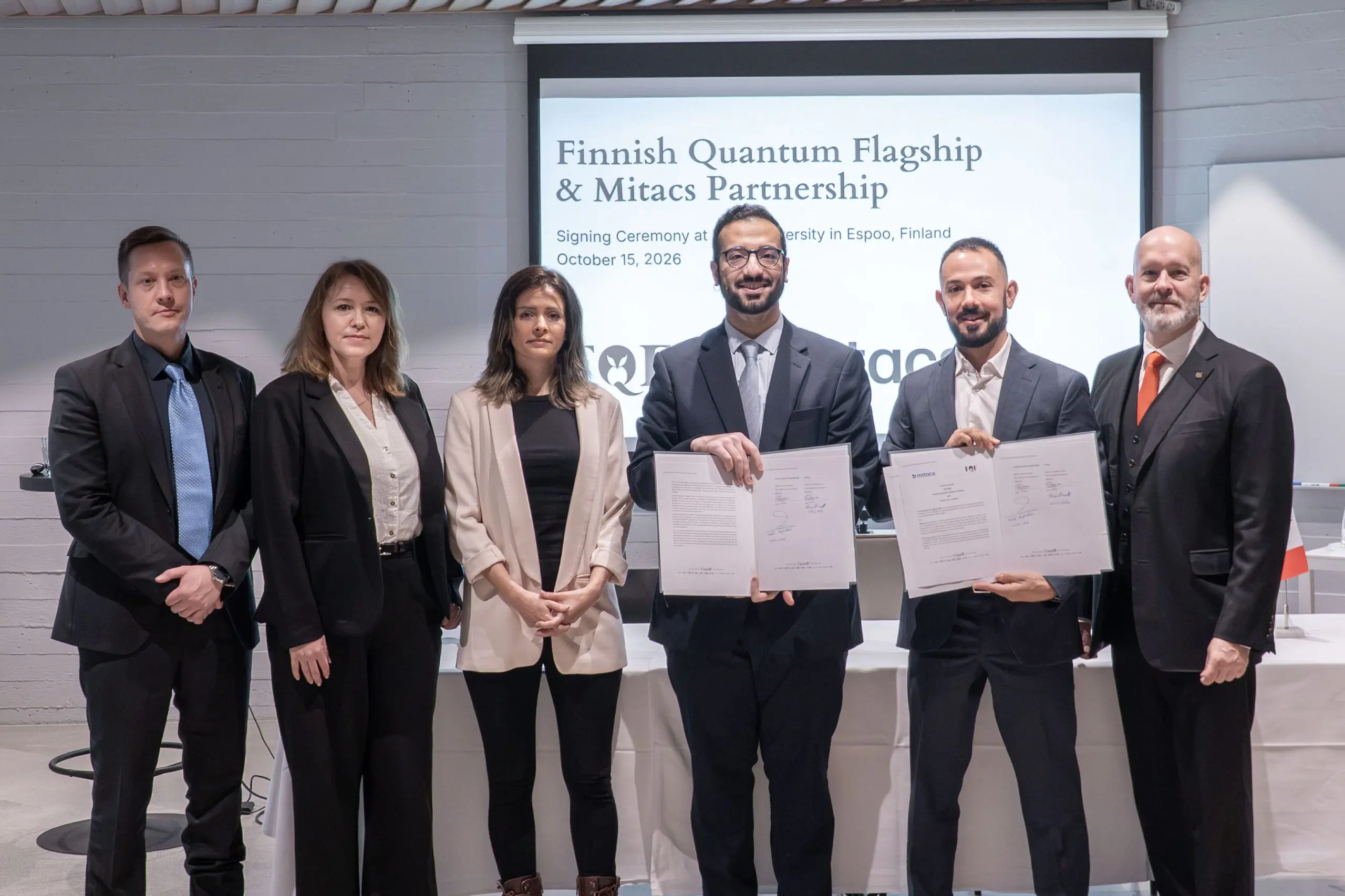
This commitment extends beyond hardware and software, with a strong emphasis on quantum materials research, ecosystem development, and funding mechanisms to support ongoing innovation. Finland’s long-term strategy uniquely integrates quantum industrial players from the outset, a factor believed to provide a competitive advantage. This early collaboration ensures that private innovation is effectively channeled into public success, according to national strategy documents.
Complementing this industrial focus is QDOC, a program currently training approximately 90 students in quantum research across Finnish universities. Adam Foster, Professor of Physics at Aalto University and Director of QDOC, emphasizes the importance of a skilled workforce for sustained leadership in quantum technologies, stating, “This pilot project has attracted international talent from around the world, and these types of talent attraction schemes will aid in Finland maintaining its role as a leader in the field.”
The Finnish Quantum Flagship has spun our three new companies in the first two years of its operations: A-Gate Sensors and Arctic Instruments in the hardware domain, and QMill in the software domain.
Peter Liljeroth, Professor of Physics at Aalto University and Director of the Finnish Quantum Flagship
OtaNano Facilities Enable Quantum Technology Development
OtaNano provides companies direct access to facilities previously reserved for fundamental research, accelerating the translation of quantum discoveries into marketable technologies. The facilities, evolving from the Low Temperature Lab established in the 1960s, now support a broad spectrum of nano-, micro and quantum technologies, indicating a deliberate integration beyond a solely quantum focus. InstituteQ, Finland’s national quantum institute, further amplifies this impact by uniting research, industry and government entities to expedite quantum science and technology development.
The institute operates through three core pillars, ResQ, InnoQ and EduQ, aiming to convert sustained scientific excellence into practical applications and establish Finland as a prominent, globally connected quantum innovation hub. The Finnish Quantum Flagship, the nation’s most ambitious research coalition, is housed within InstituteQ, demonstrating a commitment to long-term investment in quantum technologies.
This Finnish quantum strategy is unique in that it involved quantum industrial players from the beginning. Their input is documented throughout the strategy and the related technology roadmap.
Peter Liljeroth, Professor of Physics at Aalto University and Director of the Finnish Quantum Flagship
Bluefors and IQM Demonstrate Commercial Quantum Success
Bluefors generated €217 million in revenue during 2025, demonstrating the economic impact of Finland’s sustained investment in quantum technologies. This longevity highlights a commitment to foundational research that predates recent surges in global quantum investment, directly linking early scientific inquiry to present-day commercial success. IQM Quantum Computers further exemplifies this trend as the first European quantum computing company listed on a US Stock Exchange, delivering superconducting quantum computers internationally.
Both Bluefors and IQM are actively developing technology within Finland, including components for Aalto University’s 20-qubit computer, establishing a localized value chain. This domestic development contrasts with many quantum initiatives and highlights a strategy of complete ownership, from fundamental research through to commercialization and deployment.
What started off as a simple research question, ‘What is the coldest temperature we can possibly achieve,’ resulted in the establishment of one of the earliest ultra-low temperature research laboratories in the world.
Jukka Pekola, distinguished professor of physics at Aalto University and director of InstituteQ, Finland’s National Quantum Institute
National Quantum Strategy Targets 2035 Economic Goals
Finland’s National Quantum Strategy aims for a substantial economic impact, targeting €3 billion in turnover within the quantum sector by 2035, alongside €400 million in private investments and the creation of 10,000 industry jobs. This ambitious goal is underpinned by a collaborative effort involving research organizations, government ministries, higher education institutions and private companies, a structure designed to translate innovation into economic gains.
InstituteQ is central to this effort, tasked with onboarding at least 50 end-user companies actively using quantum technologies by 2030, working in conjunction with Business Finland and the wider Finnish quantum ecosystem. A key element of the strategy is the National Quantum Technology Roadmap 2025-2035, which focuses on accelerating three core technology areas: quantum computation, quantum sensing and quantum communication.
Liljeroth, a member of the strategy’s development working group, emphasizes the unique approach Finland has taken, stating, “This Finnish quantum strategy is unique in that it involved quantum industrial players from the beginning.” Their input is documented throughout the strategy and the related technology roadmap. This early integration of companies is intended to provide Finland with a competitive advantage in commercializing quantum innovations. The roadmap’s focus on specific technology pathways reflects a pragmatic approach to building a quantum value chain, moving beyond foundational research toward practical applications.
InstituteQ’s role extends to identifying and recruiting potential end-user companies, actively seeking to bridge the gap between research and industry adoption. This coordinated effort, combining strategic planning with targeted recruitment, positions Finland to capitalize on the growing quantum technology market and achieve its stated economic objectives by 2035, encouraging a future where quantum technologies drive innovation across multiple sectors.
QDOC is training the next line of Finnish quantum experts, with roughly 90 students conducting their research at universities throughout the country.
Adam Foster, Professor of Physics at Aalto University and Director of QDOC



See today’s quantum computing news on Quantum Zeitgeist for the latest breakthroughs in qubits, hardware, algorithms, and industry deals.