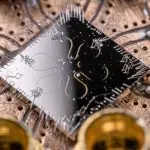
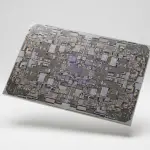
An upgrade to Quantinuum’s Reimei quantum computer at RIKEN now enables researchers to address more complex scientific problems than previously possible with the prior H1 system. RIKEN and Quantinuum expanded their partnership to advance quantum-AI hybrid supercomputing, with plans to collaborate with Japanese universities and SoftBank Corp. to build domestic infrastructure and connect the quantum computer with AI data centers in Japan.
“With the upgraded Reimei quantum computer, we will be able to tackle more complex and larger-scale scientific problems that were difficult to address with the previous H1 system,” says Mitsuhisa Sato, Division Director of the Quantum-HPC Hybrid Platform Division at the RIKEN Center for Computational Science (R-CCS).
RIKEN and Quantinuum Advance Quantum-AI Hybrid Supercomputing
The collaboration between RIKEN and Quantinuum now includes plans to develop a domestically produced, fault-tolerant quantum computer, built with contributions from Japanese universities and suppliers. RIKEN and Quantinuum will also collaborate with SoftBank Corp. to explore the connection of the quantum computer with AI data centers in Japan.
This connection aims to support use case development across critical sectors including electronics, energy and life sciences, by combining the power of quantum, super and conventional AI computing. The newly signed Memorandum of Understanding will expand research into the use of quantum computing for AI for Science, a key initiative being promoted by RIKEN, with a strategic emphasis on applying quantum resources to accelerate scientific discovery.
With the upgraded Reimei quantum computer, we will be able to tackle more complex and larger-scale scientific problems that were difficult to address with the previous H1 system, further advancing quantum-HPC hybrid computing through our ongoing JHPC-quantum project.
Mitsuhisa Sato, Division Director of the Quantum-HPC Hybrid Platform Division at the RIKEN Center for Computational Science (R-CCS)




See today’s quantum computing news on Quantum Zeitgeist for the latest breakthroughs in qubits, hardware, algorithms, and industry deals.