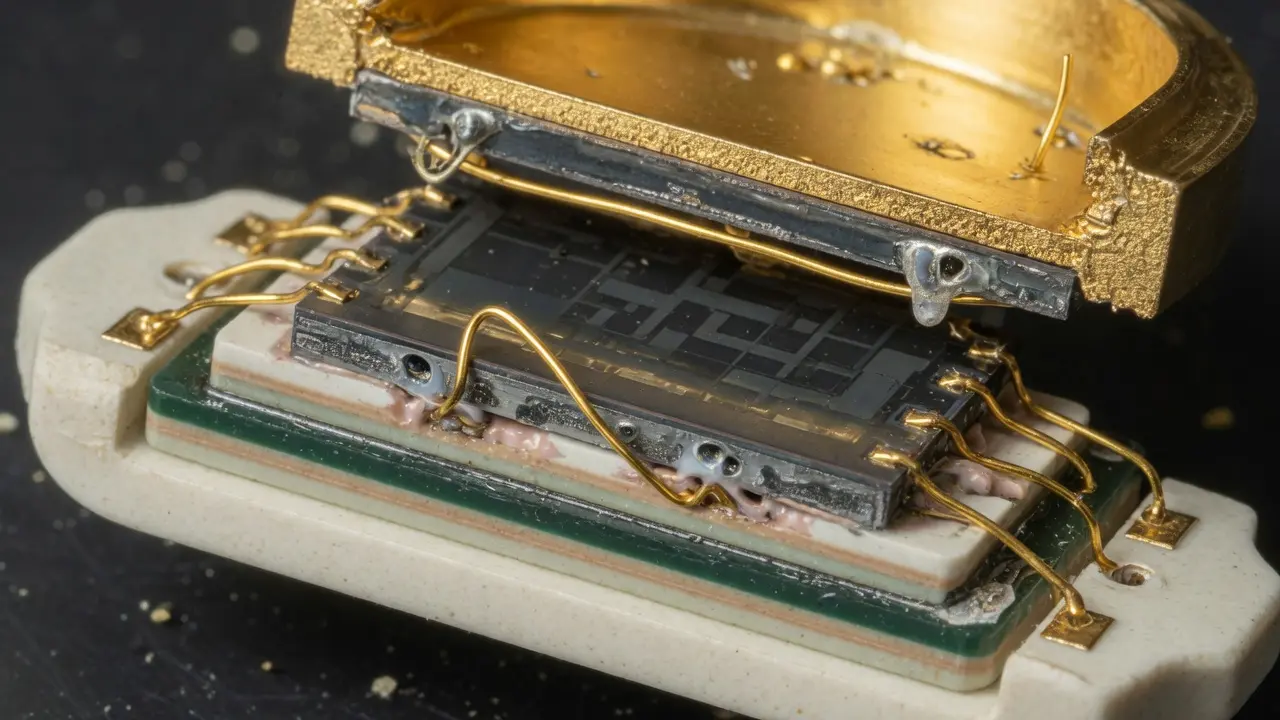
They demonstrate rhenium on sapphire as a promising material platform for superconducting circuits through the realization of transmons with mean relaxation times up to at 5 GHz. The team, led by Robert J. Schoelkopf, focused on rhenium due to its ability to suppress native oxide formation, addressing a long-hypothesized source of performance-limiting dielectric loss in superconducting circuits. Their work demonstrates rhenium on sapphire as a promising material platform, supported by a detailed loss characterization study. Further investigation may solidify rhenium’s position as a leading material for extending qubit decoherence times.
Rhenium Film Demonstrates 5 GHz Qubit Coherence
Rhenium films deposited on sapphire enabled the creation of superconducting transmons exhibiting mean relaxation times, , reaching 5 GHz. This performance represents an advancement in qubit coherence, a critical metric for the speed and complexity of quantum computations. The team’s work directly addresses dielectric loss, a long-recognized limitation in superconducting circuit performance, by focusing on materials that minimize loss at interfaces. The choice of rhenium stemmed from its unique ability to suppress native oxide formation, a hypothesized contributor to dielectric loss at metal-air interfaces.
Prior characterization of rhenium films on sapphire demonstrated promising lattice matching, suggesting a low-loss interface between the materials. This foundation allowed the fabrication of 150 nanometer-thick rhenium films via sputtering, subsequently patterned using reactive-ion etching. Sapphire substrates, grown using the heat-exchanger method and annealed at high temperatures, were selected for their low dielectric loss tangent.
A detailed loss characterization study accompanied the transmon realization, allowing the researchers to separate and quantify dominant loss mechanisms. They constructed a “loss budget” that accurately reflects their T_1 measurements, validating their approach to material science for quantum computing. This budget identified contributions from the rhenium-aluminum interface, rhenium and aluminum surfaces, the sapphire bulk and losses within the superconducting aluminum packaging. The team’s analysis revealed that the rhenium-aluminum interface exhibited a loss factor of 2.9 ± 8×10^(-12), comparable to that of tantalum-aluminum interfaces achieved with similar ion milling processes.
The team’s analysis of loss contributions revealed that package seam loss accounted for 1.1 ± , while package metal-air loss was 8.4 ± . These values, along with the package conductor loss of 5.3 ± , were extracted from prior work using forky whispering-gallery-mode resonators and ellipsoidal cavities.
The researchers noted that while tantalum also exhibits promising properties, rhenium films do not survive treatment with piranha solution, necessitating the use of concentrated sulfuric acid for cleaning after patterning. Experimentation with alternative cleaning agents may further improve surface loss factors. The comparison of rhenium and tantalum processes highlights the effectiveness of the chosen fabrication techniques. Rhenium exhibited a surface loss of 3.6 ± , closely matching the 3.4 ± observed with tantalum.
Bulk loss was also comparable, at 2.9 ± for rhenium and 4.3 ± 1. for tantalum. “Chemical profiling of the MA interface, as tantalum has received, and further experimentation with the deposition process and chemical treatments may enable even higher decoherence times with rhenium,” the researchers wrote.
The electric field profiles of the tripole stripline resonators used in the study were analyzed, focusing on the λ/2 modes due to their sensitivity and effectiveness. The power-independent component of was found to provide an approximate bound on conductor loss, which was determined to be negligibly small for the devices tested. The team separated the dominant loss mechanisms and constructed a loss budget that agrees with their measurements.
This focused approach allowed for a more precise understanding of the dominant loss factors affecting qubit coherence. The detailed loss budget constructed by the team provides a comprehensive account of the various loss contributions, with relative percentages assigned to each component. Aluminum surface loss accounted for 38%, and bulk loss accounted for 23%.
Package seam, metal-air, and conductor losses each contributed less than 1%. This granular breakdown of loss mechanisms emphasises the importance of minimizing interfacial losses to maximize qubit coherence times. The data presented suggests that further refinement of the rhenium-based fabrication process, particularly in the areas of surface cleaning and interface control, could lead to even greater improvements in qubit performance.
Transmon Design: Rhenium Pads & Aluminum Junctions
The construction of a loss budget, detailing the sources of energy dissipation in superconducting qubits, confirmed a measured coherence time of five gigahertz for transmons using rhenium pads and aluminum junctions. This detailed accounting of loss mechanisms aligned with experimental measurements of , validating the approach to material science employed in the fabrication process.
This granular breakdown of loss factors distinguishes rhenium-based transmons from their tantalum counterparts, allowing for a direct comparison of material performance. The study found that the loss factor at the rhenium-aluminum interface was comparable to that of the low-loss tantalum-aluminum interface, indicating the effectiveness of the ion milling process used to prepare the rhenium surface prior to aluminum deposition.
However, the analysis also revealed that the aluminum near the Josephson junction exhibited disproportionately high loss, despite occupying a significantly smaller area than the rhenium pads. This amplification of loss in the near-junction region suggests that the density of two-level systems, or TLSs, in that area is a critical factor influencing overall qubit coherence.
While effective, this method may not achieve the same level of organic residue removal as piranha solution, potentially contributing to surface loss. The loss budget constructed for these transmons predicts an internal quality factor, , of 9.2(1.4)e6, corresponding to the measured sample average of 9.1(2.5)e6, demonstrating a strong correlation between theoretical modeling and experimental results.
The team demonstrated rhenium on sapphire as a promising material platform for superconducting circuits through the realization of transmons with mean relaxation times up to 5 GHz. By analyzing the resonator’s performance, researchers were able to extract individual loss contributions from each component, including the rhenium and aluminum films, as well as the interfaces between them. The team transferred loss factors from separate devices, including rhenium tripole stripline resonators, to account for remaining loss mechanisms in the transmon design.
The researchers report. The amplified effect of TLSs in the near-junction region, where the mode’s inductance is concentrated, emphasises the importance of minimizing dielectric loss in this critical area. The detrimental effect of TLSs is larger than expected given the area occupied by the aluminum near-junction region, suggesting that the density of these loss-inducing defects is particularly high in that location.
Further investigation into the origin and mitigation of TLSs in the near-junction region could lead to significant improvements in qubit coherence. The team’s findings demonstrate that rhenium presents a promising material platform for superconducting circuits, offering competitive performance with tantalum while opening new avenues for optimization and control of loss mechanisms.
Rhenium’s Suppression of Native Oxide Formation
Rhenium-based transmons achieved a mean relaxation time, , up to 5 GHz, a performance level demonstrated through the fabrication of superconducting circuits on sapphire substrates. Further characterization may establish rhenium as a leading candidate for maximizing decoherence time.
The observed coherence times were measured in five fabricated transmons, each integrated with a stripline-based readout resonator and Purcell filter within a superconducting tunnel package. Temporal fluctuations in were noted during 24-hour sampling periods, a phenomenon frequently attributed to the coupling of electric fields to two-level systems, or TLS, within the dielectric environment.
Analysis of these fluctuations revealed an average of 9.1(2.5)e6, directly correlating to the achieved 5 GHz . This level of performance, while competitive with tantalum-based transmons, emphasises the need for further refinement and a detailed understanding of the dominant loss mechanisms at play. This detailed analysis allowed for a precise decomposition of loss contributions, revealing that the rhenium-aluminum interface exhibited negligible loss, permitting its smooth integration into existing aluminum-based fabrication processes without compromising circuit quality.
The team’s findings suggest that the observed performance is not limited by interfacial losses between rhenium and aluminum, opening avenues for further optimization of the overall system. This substrate selection, combined with the properties of rhenium, contributes to a reduction in dissipation through coupling to the electric field. However, the researchers noted significant device-to-device variation in , suggesting that the quality of the aluminum near-junction region is important for overall performance.
The surface participation ratio in this area is disproportionately high, indicating that even minor imperfections or losses within the aluminum layer can significantly impact qubit coherence. The team’s work builds upon previous advancements in tantalum-based transmons, which benefited from a clean metal-substrate interface achieved through piranha solution treatment and a low-loss native oxide layer.
While tantalum demonstrated improvements in , the persistent presence of interfacial losses prompted the exploration of alternative materials like rhenium. The suppression of native oxide formation in rhenium, if confirmed as the source of reduced loss, represents a step towards maximizing decoherence time in superconducting qubits.
Loss Budget Analysis Validates Transmon T_1 Measurements
Their loss characterization study separates the dominant loss mechanisms and constructs a loss budget that agrees with their measurements. The constructed loss budget demonstrates that surface loss currently limits coherence, contributing 36% to the overall loss, while aluminum surface loss accounts for 38%. Bulk material loss contributes 23%, and the package seam, metal-air interface, and conductor each contribute less than one percent, indicating minimal impact from these sources.
This granular breakdown of loss mechanisms allows for targeted improvements in fabrication and material selection, focusing efforts on minimizing surface imperfections and dielectric loss. The analysis confirms the rhenium-aluminum interface contributes only 2% to the total loss, demonstrating its compatibility with existing aluminum-based fabrication techniques without significant performance penalties. By employing a participation matrix approach, the researchers were able to isolate and quantify the contribution of each loss source, creating a comprehensive model of decoherence. This model not only validates their experimental results but also provides a framework for optimizing future designs and materials.
👉 More information
🗞 Rhenium as a material platform for long-lived transmon qubits
✍️ Yanhao Wang, Suhas Ganjam, Ishan Narra, Luigi Frunzio and Robert J. Schoelkopf
🧠 DOI: http://link.aps.org/doi/10.1103/2dpj-3nsv


See today’s quantum computing news on Quantum Zeitgeist for the latest breakthroughs in qubits, hardware, algorithms, and industry deals.