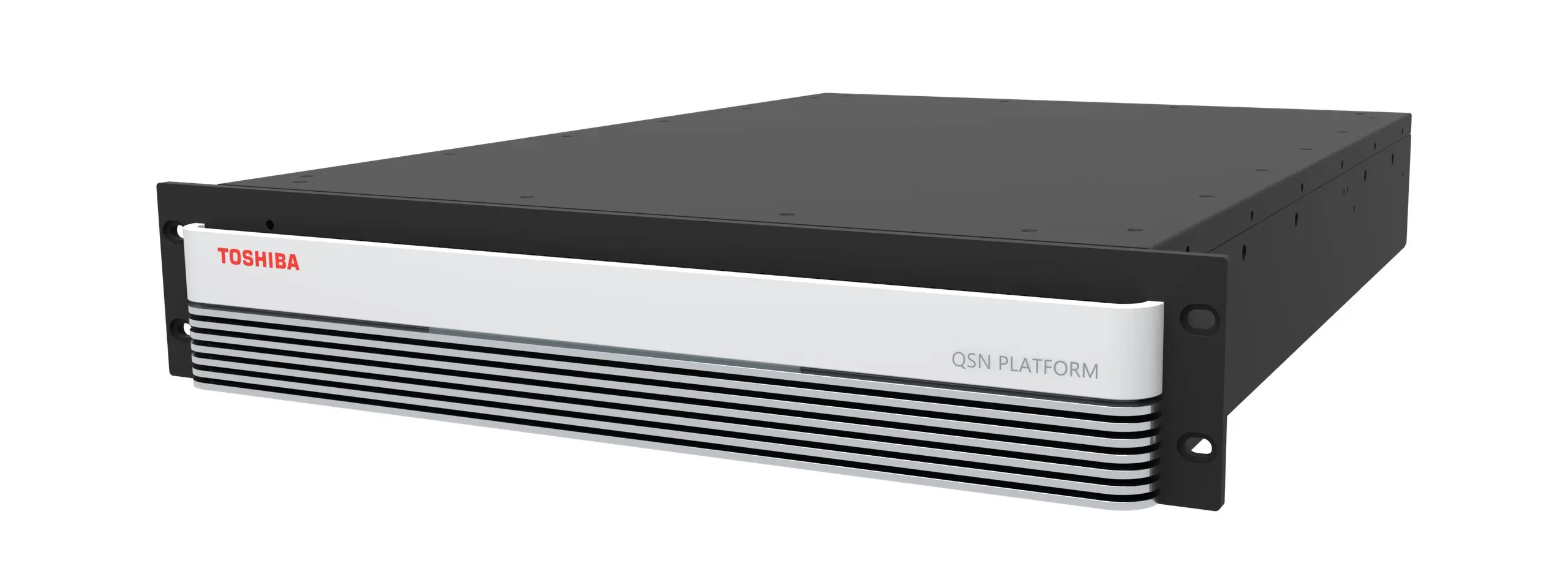
Toshiba Corporation has launched the Quantum-Safe Networking (QSN) Platform, a new system designed to integrate quantum-safe security with organizations’ existing network infrastructures without requiring costly rebuilds. The platform scales from a single connection to complex network topologies like mesh networks, offering a flexible approach to protecting critical data paths from future quantum computer attacks.
This launch addresses the growing threat of “harvest now, decrypt later” attacks and aligns with global mandates for quantum-safe security; “The quantum-safe transition represents the largest cryptographic transformation in history,” says Hiroshi Tsukino, Vice President, ICT Solutions Division, Toshiba Corporation. Service providers can also use the platform to offer new quantum-safe services and generate additional revenue.
QSN Platform Architecture Enables Scalable Quantum-Safe Networking
The Toshiba QSN Hub uses active optical switching, allowing for scalable point-to-multipoint quantum-safe networking from a single central system to multiple remote sites. This contrasts with conventional deployments requiring more equipment for similar connectivity. This centralized approach reduces the physical infrastructure needed for quantum-safe key distribution, a significant factor in lowering deployment costs for organizations. By consolidating functionality, the platform minimizes the need for dedicated hardware per network link, a key innovation for large-scale implementations.
The QSN Controller provides centralized, automated control over the entire network, offering network-wide visualization and configuration through Software Defined Networking interfaces. This simplifies network integration and allows organizations to adapt to evolving threats and requirements without extensive manual intervention. Toshiba designed the platform to operate with high key rates and extended fiber spans, further reducing the need for dedicated fiber optic cabling, additional equipment and trusted network nodes.
The QSN Transceiver combines both a Quantum Transmitter and Quantum Receiver into a single chassis, streamlining high-performance core network deployments and secure key relaying. “Toshiba QSN Platform dramatically simplifies the rollout of quantum-safe protection by reducing both cost and complexity across large-scale networks,” said Andrew Shields, Vice President of Toshiba Europe and Head of its Quantum Technology Division.
“It will transform network deployments by enabling operators to serve multiple customers and nodes from a single exchange-based unit, eliminating the need for dedicated hardware per link.” The platform’s architecture supports the integration of Cryptography, providing quantum-resistant key exchange and helping organizations comply with evolving government mandates. This combination of technologies offers a flexible and scalable solution for building future-ready networks capable of withstanding advanced cyber threats.
Toshiba QSN Platform dramatically simplifies the rollout of quantum-safe protection by reducing both cost and complexity across large-scale networks. It will transform network deployments by enabling operators to serve multiple customers and nodes from a single exchange-based unit, eliminating the need for dedicated hardware per link.
Andrew Shields, Vice President of Toshiba Europe and Head of its Quantum Technology Division
QSN Platform Reduces Network Costs and Complexity
The QSN Hub 1550/1310 consolidates quantum key distribution (QKD) functionality, enabling a single unit to serve hundreds of remote sites; this contrasts sharply with traditional point-to-point deployments requiring dedicated equipment for each connection. This centralized architecture significantly reduces both physical infrastructure and operational expenses, a key advantage for widespread quantum-safe network adoption. Beyond the hub, the QSN platform’s modular components further enhance cost efficiency and adaptability.
The QSN Spoke 1550/1310 provides a compact endpoint for efficiently integrating remote sites into hub-and-spoke deployments, while the QSN Link 1550/1310 offers dedicated point-to-point QKD with reusable components. This design allows organizations to tailor system configurations to their specific network needs, avoiding unnecessary investment in fixed, inflexible solutions, Toshiba says. The QSN Multiplexer enables quantum channels, QKD service channels and standard data traffic to share existing fiber optic cables, eliminating the need for costly dedicated dark fibers.
Addressing the Threat of “Harvest Now, Decrypt Later” Attacks
The Toshiba QSN Platform incorporates Post-Quantum Cryptography alongside more advanced quantum technologies, including Quantum Key Distribution and Quantum Random Number Generation, offering organizations a tiered approach to security adaptable to specific environments and use cases. This combination allows for a flexible response to evolving threats, rather than relying on a single cryptographic method. The platform’s design acknowledges that the quantum-safe transition is an ongoing process of adaptation and refinement, not a singular event.
Service providers stand to benefit from the QSN Platform’s capabilities beyond simply securing their own networks. The QSN Key Delivery System, integrated within the QKD appliances, delivers PQC and hybrid keys across the network through a distributed, resilient, and crypto-agile software layer, ensuring organizations can adapt to changing threats, standards and security requirements.
“A transformation of that scale cannot happen overnight. Organizations need to begin protecting their most critical networks and data today, while establishing a clear path to extend that protection as threats evolve and new standards and operational requirements are introduced.” The platform’s design reflects this long-term perspective, prioritizing flexibility and scalability for sustained quantum-safe security.
The quantum-safe transition represents the largest cryptographic transformation in history. A transformation of that scale cannot happen overnight. Organizations need to begin protecting their most critical networks and data today, while establishing a clear path to extend that protection as threats evolve and new standards and operational requirements are introduced.
Hiroshi Tsukino, Vice President, ICT Solutions Division, Toshiba Corporation


See today’s quantum computing news on Quantum Zeitgeist for the latest breakthroughs in qubits, hardware, algorithms, and industry deals.